A patio gives you a firm, clean place to sit, eat outside or walk to the shed without crossing wet grass. We build new patios, paths and paved areas, and we replace old ones that have sunk, cracked or turned slippery. The work covers marking out, digging, a compacted base, laying the paving, pointing and finishing the edges, with the old paving and spoil taken away.
We work from Hall Green, Birmingham, and cover Birmingham, the Black Country, Solihull and north Worcestershire. Paving options include sandstone-look, porcelain and natural stone, so you can pick a look that suits the house. A small seating area is as welcome as a full terrace, and we are glad to talk through either.
Most of a good patio is hidden underneath. After marking out the shape, we dig out the ground to the right depth, then lay and compact a sub-base so the slabs sit on something solid. Skimping on this stage is the usual reason paving sinks, rocks or opens up at the joints, so it is where we spend our care. Digging out also lets us find and deal with roots, old foundations or soft ground before any paving is laid.
The paving is then laid with a slight fall away from the house so rainwater runs off rather than collecting. Joints are pointed, edges are finished neatly where the patio meets walls, steps and borders, and the surface is brushed clean. If the garden needs steps or a retaining edge to deal with a slope, we plan those in at the start. We also check that the finished surface sits below any damp-proof course, so the house stays protected from splashing and standing water.
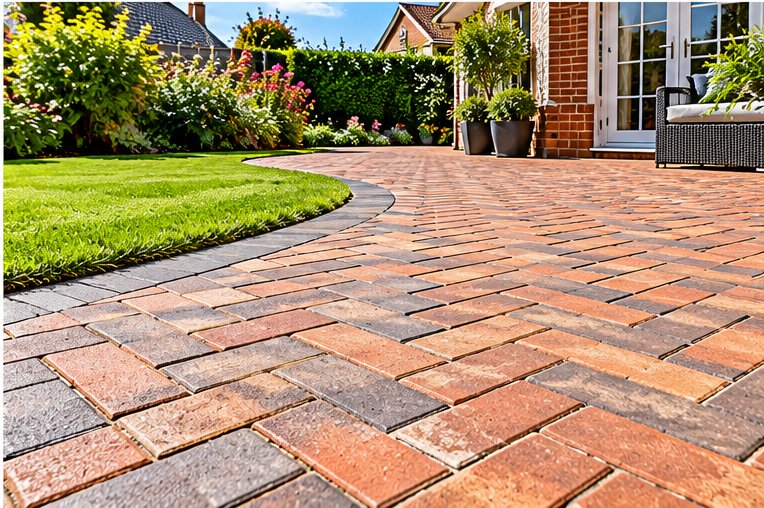
Sandstone-look paving gives a traditional, slightly varied appearance that sits well beside older brickwork. Porcelain is dense and smooth, with a crisp modern look and a surface that is easy to keep clean. Natural stone has real character, though each piece varies. We can show you the differences and explain what each needs in terms of care. Paving also comes in different sizes and finishes, and a mix of slab sizes can make a larger patio look more interesting.
Layout matters as much as material. Think about where the sun falls, how much room a table and chairs actually need, and whether a path should link the patio to the rest of the garden. We usually suggest sketching the shape on the ground first, so you can see how it feels before any digging begins. Bring any ideas, photographs or magazine pages you like, because they help us understand the look you want far better than words do.
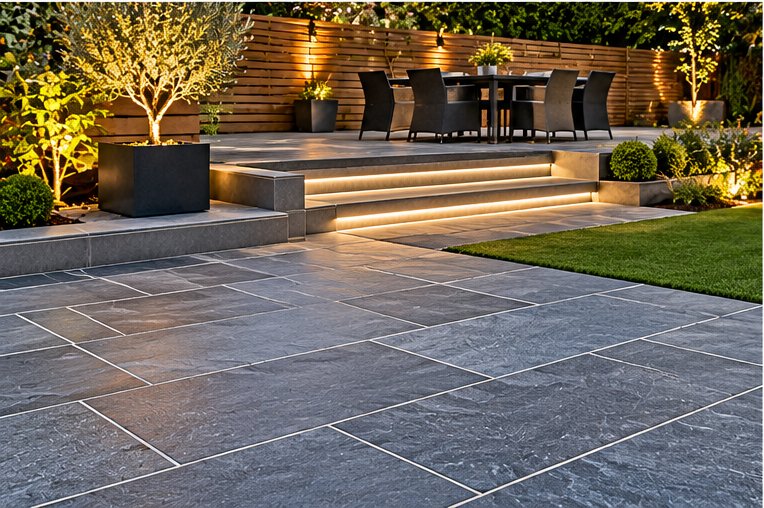
Victorian terraces often have small, enclosed yards where a patio is most of the garden, so neat cutting and good drainage matter. Inter-war semis usually have more room, and a patio can sit close to the house with a path leading down a long garden. Sloping plots may need levels reshaped, with steps or a low wall. Older houses may also have uneven yards, so we check levels carefully before deciding how the paving should run.
Before work starts, think about where water will go, because paving should never direct it towards the house. Check for drains, manholes or services that need to stay accessible, and consider how materials will reach the garden if access is narrow. Mature tree roots nearby can affect how deep we can dig, so it is worth pointing them out. Tell us early if you plan a barbecue, hot tub or heavy planters, as the base may need more thought for those.
Based in Hall Green, so we are never far from the gardens we work in.
We look at the job before we price it, so you know what is involved.
Branches, clippings and rubbish from our jobs are cleared and the garden left tidy.
Call, or send photos on WhatsApp, and we will come back to you.
 Patio Construction
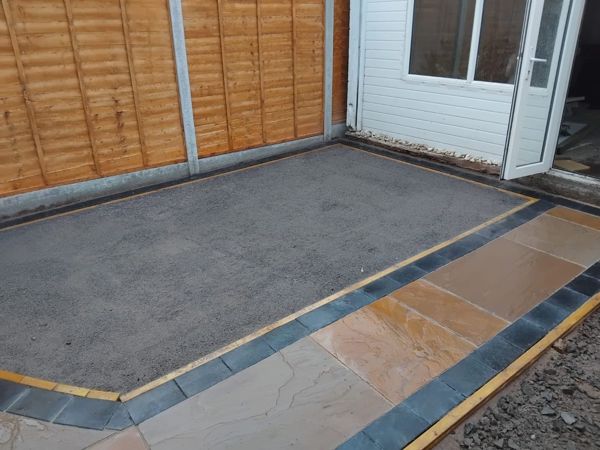
Sandstone-look paving with dark block edging and new fence panels transformed a small Droitwich terrace garden, shown part-finished.
View project →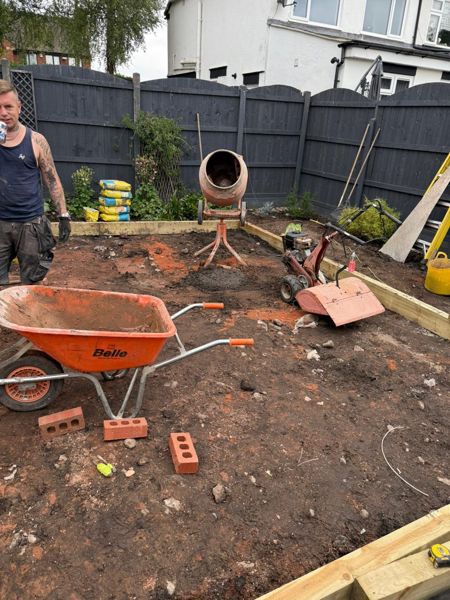 Patio Construction
A bare Cradley Heath back garden turned into a raised sandstone-look patio with brick edge, rolled turf and a pebble border.
View project →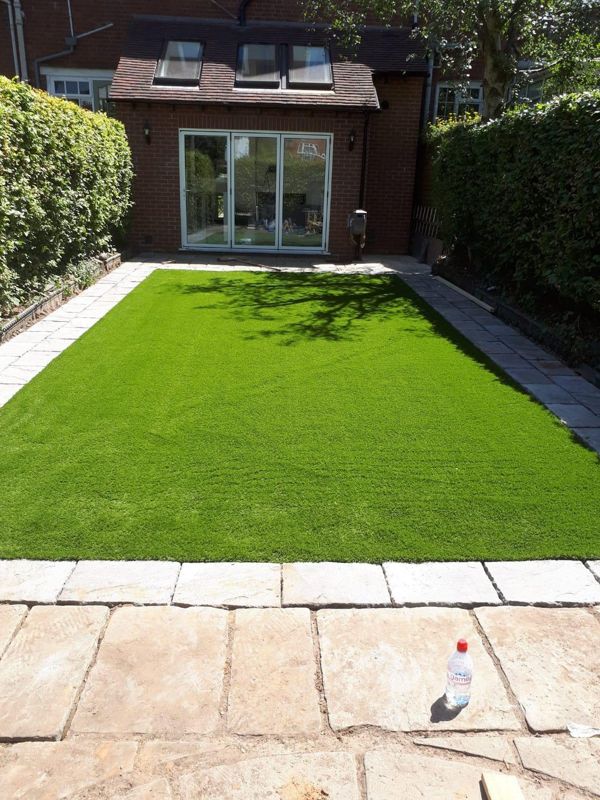 Patio Construction
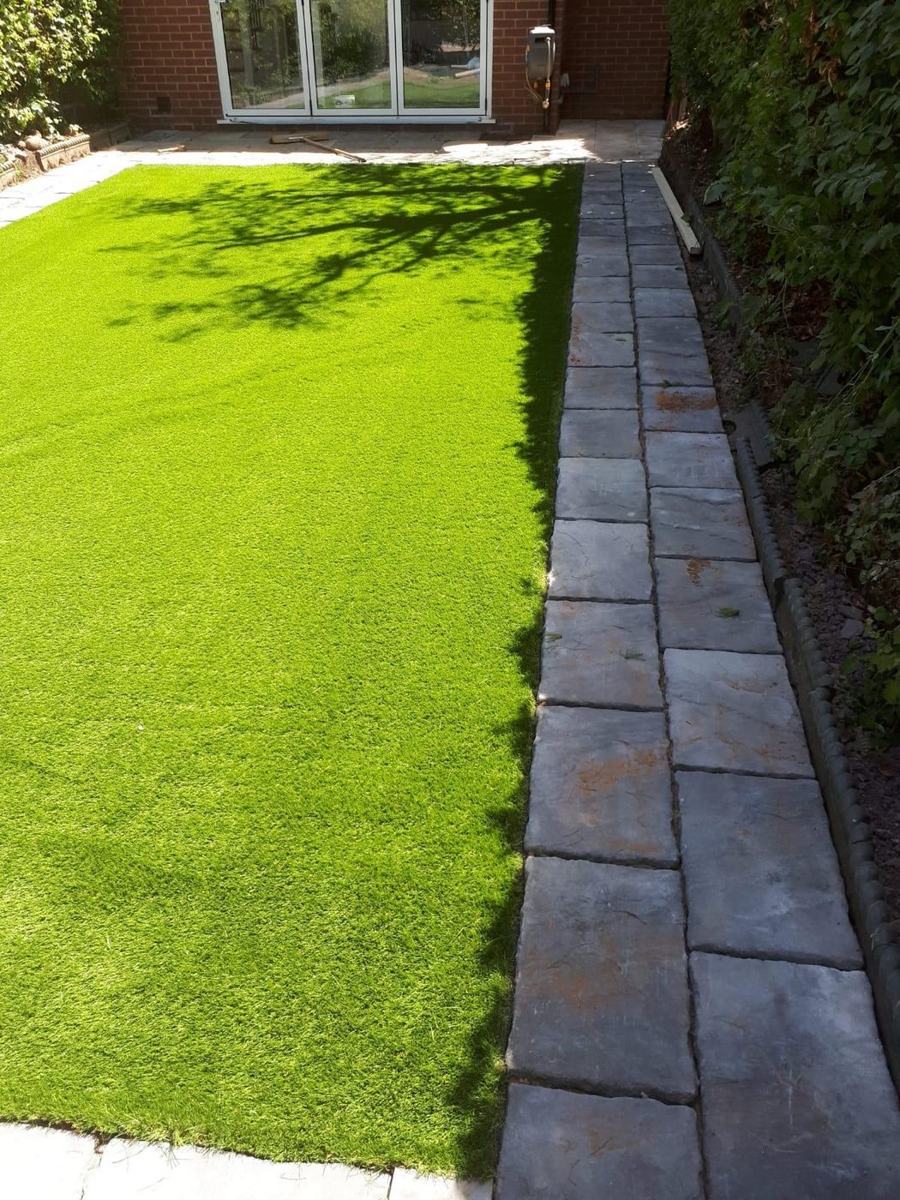
A narrow Birmingham back garden given a stone-look paved edge and a new artificial lawn, shown from bare ground to finished.
View project →From our base in Hall Green we work across Birmingham, the Black Country, Solihull and parts of Worcestershire. Choose your area.
Yes. Old paving, broken concrete, spoil and any waste from the work are cleared from site. We take out the existing surface, prepare the ground properly for the new patio, and leave the area tidy once the new paving has been laid and finished.
It depends on the look you want and how much upkeep you will accept. Sandstone-look suits traditional houses, porcelain is smooth and easy to clean, and natural stone has genuine character. We can talk through each one, and the style of your house, before you decide.
We lay the paving with a slight fall so water runs away from the house and into borders or a suitable drain. The firm, compacted base underneath helps stop dips forming. Getting the levels right at the start is far easier than fixing puddles later.
Yes. Paths, steps and small retaining walls are often built alongside a patio, particularly in sloping gardens. Doing them together means the levels, materials and edges match, and the finished garden looks planned rather than added to in separate pieces over time.
Tell us what needs doing and where. We will get back to you to arrange a visit and a free, no-obligation quote. Photos sent on WhatsApp help.