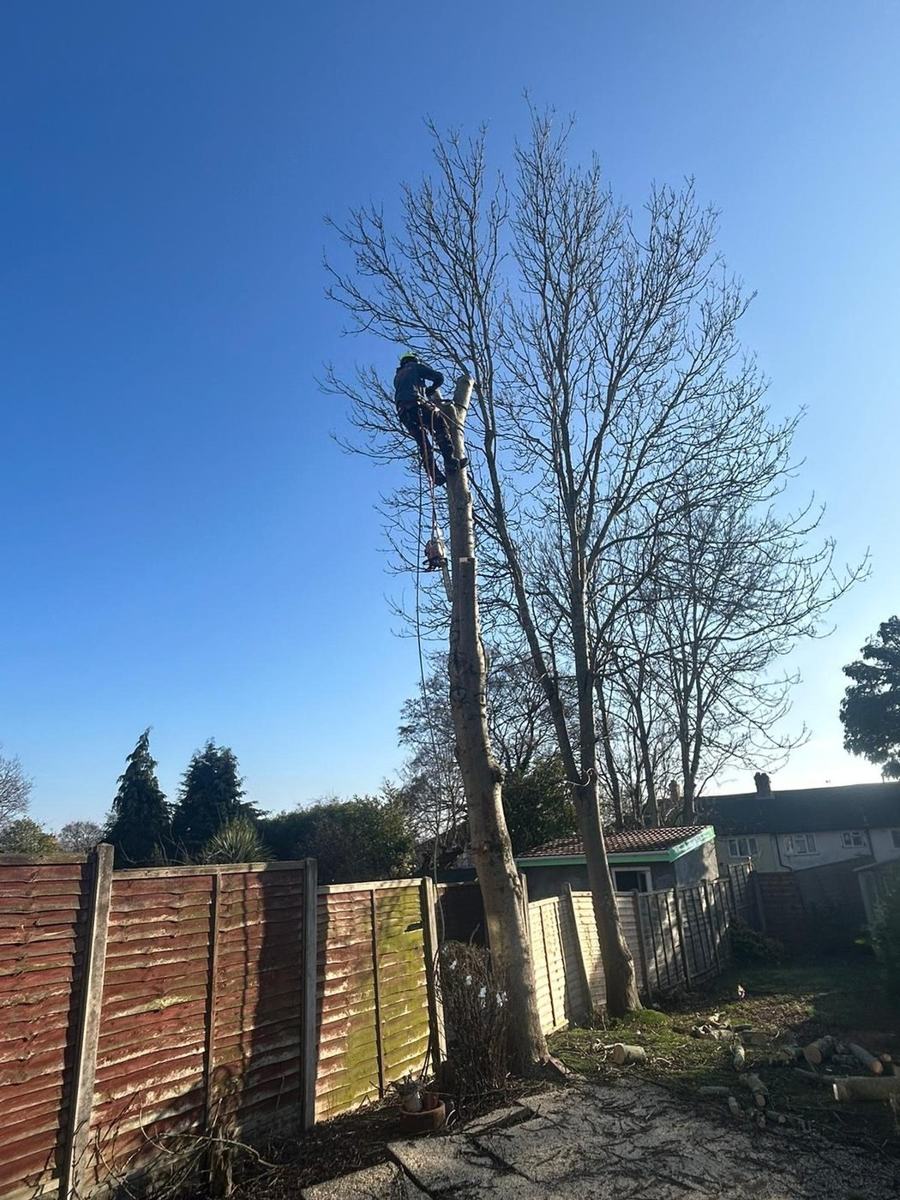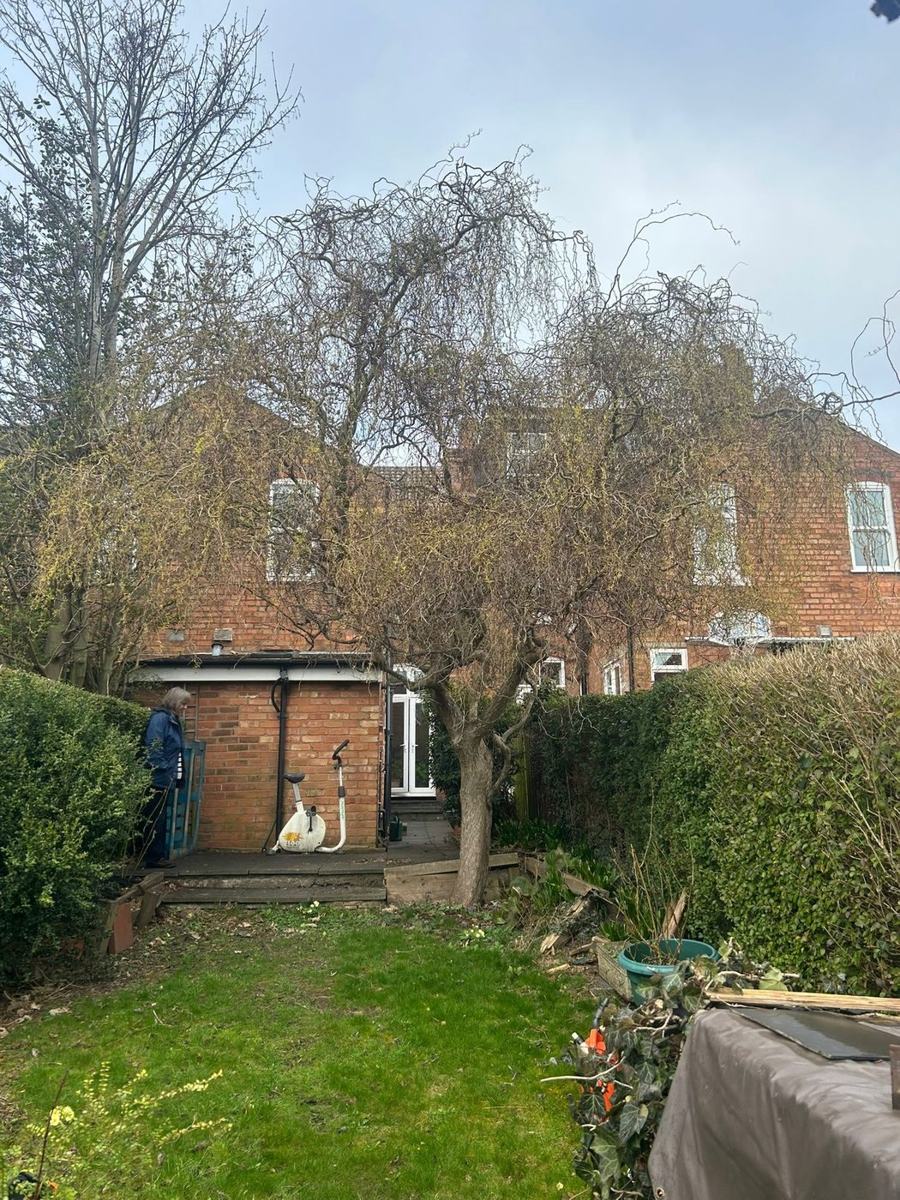
Start by looking from a safe distance
You do not need any equipment to give a tree a first check. Stand back far enough to see the whole shape, then walk slowly round it. Look at the trunk, the base, the ground nearby and the overall outline of the crown. A healthy tree usually looks balanced and settled, with leaves or buds across the whole canopy. Anything that looks different from how it did last season, or different from neighbouring trees of the same kind, deserves a closer look and perhaps a professional opinion.
Warning signs in the trunk and base
The trunk and the point where it meets the ground tell you most about stability. Problems here matter more than a few dead twigs, because the whole tree depends on this part holding together. Take particular care with trees close to houses, garages, parked cars and footpaths, where a failure would do the most harm.
- Cracks or splits running along the trunk, especially where a fork joins
- Fungus growing on the trunk or at the base, which can point to decay inside
- Hollow sections, cavities or bark that is peeling away from the wood
- Soil lifting or cracking on one side, suggesting the roots are moving
- A new lean, or a lean that appears to be getting worse
What the canopy can tell you
Look up as well. Large dead branches, a crown that is thinning on one side, or leaves that are small, pale or missing while the rest of the street is in full leaf can all signal that a tree is struggling. Branches hanging low or rubbing against each other can also be a concern. Dead wood is not always a sign the whole tree is failing, and a good deal of it can be removed by careful pruning, but it is worth having checked before heavy weather arrives.
After a storm or high wind
Strong wind can loosen roots and damage limbs without bringing anything down, so a tree that looked fine last month may not be fine now. After a storm, check for snapped or hanging branches, fresh splits, and any movement at the base when the wind gusts. Keep people and cars away from anything that looks unstable. Our valley-side and canal-corridor trees across Birmingham and the Black Country often stand on soft or restricted ground, which is worth bearing in mind.
What you can safely do yourself, and what to leave alone
Looking is safe, and so is taking photographs over a few weeks so you can see whether a lean or a crack is changing. Please do not climb the tree, cut anything above head height or use a ladder with a saw. Anything near overhead cables should be left entirely to professionals. Small, low, dead twigs that you can reach from the ground are about the limit of sensible work for a householder.
When to ask for a proper inspection
If you notice any of the signs above, it is sensible to have someone look at the tree in person rather than guess from a photograph. A tree surgeon can tell the difference between a harmless quirk and a real weakness, and can suggest options ranging from leaving it alone to reducing, supporting or removing it. Before any cutting, we check whether the tree is protected by a Tree Preservation Order or sits in a conservation area, because the council may need to be told first.
Want it looked at properly?
Tell us what you have and we will arrange to visit, explain what is needed and give you a free, no-obligation quote. See our tree surgery page, or send us photos on WhatsApp.
Common Questions
Can a tree with fungus on it still be safe?
Sometimes, because fungus does not always mean serious decay. But fungus on the trunk or at the base can show that rot is spreading inside, where you cannot see it. It is sensible to have the tree looked at in person so the real extent of any decay can be judged.
Is a leaning tree always dangerous?
No. Many trees have leaned gently since they were young and are perfectly stable. The worry is a lean that is new, getting worse, or accompanied by lifting soil or cracks near the roots. A sudden change in angle is a good reason to call someone promptly.
Do dead branches mean the whole tree must come down?
Not usually. Deadwood can often be removed by careful pruning while the rest of the tree carries on healthily. Whether the tree should stay depends on how much of the crown is affected, the condition of the trunk and where it stands in relation to buildings.
Who should I tell if a neighbour's tree looks unsafe?
Start by talking to your neighbour, as they may not have noticed the problem. If the tree is on public land or beside a road, the local council is the place to report it. Photographs showing the specific concern make any conversation easier and clearer.