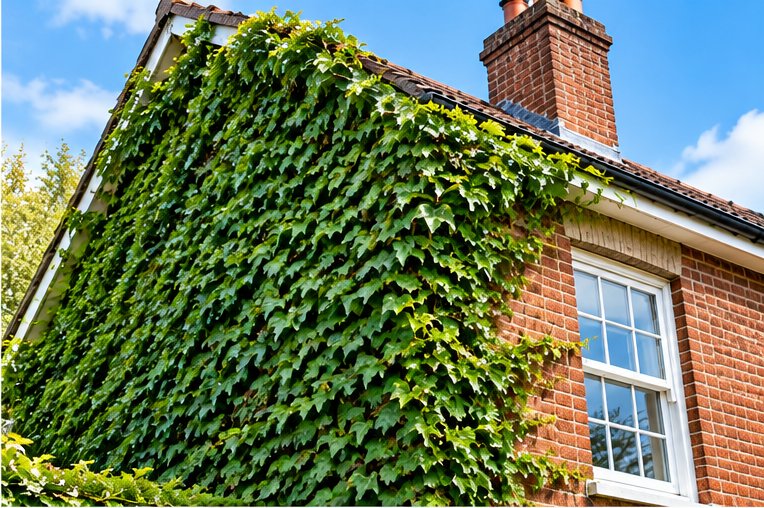
Period houses, large suburban gardens and the damp air near the Severn all suit ivy, and Worcester has plenty of it on brick walls, boundary fences, outbuildings and trees. We remove it carefully, cutting every stem at the base first so the growth dies back and can be taken down without tearing at what it grips.
Some parts of the city lie in conservation areas, so we keep the work light-handed and avoid scraping historic brick, whatever the pace. Green waste from every job is taken away, and the garden is swept before we leave, including gravel and paving where leaf drops.
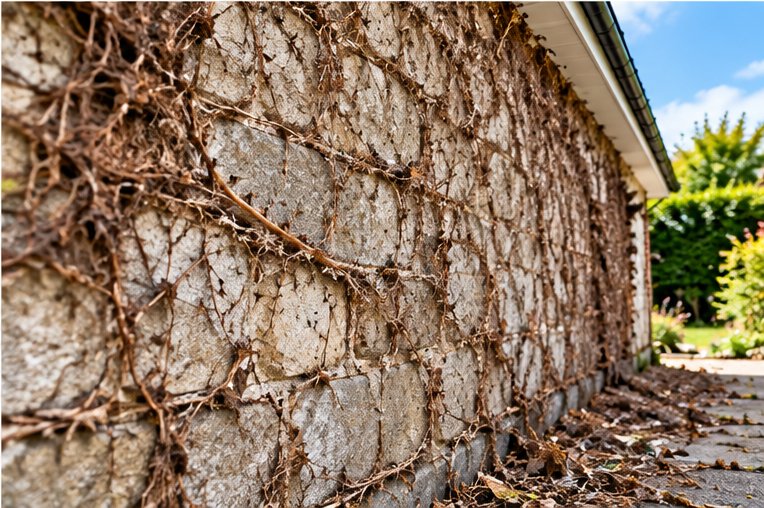
Gardens near the river and its meadows stay moist, and moisture is what ivy wants. It spreads quickly across low walls, summerhouses, timber fences and the base of willows. Because the ground stays damp, regrowth from old roots is common, so we cut stems right at ground level and clear the lower runners carefully, including those creeping along the foot of a wall.
We then leave the upper growth to wilt. In a wet corner of a Worcester garden that may take a little longer, and we judge it on the day. Dead ivy is lighter and more brittle than living ivy, which is exactly what you want when it is on a damp timber panel. We also check the bases of posts for rot while we are there.
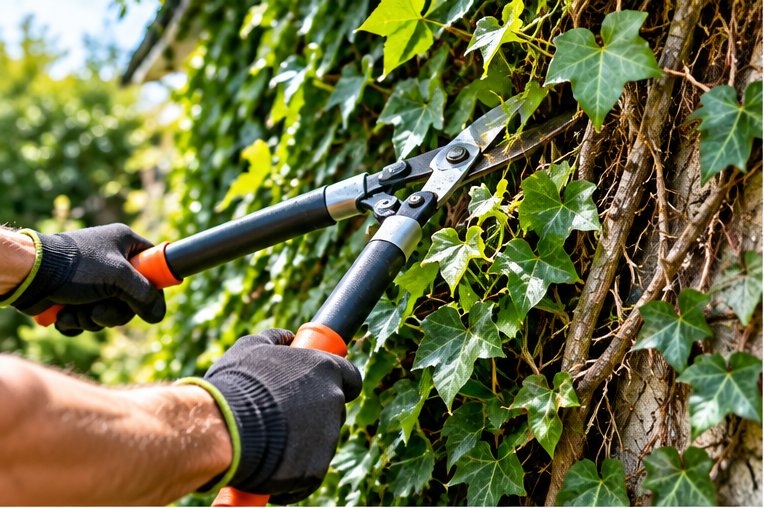
Worcester has older brick houses where lime mortar and soft bricks are easily harmed. We never scrape or power-wash the wall to speed things up. After the die-back, the ivy is eased away by hand, and the sticky rootlets are left to weather. That approach respects the building and suits the more sensitive streets. It is slower than pulling, but it is how old brick stays undamaged.
Large houses often have ivy behind drainpipes, around chimney stacks and over porch roofs. Once these are clear we tell you about loose pointing or cracked render we spot, as ivy tends to cover faults for a long time. You then have the chance to arrange repairs before the weather makes them worse. Slate and tile edges near the porch get a quick look from the ladder as well.
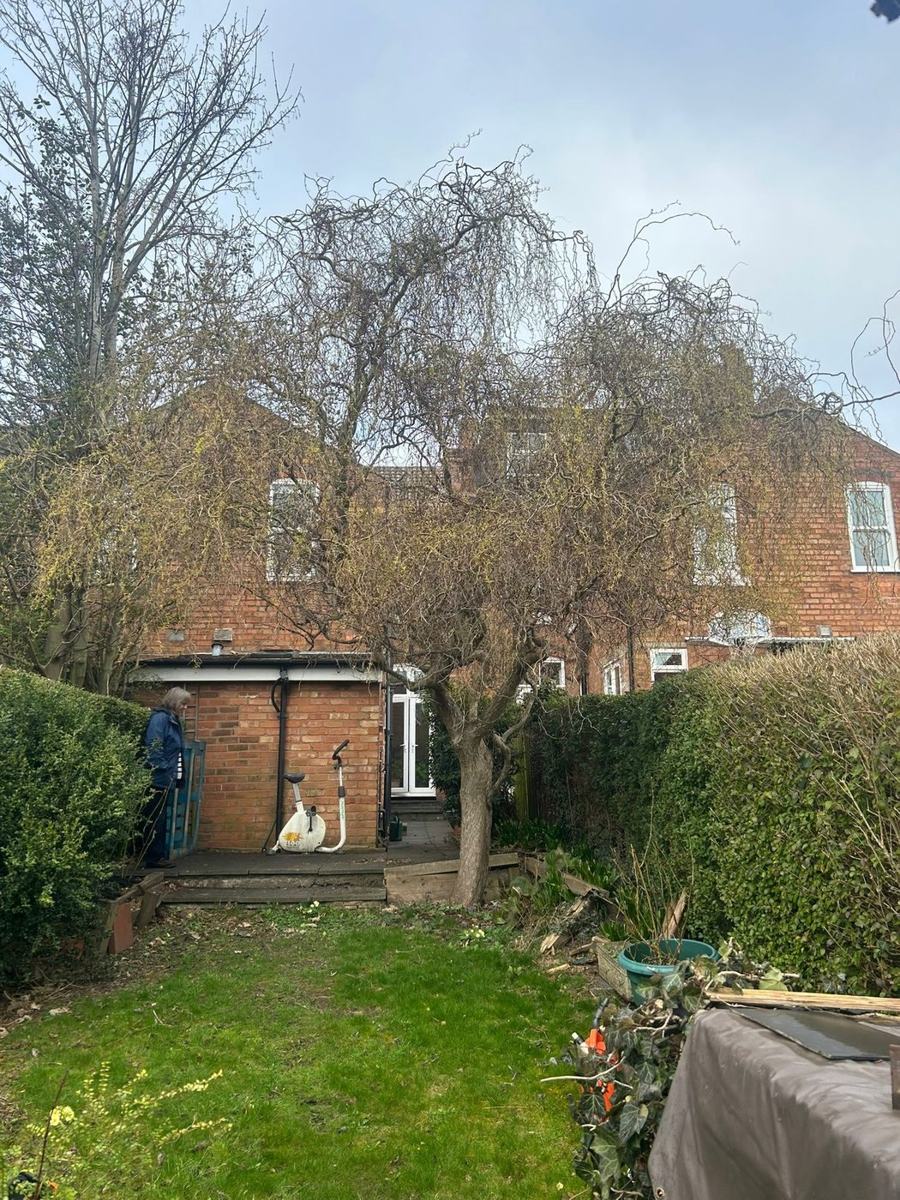
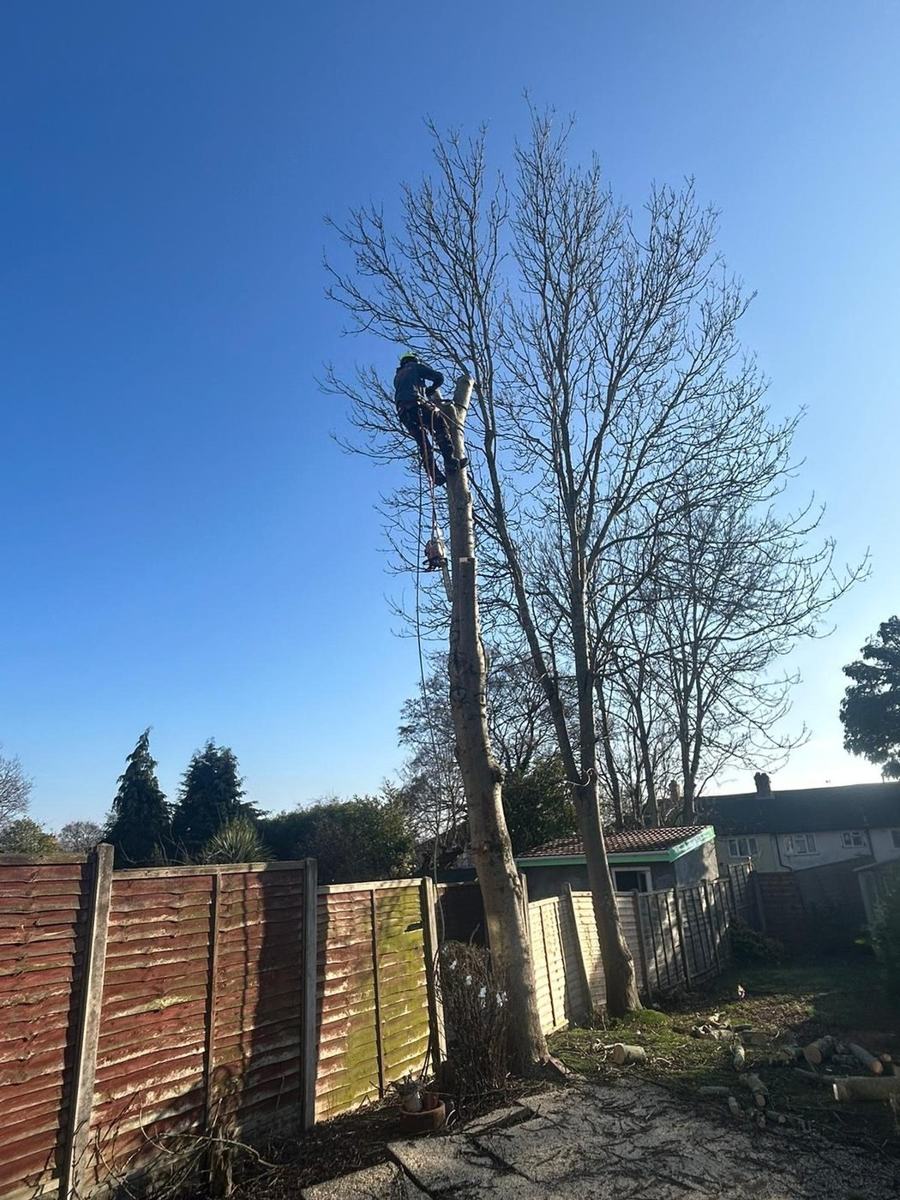
Larger Worcester plots usually have long boundary runs and several mature trees, so we agree a plan before we start. Tree trunks have the stems cut at the base, not stripped from the bark. We check for nesting birds first and leave any active nest alone. We also cover Claines and Powick, and carry all the green waste off site.
Based in Hall Green, so we are never far from the gardens we work in.
We look at the job before we price it, so you know what is involved.
Branches, clippings and rubbish from our jobs are cleared and the garden left tidy.
Call, or send photos on WhatsApp, and we will come back to you.
From our base in Hall Green we work across Birmingham, the Black Country, Solihull and parts of Worcestershire. Choose your area.
Yes, since removing ivy does not alter the building, though we still take great care. We cut the stems, let the ivy die back and lift it off by hand, with no scraping or pressure washing. We also mention anything that looks loose once the wall is bare.
It can, because damp ground suits it and old roots may still be alive. Cutting the stems at ground level and clearing the runners helps a lot. A quick look along the wall each season lets you snip seedlings early before they root properly.
Leave the bark alone and cut the ivy stems at the base. The growth above then dies back. We remove what is safe to reach from the ground and tell you plainly if higher growth should stay, since forcing it down would do more harm than good.
Tell us what needs doing and where. We will get back to you to arrange a visit and a free, no-obligation quote. Photos sent on WhatsApp help.