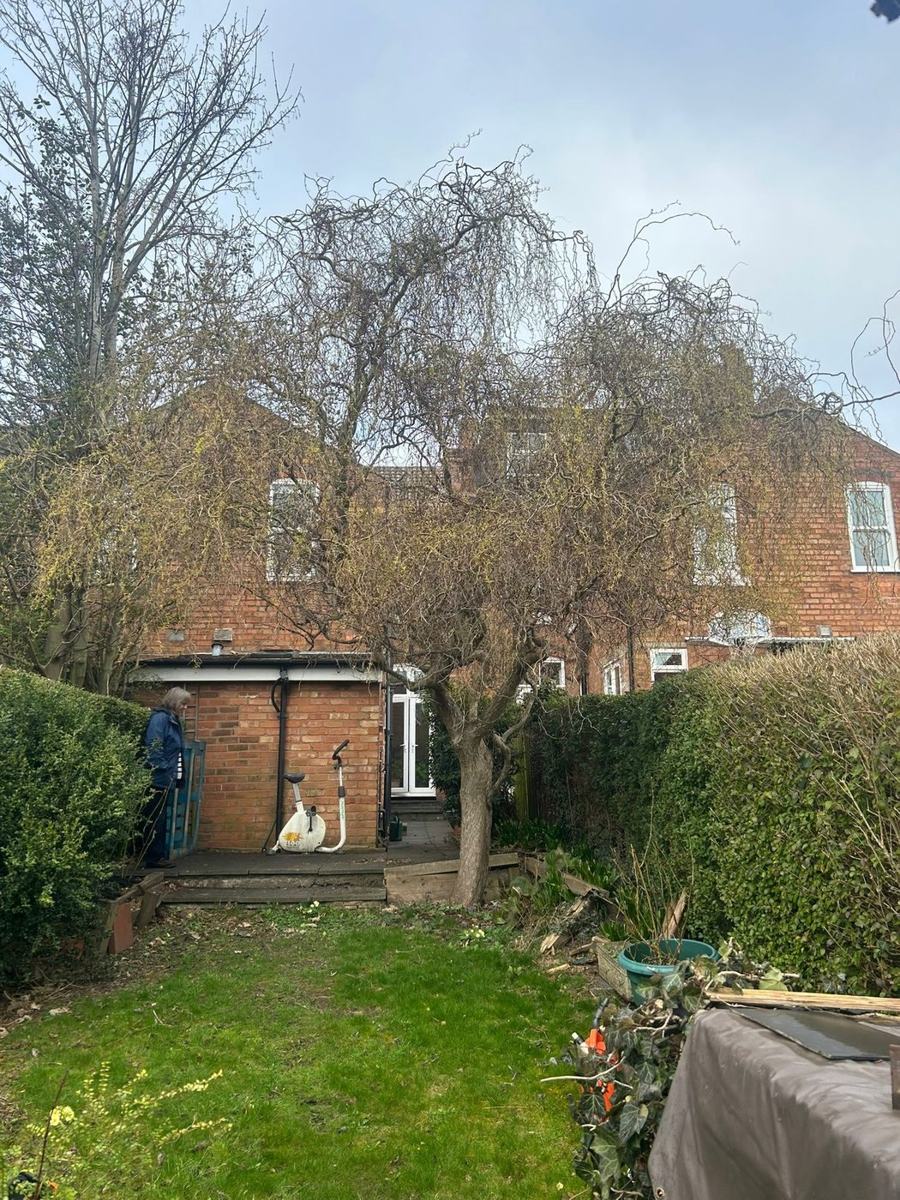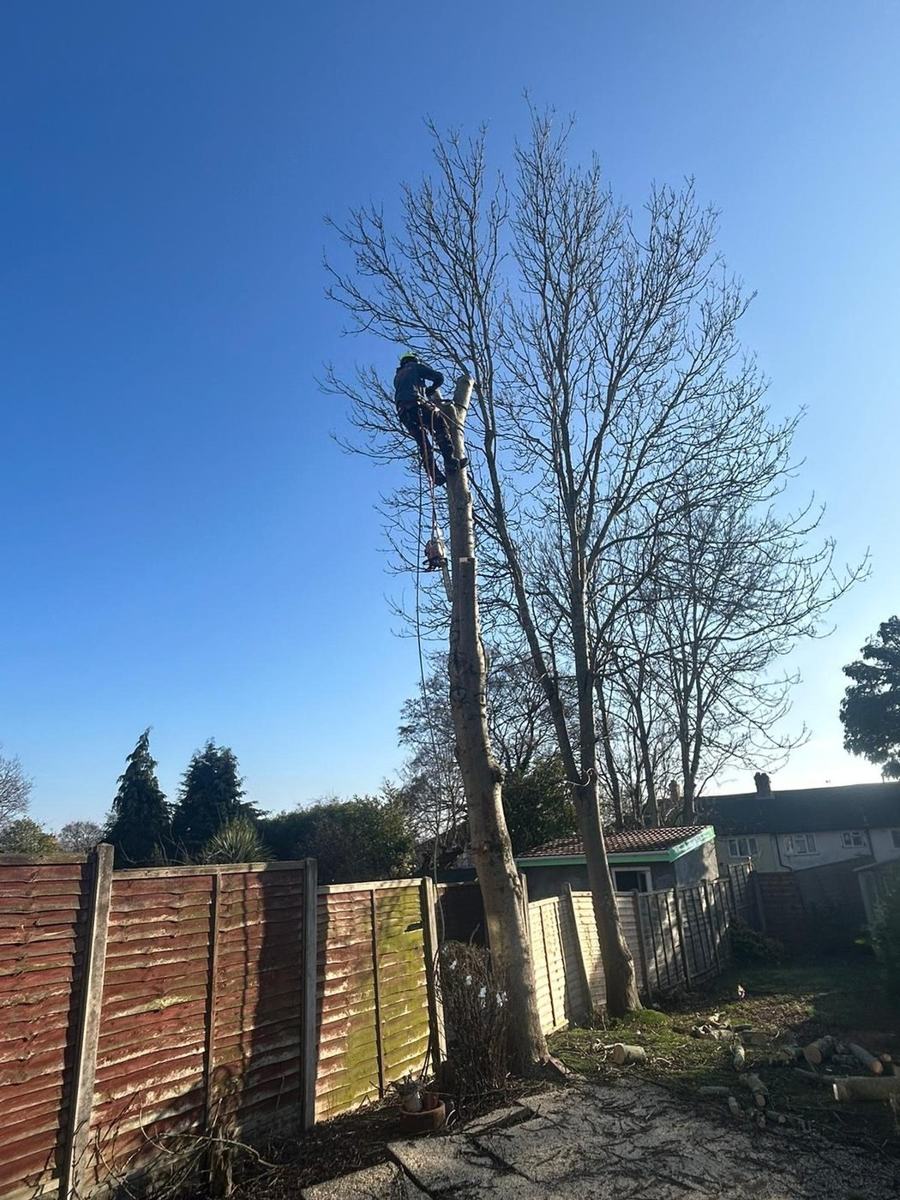
Kidderminster has plenty of period terraces and 20th century estates, and many of their gardens now hold conifers, old hedges and fences that ivy has taken over. We remove ivy from brickwork, fences, outbuildings and trees across DY10 and DY11, working steadily so the surface underneath is disturbed as little as possible, whatever it is climbing.
The first question is usually whether it will come off cleanly. Honest answer, it depends on what the ivy is clinging to. Painted fencing and timber sheds are easier to strip, while old brick and render hold the roots tighter, so we look at the surface before we promise any outcome.
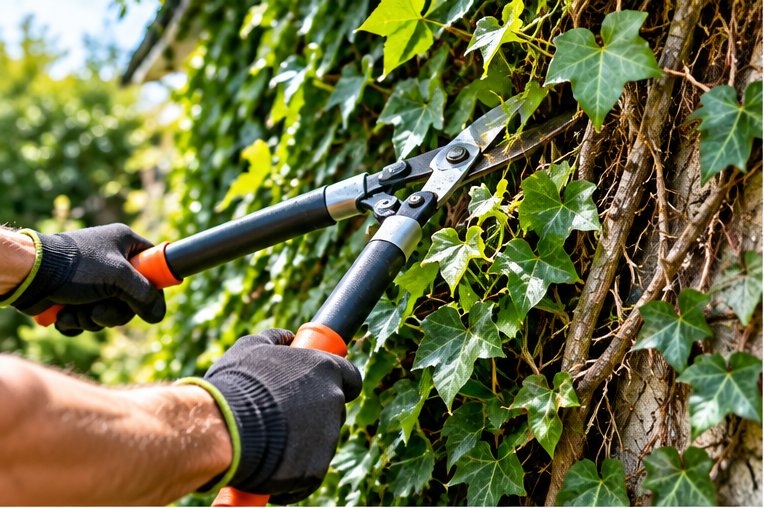
Whatever the ivy is climbing, the work begins at ground level. We cut through every thick stem close to the base, and where it has rooted in a flower bed or beside a Kidderminster terrace wall we take out a short section so the climbing growth cannot reconnect with the soil. Cutting low is what stops the plant feeding the growth above, which then begins to die back.
Fences and timber sheds are the simpler end of the job. Ivy gets between the boards and lifts them over time, so once the stems are dead we ease the growth out of the gaps and off the panels. On a Kidderminster estate garden with close-boarded fencing, that can show how much the cover was hiding, and whether a panel needs attention. Anything rotten we point out rather than cover.
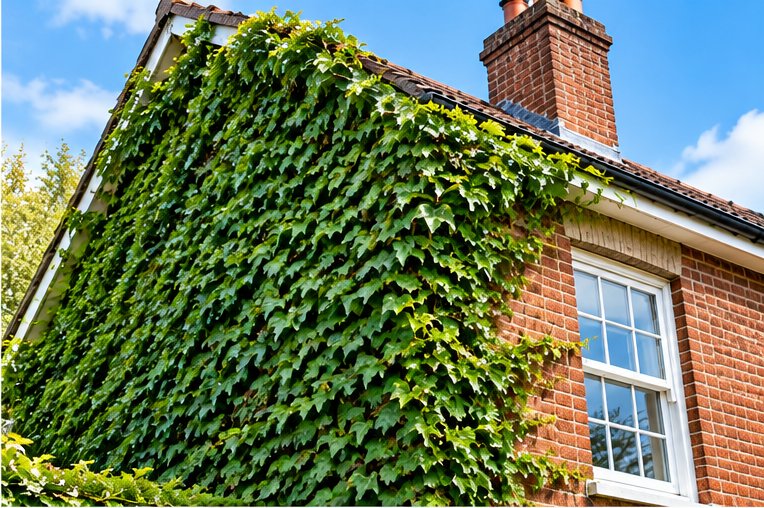
Ivy on a conifer or a mature garden tree needs a lighter hand. Kidderminster gardens often have tall hedges and conifers where ivy has pulled itself well up into the foliage. We cut it free at the base and take away the lower stems we can safely reach. Higher growth is left to die and drop, because dragging it down can strip bark or snap branches. That is slower, but it protects the tree.
Nesting birds are the other consideration. Birds matter whether the ivy sits on a Kidderminster terrace wall or high in an old tree. Hedges and dense ivy are popular nesting spots, so we look before we cut, and if a nest is in use we leave that stretch alone and carry on elsewhere. It is better to return to a section than to disturb a nest. You will be told plainly if a section has to wait.
Once the ivy is down we gather every stem and leaf and take the green waste away, so you are not left with a pile to deal with. Kidderminster walls and fences look stark at first once the green cover goes, and some stained patches or root marks are normal. We also cover Stourport-on-Severn and Bewdley, if a neighbour or family member has the same trouble.
Based in Hall Green, so we are never far from the gardens we work in.
We look at the job before we price it, so you know what is involved.
Branches, clippings and rubbish from our jobs are cleared and the garden left tidy.
Call, or send photos on WhatsApp, and we will come back to you.
From our base in Hall Green we work across Birmingham, the Black Country, Solihull and parts of Worcestershire. Choose your area.
The safe route is to cut the stems at the base, let the growth die back, then remove it gently. Brick that is sound should cope well. Tired mortar may loosen with the roots, so we work carefully and flag anything weak. Pulling live ivy straight off is what usually causes the damage.
Ivy does not usually kill a healthy tree outright, but a heavy covering adds weight, blocks light from the lower foliage and makes it harder to see the condition of the trunk. On conifers it can also crowd the inner branches. Removing it from the base is a sensible way to keep an eye on the tree.
Ivy can regrow from any roots or stems left in the ground, so we take out the base growth thoroughly. Small shoots may still appear from seed or missed roots, and a quick snip when you spot them keeps things under control. Cutting at ground level is what makes the biggest difference.
Tell us what needs doing and where. We will get back to you to arrange a visit and a free, no-obligation quote. Photos sent on WhatsApp help.