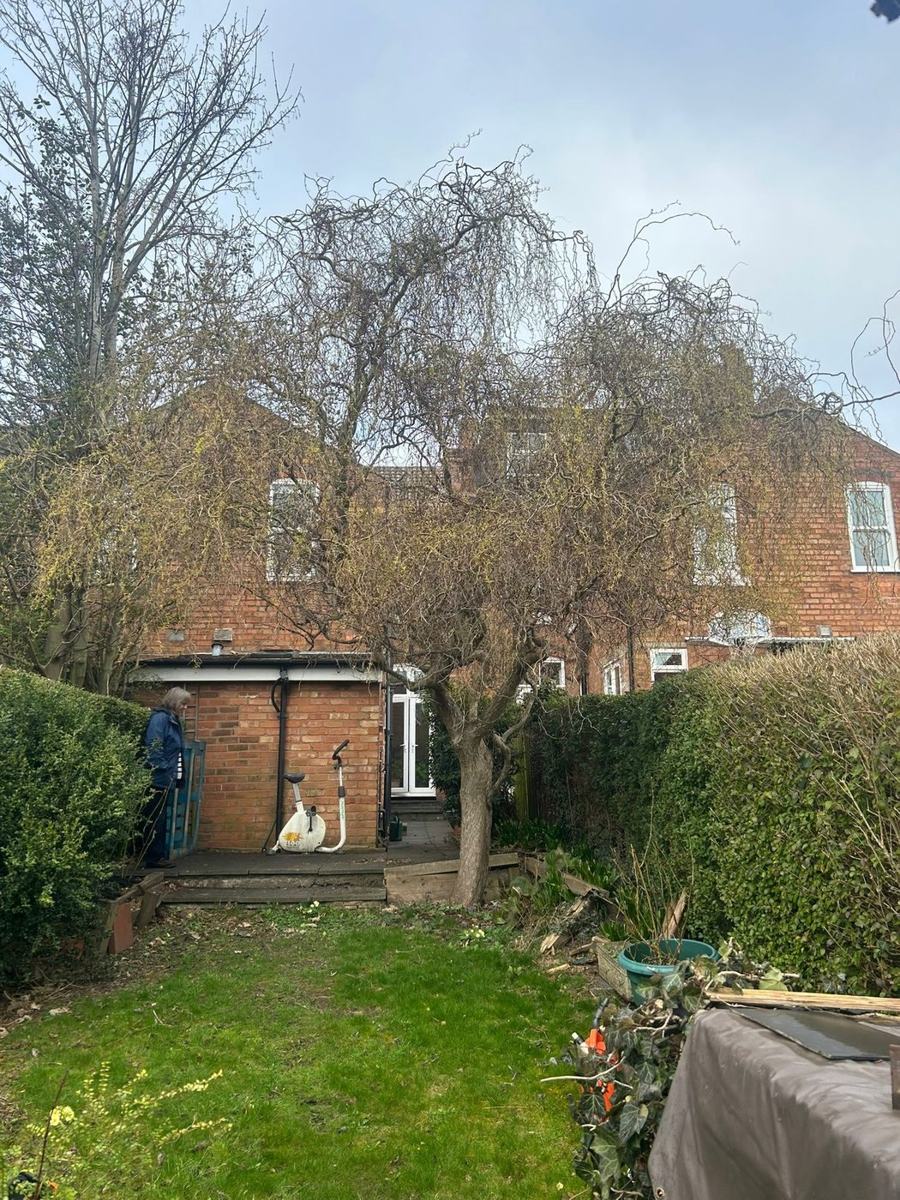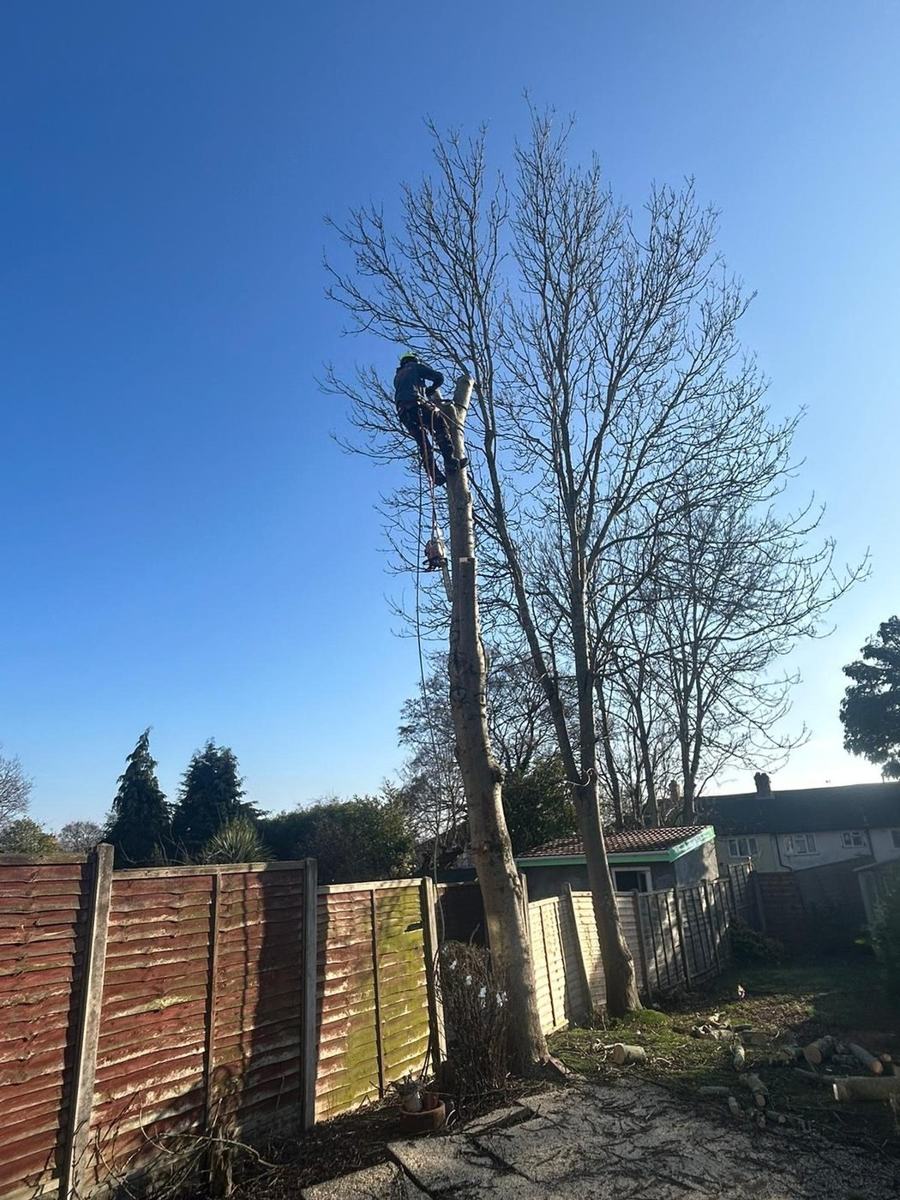
Inter-war semis and bungalows in Yardley often come with long gardens, and long gardens mean long boundaries for ivy to run along. It climbs the fence, scales the garage, and works up the mature trees and conifers. We cut it back and remove it, starting with the stems at the base.
The method is gentle on the surface beneath: cut, wait for the growth to die back, then take it down. The ivy leaves your garden with us as green waste, and the paths and borders are swept clean afterwards.
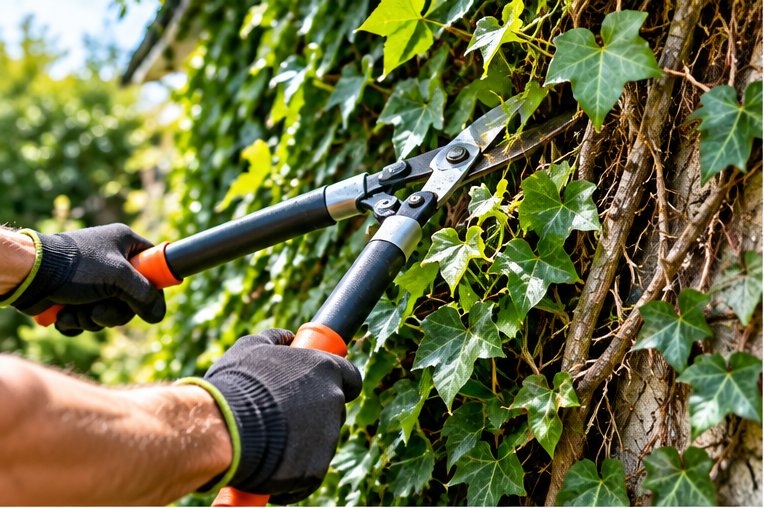
A long garden can hide a lot of ivy at the far end. By the time it is noticed, it may have crossed a whole fence line and started up the garage and the trees beyond. We walk the boundary first, find where the main stems enter the ground, and cut them there rather than chasing growth along the length. Yardley gardens that run back a long way can have several separate stems, and we look for them all.
Once the stems are dead, the removal goes quickly and cleanly. Panels, rails and posts that were hidden become visible, and we tell you which are sound and which are not. In a Yardley garden where the fence marks the edge of a long lawn, knowing that is useful before a storm. Anything leaning gets mentioned, and the ivy is cleared from its base.
Conifers and mature trees are common in Yardley gardens, and ivy likes both. Ivy in a Yardley conifer can brown the inner branches and thin the shape. We cut the stems at ground level so the climbing growth dies, then remove the lower dead material. Higher branches are left to shed it naturally unless a safe reach is possible from the ground or a steady ladder.
We do not rip ivy out of bark or branches. Doing so can break stems and leave scars, and it rarely helps a tree. For a trunk that has been covered for a long time, patience pays: you get a cleaner result and the tree keeps its bark. Dead stems are then pulled from the lower trunk, and the fallen leaf is raked up.
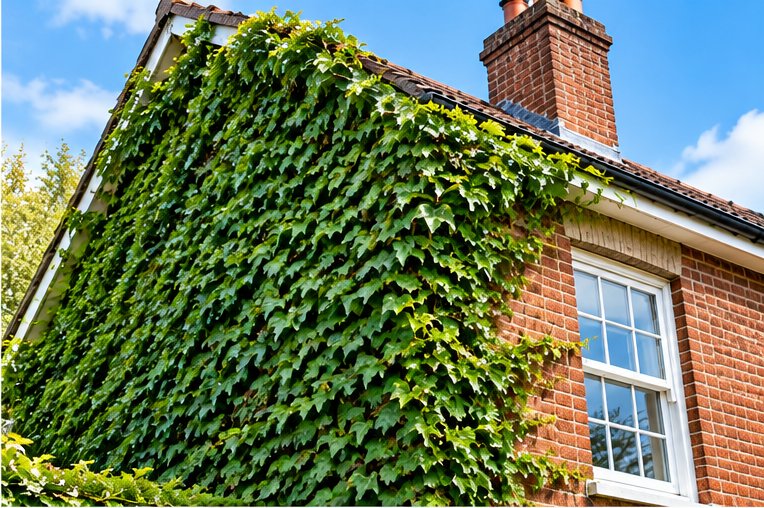
Bungalows have low roofs, which ivy can reach easily, lifting the edges of tiles or felt. Around the older streets near Yardley Old Village, brick walls need an especially careful, hand-only approach. Before we start we check for nesting birds and leave active nests. We also cover Acocks Green and Stechford, and all the green waste goes with us once the work is done.
Based in Hall Green, so we are never far from the gardens we work in.
We look at the job before we price it, so you know what is involved.
Branches, clippings and rubbish from our jobs are cleared and the garden left tidy.
Call, or send photos on WhatsApp, and we will come back to you.
From our base in Hall Green we work across Birmingham, the Black Country, Solihull and parts of Worcestershire. Choose your area.
It can. Stems creep under the edges of tiles and felt and push them up over time. We cut the stems first, let them die, then remove the ivy by hand, checking the roof edge as it comes clear.
Heavy ivy can shade and weaken the inner branches, which turn brown. Cutting the stems at the base and clearing the dead growth lets light back in, though browned conifer branches do not always recover. We tell you honestly what we see once the ivy is gone.
As far as the ivy goes on your property. We walk the boundary with you or check beforehand, cut each main stem at the base, and clear the loosened growth along the fence, garage and trees. Anything beyond your boundary is left alone.
Tell us what needs doing and where. We will get back to you to arrange a visit and a free, no-obligation quote. Photos sent on WhatsApp help.