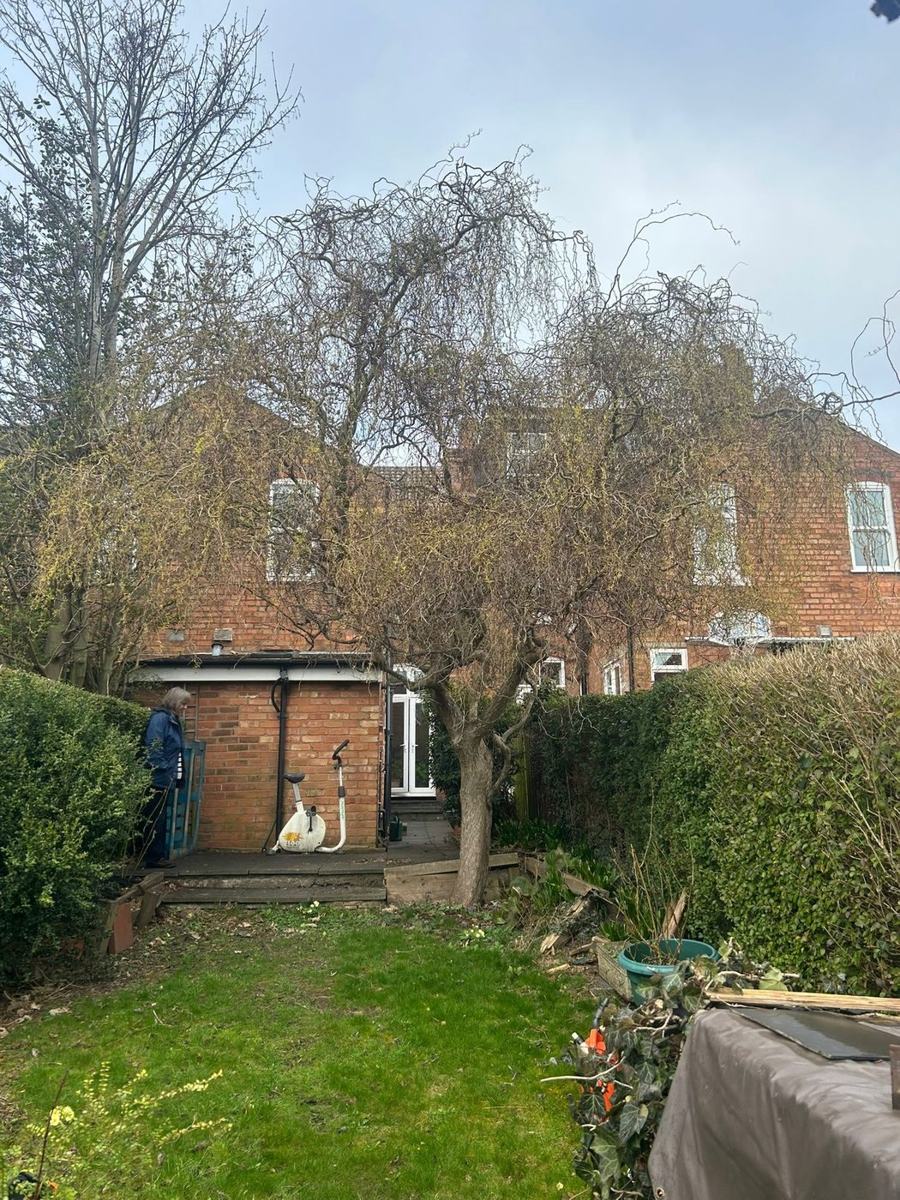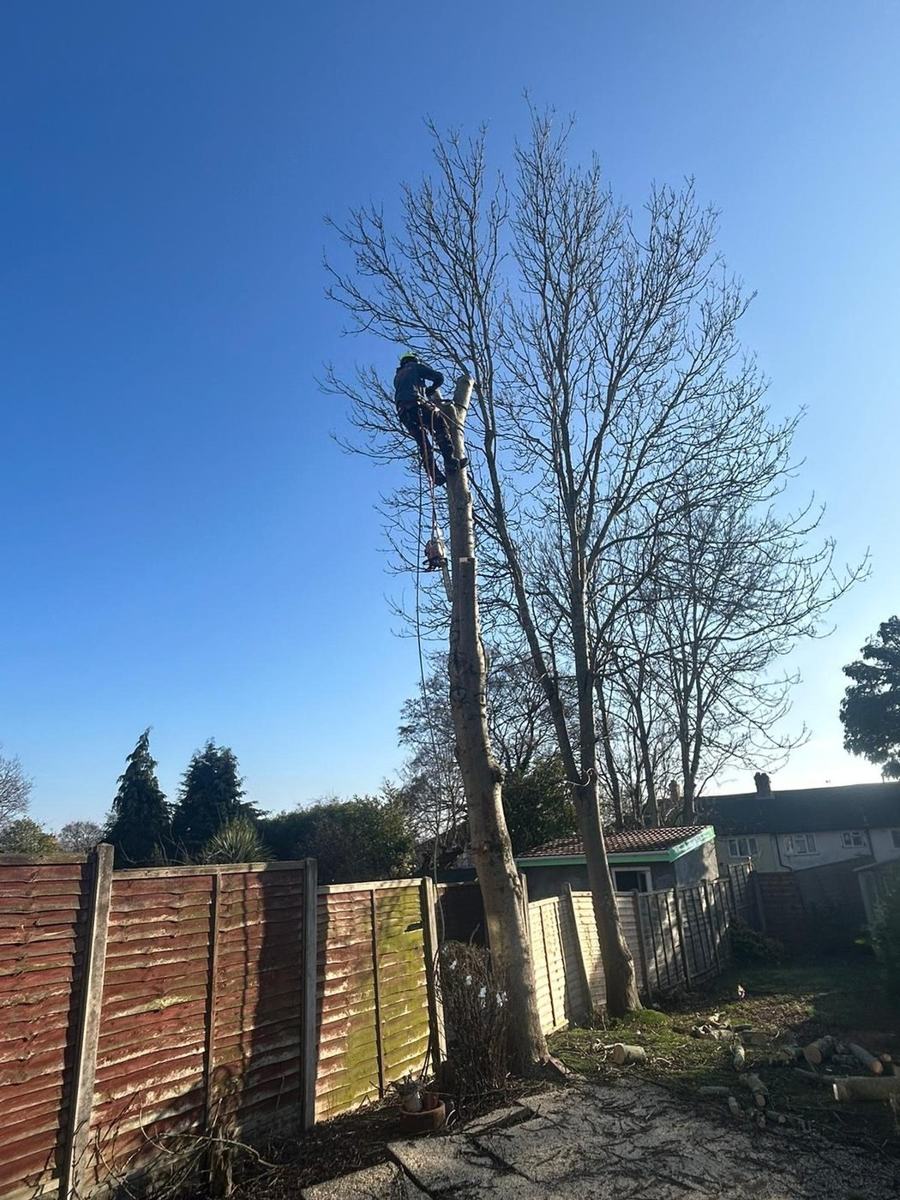
Stourbridge has plenty of period houses and older boundary walls, and a lot of garden trees that have stood long enough to be swallowed by ivy. We remove ivy from brickwork, fences, sheds and trunks across the town, cutting the stems first and taking the growth down once it has died back, so surfaces are left in as good a state as possible.
The ground here is hilly, which affects how we reach and clear a job. We look at the slope, the steps and the route to the waste before we start, then take every cutting away with us when the work is done.
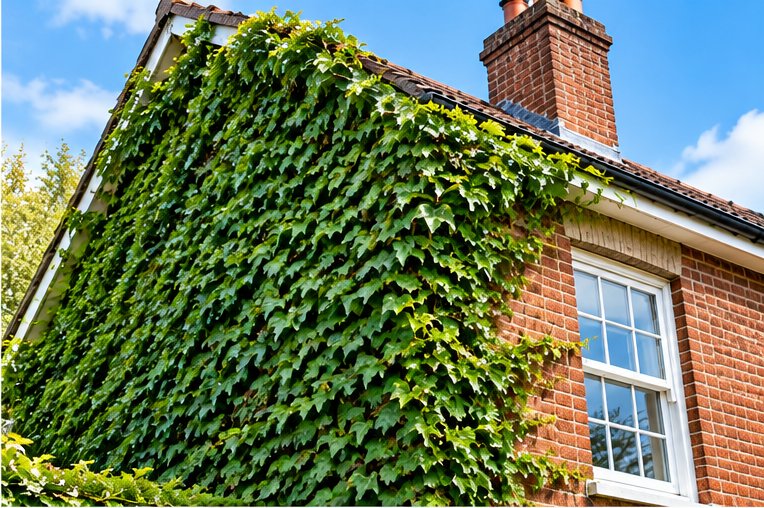
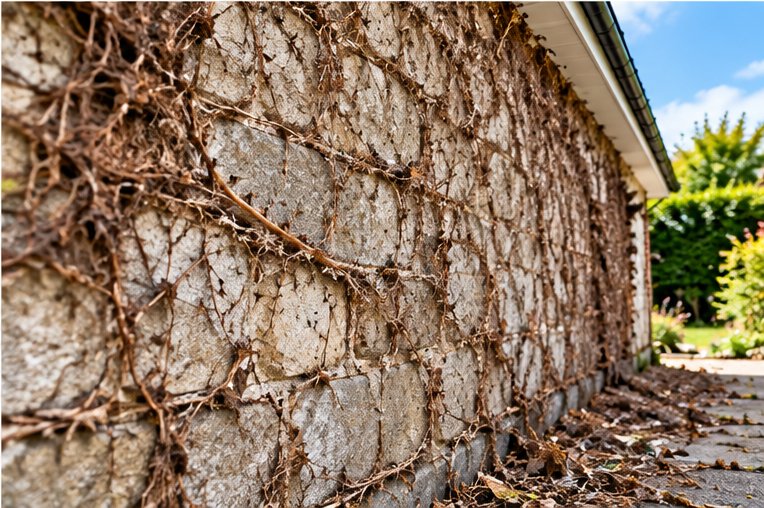
Period houses around Stourbridge often have soft brick and lime mortar, and ivy loves both. The stems push into joints and the little rootlets grip the face of the wall. We start by cutting each main stem at the base, then leave the growth above to die back so it releases far more easily than green ivy would. Cutting low also means we are not working blind against a wall full of live, clinging stems.
When we do take it down, we work slowly from the top. Any rootlets that stay stuck to the masonry are left to weather rather than scraped, because hard scraping takes the face off old brick. Ivy can also hide cracks and loose pointing, so we tell you what we see once the wall is bare and visible, such as a lintel that has cracked or a chimney stack with failing joints.
Mature trees are common in Stourbridge gardens, and ivy on a trunk is a different job from ivy on a wall. We cut a clear band through the stems at the base of the tree so the growth above loses its supply. We do not tear it off the bark, which can damage the tree and tends to leave the trunk looking worse.
Hilly gardens bring their own difficulties. Retaining walls, terraced beds and steep steps all collect ivy, and they are awkward to carry waste across. We plan a route for the cuttings before we begin, work from stable ground, and take everything away so slopes and steps are not left covered in loose leaf and stem. Stepped paths get swept at the end, since wet leaf on stone is slippery underfoot.
Thick ivy is a popular nesting place, and in a leafy part of Stourbridge near canal and hill we check the growth carefully before any cutting begins. If a nest is in use we hold that section back and carry on elsewhere. Once the cover is down, the green waste goes with us rather than staying in your garden. We also cover Amblecote, Pedmore and Wollaston.
Based in Hall Green, so we are never far from the gardens we work in.
We look at the job before we price it, so you know what is involved.
Branches, clippings and rubbish from our jobs are cleared and the garden left tidy.
Call, or send photos on WhatsApp, and we will come back to you.
From our base in Hall Green we work across Birmingham, the Black Country, Solihull and parts of Worcestershire. Choose your area.
Often it is sensible, especially when the growth is heavy enough to hide the trunk or crowd the lower branches. We cut the stems at the base and let the ivy die back on the tree rather than pulling it off the bark.
It can. Stems and rootlets work into soft mortar and weak brick, and the leaves can hold moisture against the surface. Clearing it carefully lets you see the true condition of the wall, and we tell you if anything looks loose.
Yes. We look at the slope and steps beforehand, plan how the cuttings will be moved, and take all the green waste away when we finish. Let us know about narrow paths or uneven ground when you get in touch.
Tell us what needs doing and where. We will get back to you to arrange a visit and a free, no-obligation quote. Photos sent on WhatsApp help.