Why ivy deserves a careful approach
Ivy looks tidy and gives shelter to wildlife, but left alone it can become a heavy mass that hides what is underneath. On brickwork it can push into cracks and loose pointing, on fences it adds weight, and on trees it can crowd the canopy and make a branch harder to assess. It is a very vigorous plant, and its roots grip surfaces tightly. Tearing it off while it is still green often takes mortar, paint or bark with it. A slower, planned removal protects the wall, fence or tree you are trying to clear.
Check for birds and wildlife first
Dense ivy is a popular nesting place, particularly in spring and early summer. Before any cutting, look and listen for birds coming and going, and leave the area alone if there is a nest in use. Disturbing active nests is something to avoid. If you are not sure, wait or ask someone who deals with this regularly. Late summer through to winter is often easier for clearance, though a quick check for nests and roosting animals is still wise. Careful timing is part of doing the job properly.
The cut-first method
The safest approach starts at the bottom. Cut each main stem near ground level, remove a short section so it cannot rejoin, and leave the ivy above to die back. Once the leaves have browned and dried, which can take a number of weeks, the growth is lighter and looser. Then work carefully from the top down, easing the dead stems away rather than yanking them. Take your time with clinging roots, because forcing them off can mark the surface. Dispose of the cuttings properly, as ivy stems can re-root in damp ground.
- Wear gloves, long sleeves and eye protection when cutting.
- Cut stems at the base and remove a gap in each one.
- Wait for the foliage to die back before pulling anything away.
- Keep roots from regrowing by digging out or repeatedly cutting new shoots.
Walls, fences and sheds
On sound brickwork, the sticky aerial roots can often be brushed away once dead, though marks may remain for a while. On older walls with soft mortar, ivy may be holding things together or hiding damage, so go gently and look closely as it comes off. Fences and sheds are usually easier, but the weight of old ivy can loosen panels and posts. Once it is clear, you can see whether repairs are needed. In many Victorian terraces and older boundaries around Birmingham, the wall behind the ivy deserves a proper look.
Ivy on trees
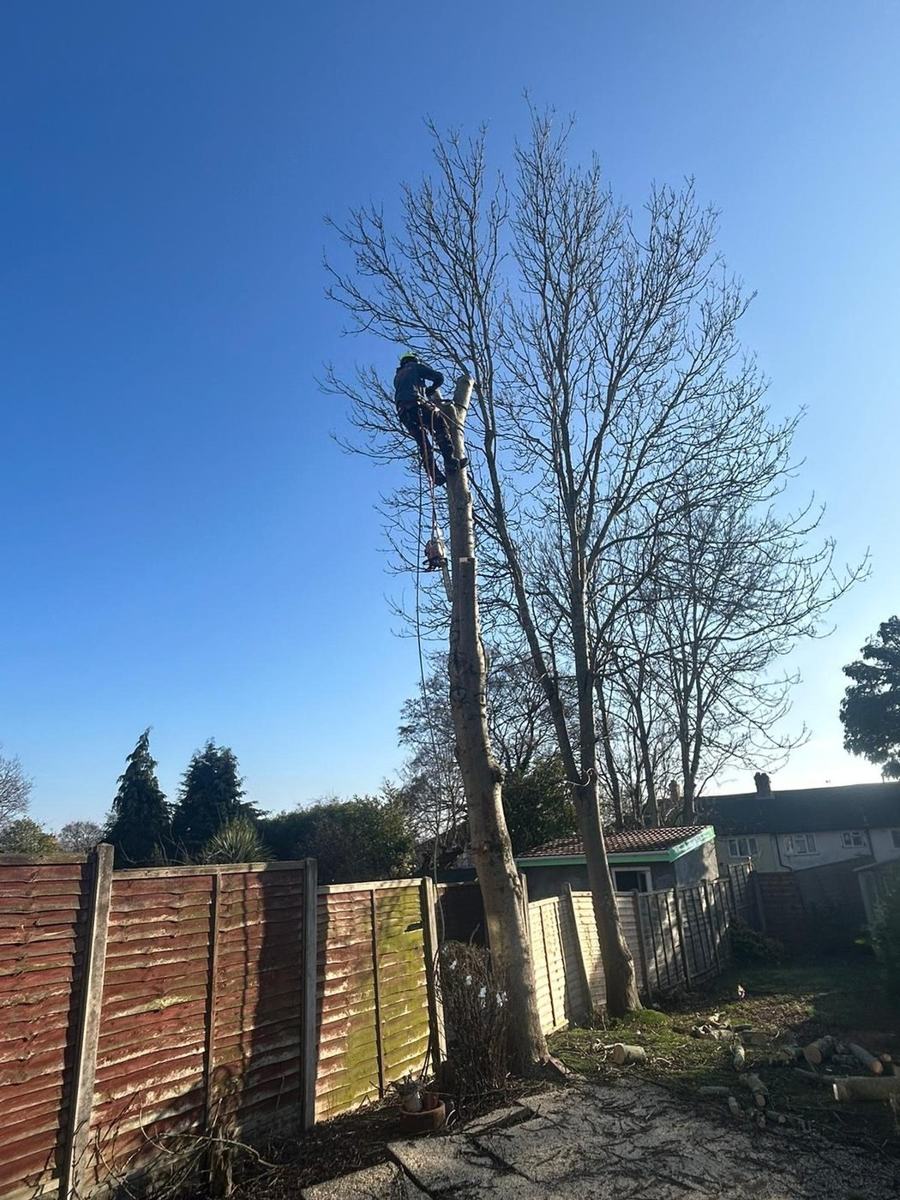
Ivy on a tree trunk is not always harmful, but a thick growth in the canopy can add weight and wind resistance and hide dead wood or weak unions. Cutting the stems at the base is the usual answer, and the ivy above will die back over time without needing to be pulled from the branches. Do not climb or use ladders to work on tall trees. If the tree is large, close to buildings or hard to reach, leave it to a professional. Also check whether the tree is protected by a Tree Preservation Order or lies in a conservation area, which the local council can confirm.
When to call us
Small patches on a low fence are a reasonable weekend job. Large areas, tall walls, ivy tangled with gutters or roof edges, and anything involving big trees are better handled by people with the right equipment and a safe way to work at height. We cut ivy back, clear it from walls, fences, outbuildings and trees, check for nesting birds, and take the green waste away. The most reliable way to understand the job is for us to see it, so get in touch and we will talk through what is involved.
Want it looked at properly?
Tell us what you have and we will arrange to visit, explain what is needed and give you a free, no-obligation quote. See our ivy removal page, or send us photos on WhatsApp.
Common Questions
Will ivy damage my brick wall?
On sound, well pointed brickwork it often does little harm, but it can work into cracks, loose mortar and failing render and make existing problems worse. It also hides defects. Removing it lets you see the true condition of the wall, which is worth doing before deciding whether repairs are needed.
Can I just pull the ivy off?
It is better not to. Green ivy grips firmly and can take mortar, paint or bark with it. Cut the stems at the base first, leave the growth to die back, then remove it gently. This takes patience but leaves surfaces in much better condition.
Will cutting the base kill the ivy?
It kills the growth above the cut, but the roots in the ground can send up new shoots. Digging out as much root as you can, and cutting back any regrowth promptly, keeps it under control. Persistent patches may need repeated attention over a season or two.
Is it all right to remove ivy in spring?
Take care, because birds often nest in ivy from spring into summer. Check for nests before cutting, and leave any in use alone. Autumn and winter are usually easier on wildlife. If you are unsure what you are looking at, ask us to look first.