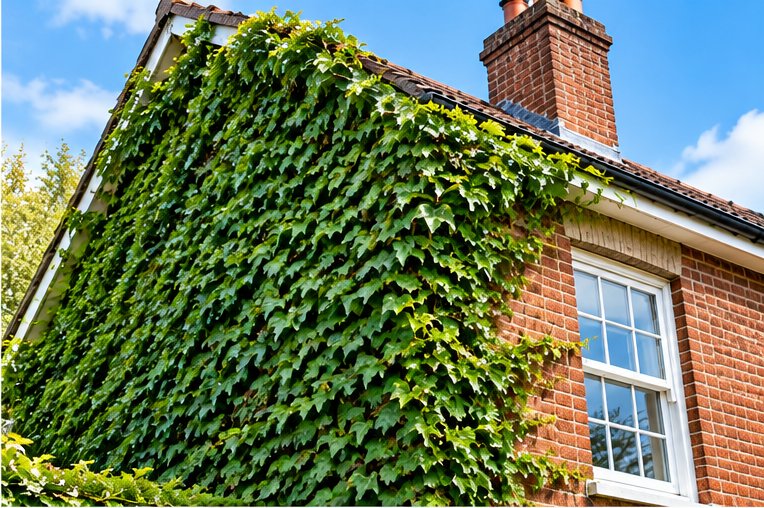
A bit of ivy on an Oldbury garden wall can turn into a thick green wall of its own if it is left alone. Terraces, inter-war semis and estate gardens across B68 and B69 all get it. We cut it back to the base, remove it from walls, fences and trees, and clear up so the garden is usable again.
We also deal with gardens where ivy has been allowed to run for some time. A bank of heavy growth, or a boundary that has vanished under leaves, is not a problem; it simply means we work in stages and take more waste away. First we find the stems, then we work outwards from there.
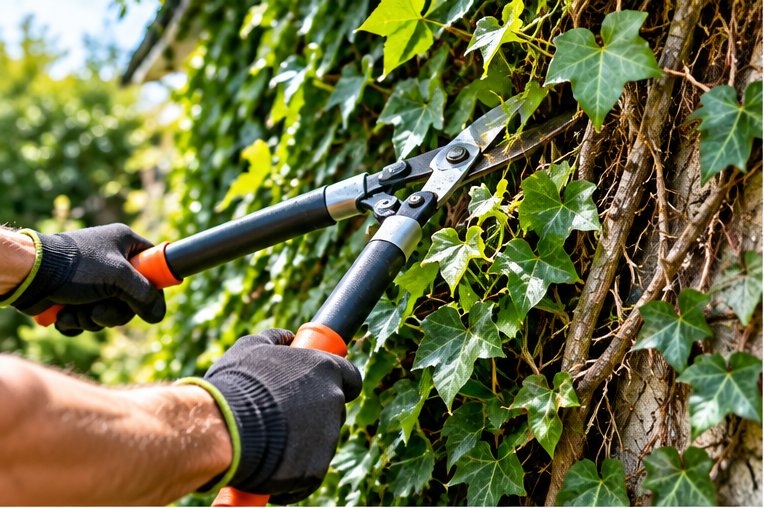
When ivy has taken over a whole corner, the first job is finding where it comes from. In an Oldbury garden the stems can trace back to a few thick trunks at the base of a wall or tree. Cutting those through stops the plant feeding everything above, and the leaves then wither. After that the clearing becomes far more manageable. It also shows what the ivy has been hiding at ground level.
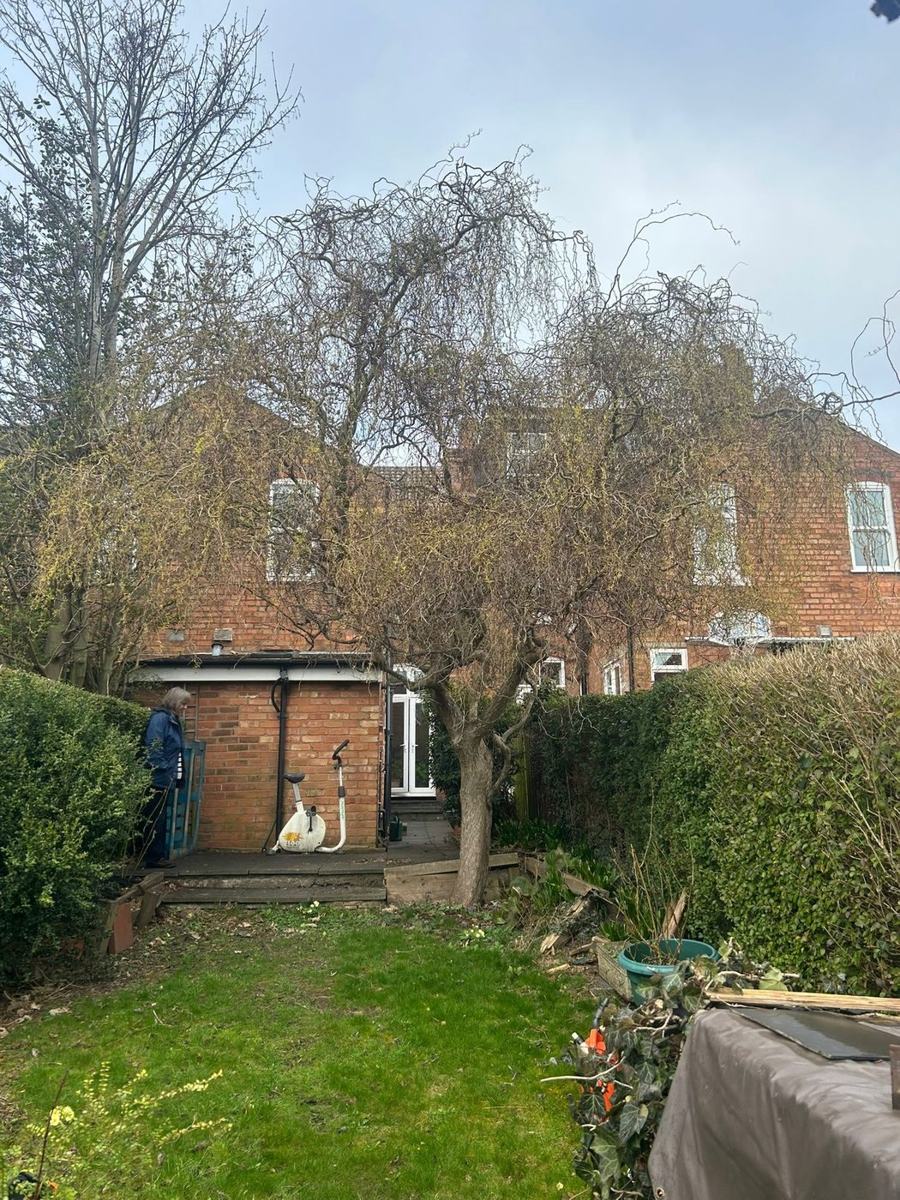
Mixed gardens with a bit of everything, from a shed and a washing line to a garden wall and a couple of trees, are common here. We work around what you want to keep, protect plants we can protect and clear the rest. A short list from you at the start of what stays and what goes makes the job quicker and the result better.
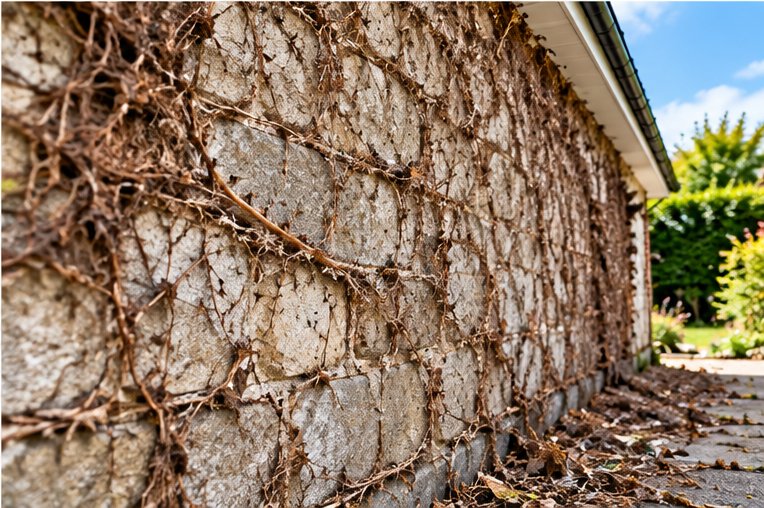
Older Oldbury terraces can have brick rear walls and low boundary walls with ivy running along the top. Left alone, the stems push into the coping and the gaps between bricks, and the weight pulls at the structure. We cut the stems at the base, wait for the leaves to brown, then pull the growth off in sections, taking care with the top course. Loose copings are pointed out.
Timber is treated differently from brick. Fences and sheds can be softened by damp trapped under ivy, so we go gently and avoid levering at weak boards. If a panel or a section of cladding comes away in our hands, you will hear about it straight away. Sometimes the ivy really is holding a rotten panel upright, and we say so. That helps you decide whether it needs replacing.
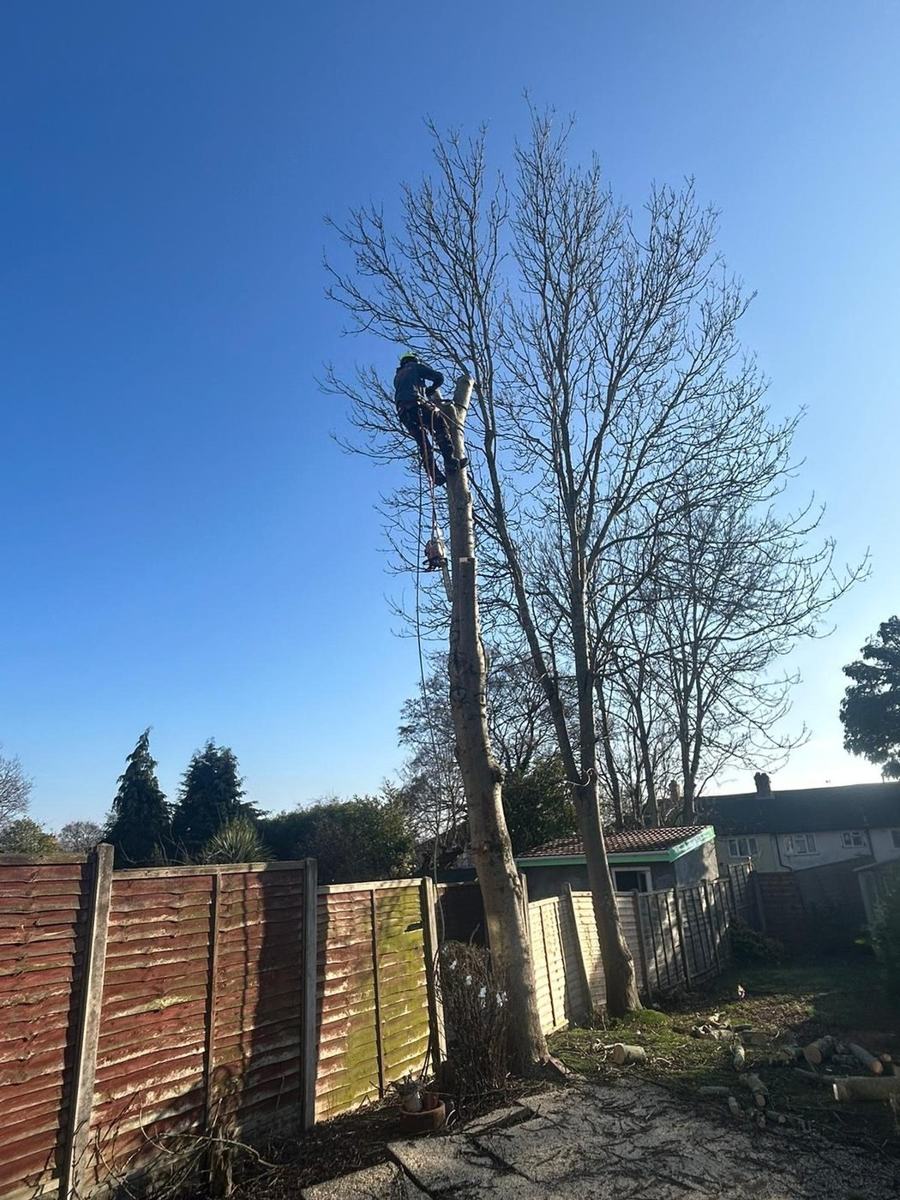
Warley Woods is close by, and some Oldbury gardens carry a mature tree or two with ivy on the trunk. We cut a gap at the base and leave the higher growth to die back, as pulling it down can damage bark. Nests are checked for first. A tree with ivy removed is easier to assess. We also cover Smethwick and Langley, and the cut ivy is taken away.
Based in Hall Green, so we are never far from the gardens we work in.
We look at the job before we price it, so you know what is involved.
Branches, clippings and rubbish from our jobs are cleared and the garden left tidy.
Call, or send photos on WhatsApp, and we will come back to you.
From our base in Hall Green we work across Birmingham, the Black Country, Solihull and parts of Worcestershire. Choose your area.
We start at the base, finding and cutting the main stems, then clear the loose growth that comes away freely. Thick matted areas are worked in sections, with waste bagged and removed as we go. If we find hidden hazards such as rotten timber or loose bricks, we flag them.
Ivy does not usually cause damp by itself, but it can hold moisture against a wall, block airflow and push roots into cracks that let water in. On an older terrace with weak pointing, removing it lets the wall dry out and lets you see what condition the brickwork is really in.
Yes, as long as it is done gently. We cut through the stems at the base, which cuts the ivy off from the soil, and we leave the upper growth to die back rather than tearing it down. That avoids stripping bark and snapping small branches.
Tell us what needs doing and where. We will get back to you to arrange a visit and a free, no-obligation quote. Photos sent on WhatsApp help.