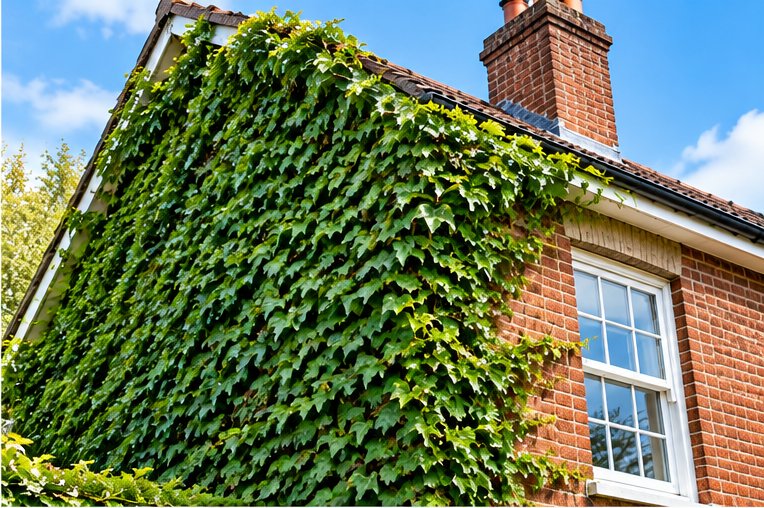
Walsall's mix of terraces, inter-war semis and later estates means ivy shows up in very different places: a front wall one week, a tall garden tree or a rotting fence the next. We cut it back and remove it from walls, fences, outbuildings and trees, always starting at the base of the stems.
Because mature trees are common in gardens here, a good share of our ivy work is on trunks and boundary planting as well as brickwork. Whatever the surface, the green waste leaves with us and the area is swept before we go.
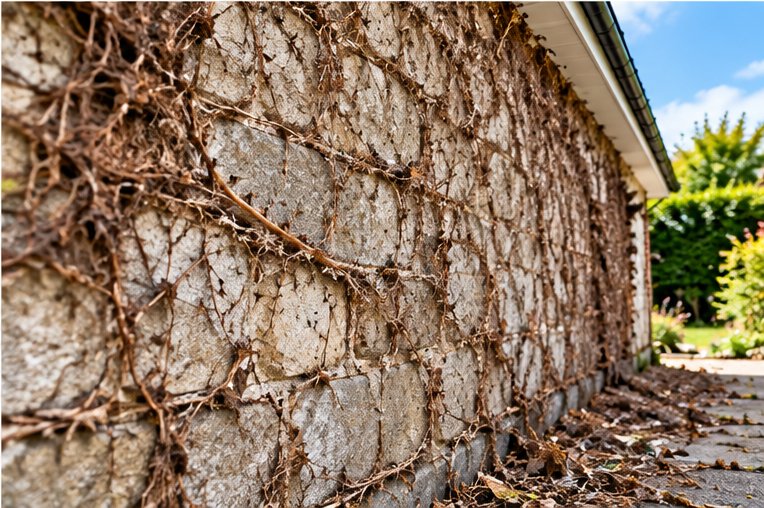
The sequence matters more than speed. First we locate the main stems and cut them close to the ground, taking out a section so the top growth is cut off from its roots and can no longer feed. We use hand tools and take care not to nick the wall or the bark. Then the ivy is left to die back, which can take a while depending on the season, and only after that do we come back to remove it from the surface.
Dry, brittle ivy lifts away far more cleanly than green stems that are still gripping hard. For a Walsall semi with original pebbledash or a painted front wall, that means far less chance of flaking, tearing or lifting the surface of the render or leaving bare patches. It is slower on paper but kinder to the house. Where a mat of ivy has grown over a downpipe, we free that first so water runs properly again.
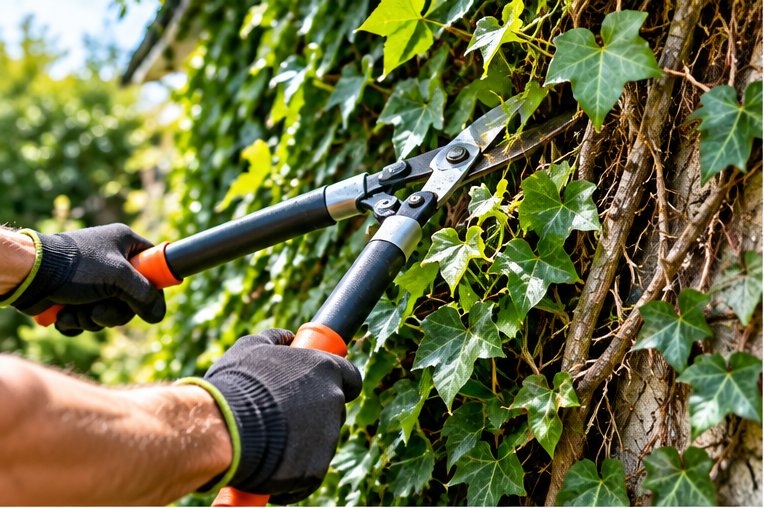
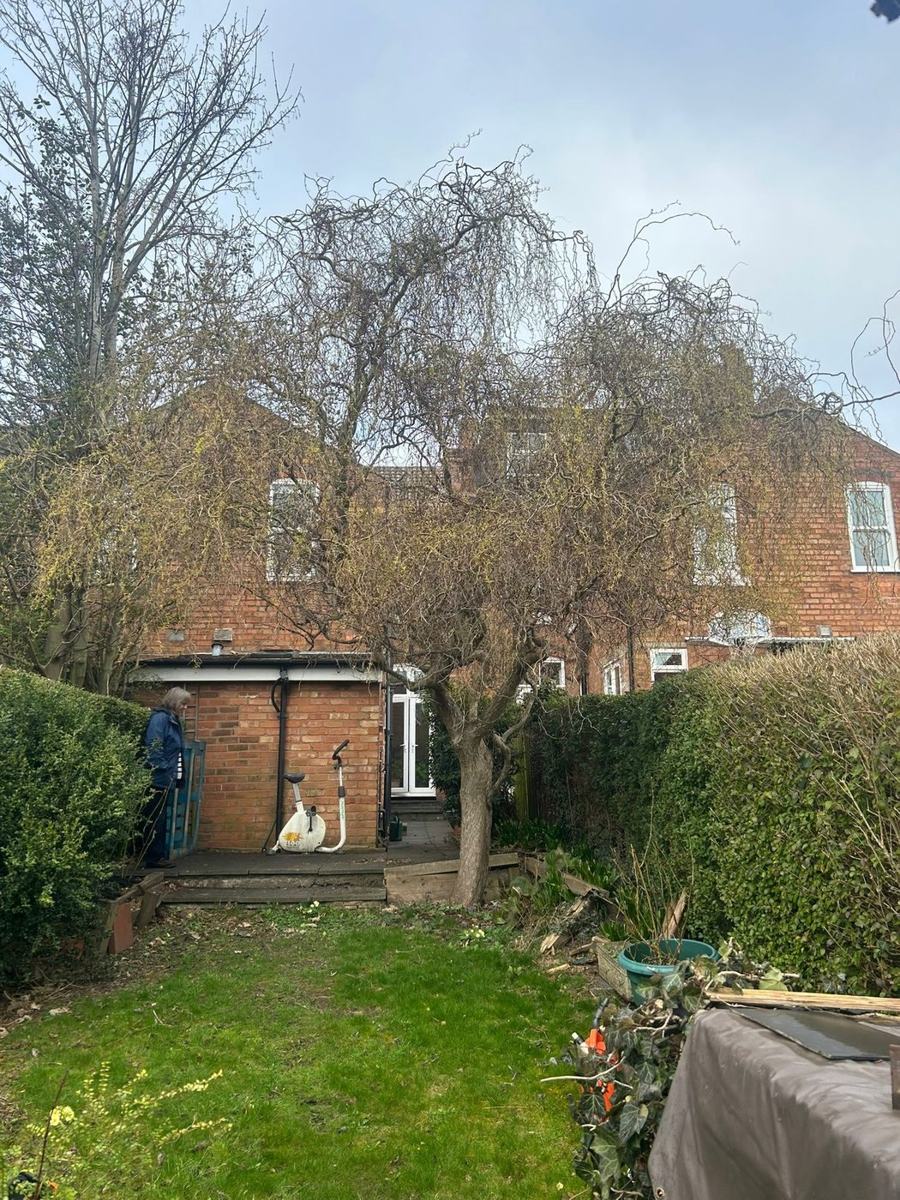
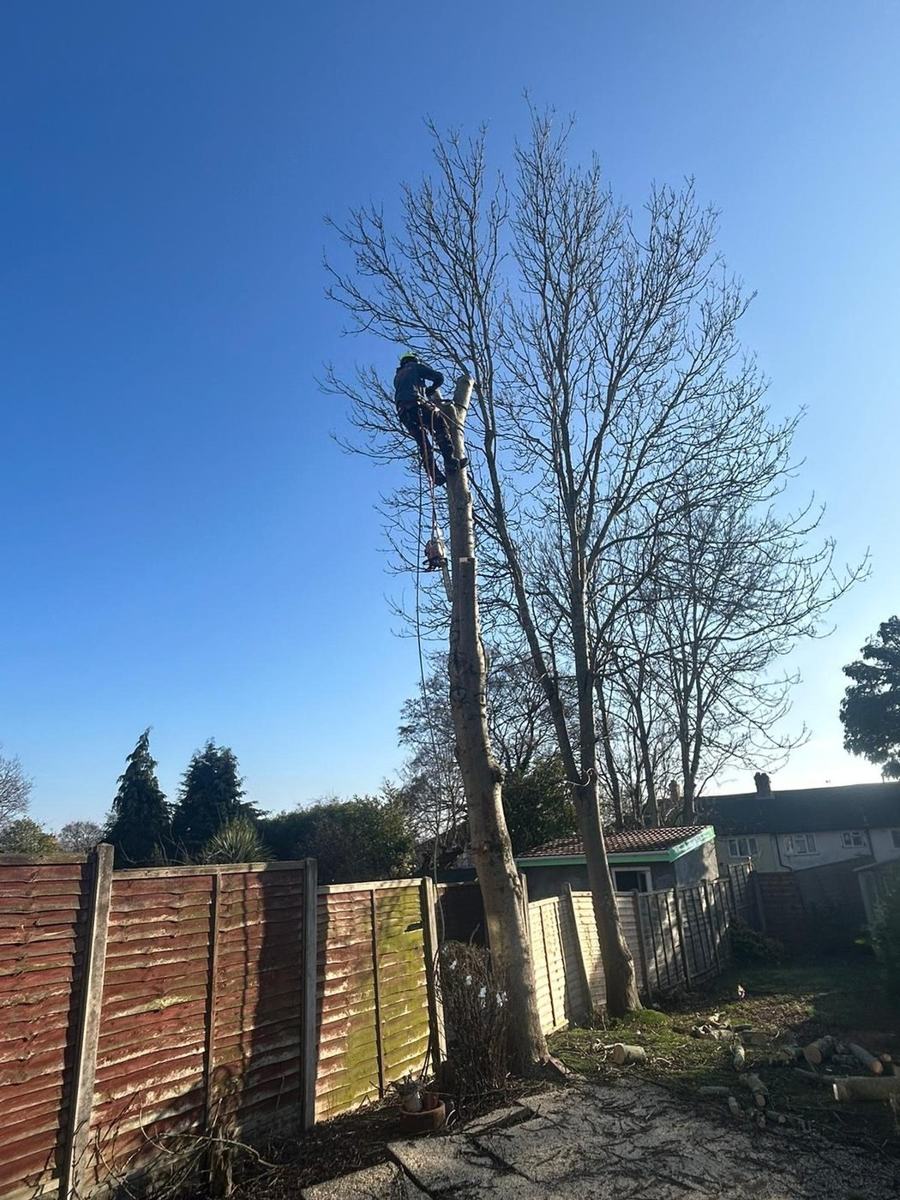
Plenty of Walsall gardens have an old tree or two, and ivy climbs them readily. On a Walsall garden tree we cut a clean gap through the stems at the base so the ivy above no longer feeds. We leave the bark alone, since peeling living ivy off a trunk can scar it and does nothing for the tree. Ivy that has climbed into the lower branches is cut at the base and the dead growth reached from the ground is cleared.
Ivy also loves a tired boundary hedge or a leylandii screen, and it can make the underlying plants look sparse. We deal with it gradually, taking out stems at the bottom and removing the loosened growth, so that the hedge or fence is still standing and in better condition once the ivy is gone. A hedge that looks thin afterwards usually recovers once light reaches it again.
Garage walls, sheds and old brick outbuildings in Walsall are often half hidden under ivy, and ivy can disguise damage to roofs, felt and brickwork. When it comes off, we tell you what we see. Before starting we check for nesting birds and wait if a nest is in use. We also cover Bloxwich and Pelsall, and take the green waste away.
Based in Hall Green, so we are never far from the gardens we work in.
We look at the job before we price it, so you know what is involved.
Branches, clippings and rubbish from our jobs are cleared and the garden left tidy.
Call, or send photos on WhatsApp, and we will come back to you.
From our base in Hall Green we work across Birmingham, the Black Country, Solihull and parts of Worcestershire. Choose your area.
Carefully and in stages. We cut the stems at the base, let the ivy die back, then ease it away by hand. Pebbledash can crumble if live ivy is pulled hard, so we stop and take it gently where it is clinging.
No. The leaves above the cut start to wither and the growth loosens over time. That slow die-back is useful because dry ivy comes off a wall or tree with far less force than living stems, so we plan the removal visit for once the leaves have browned.
Yes, usually. We cut the stems at the bottom of the hedge, then remove the loose growth in stages, taking care not to strip the hedge itself. Let us know about any shared sections with neighbours beforehand, and we will only work on what is yours to clear.
Tell us what needs doing and where. We will get back to you to arrange a visit and a free, no-obligation quote. Photos sent on WhatsApp help.