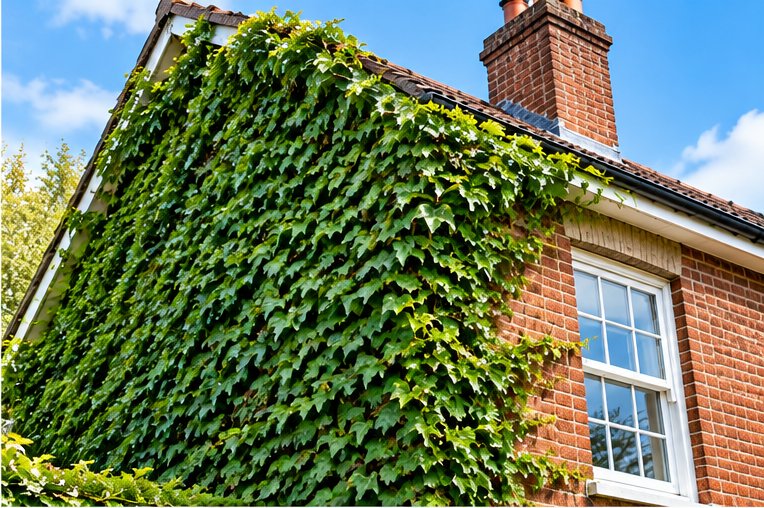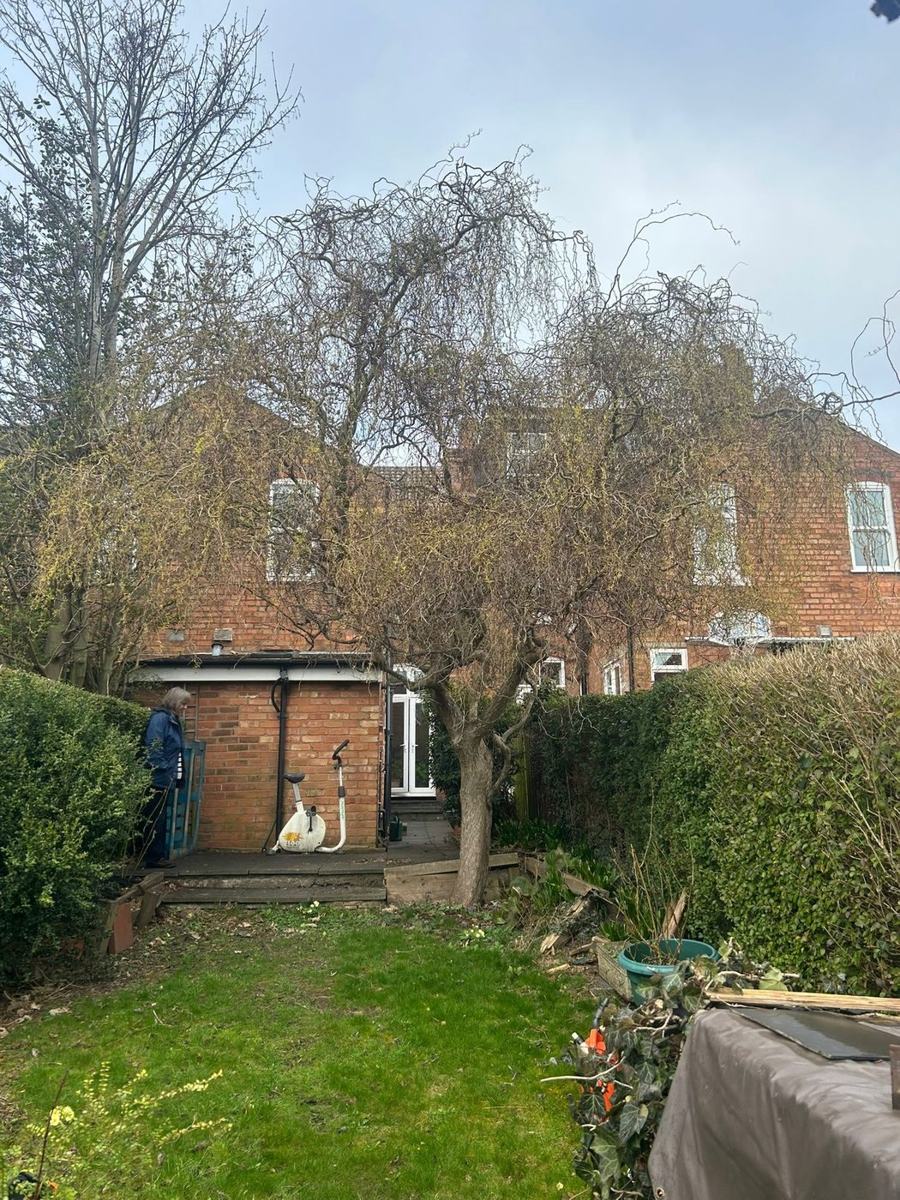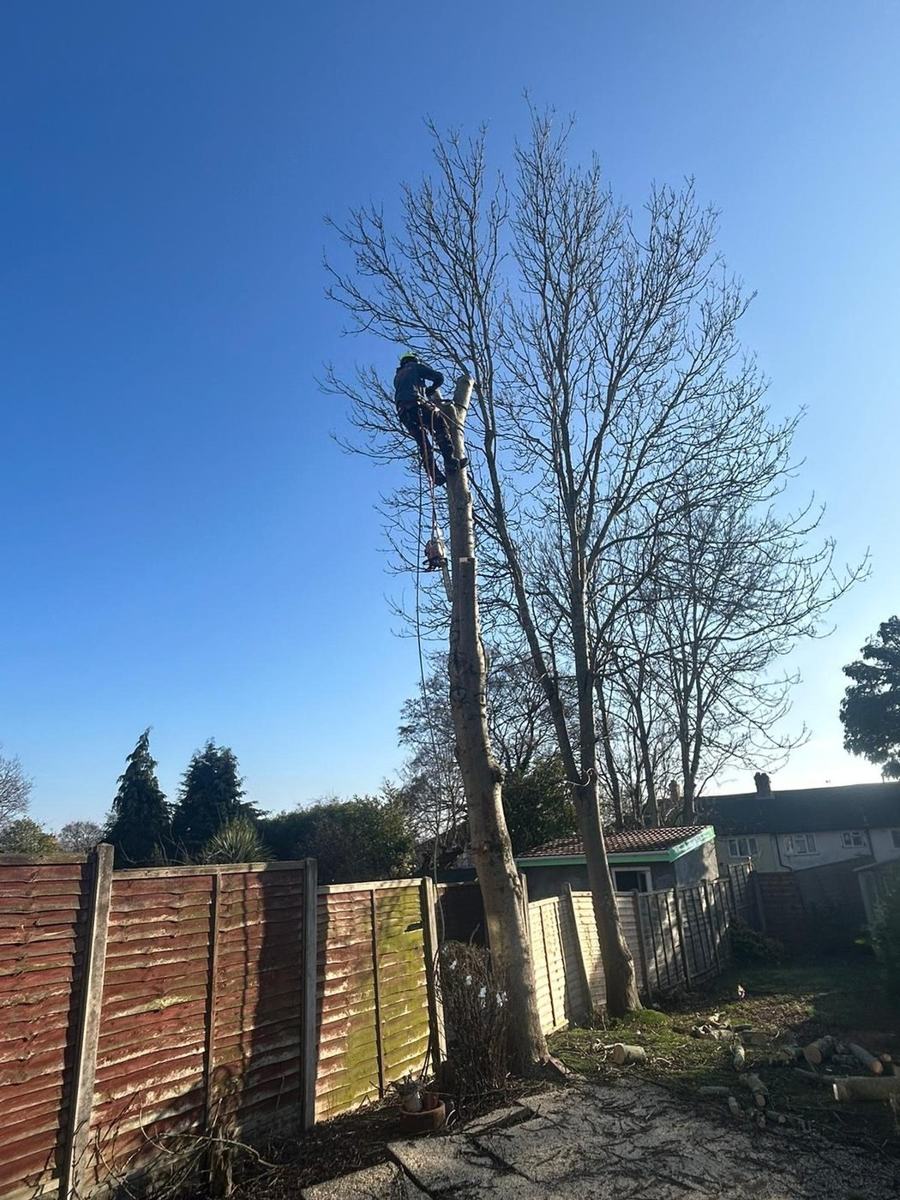
Long back gardens are a feature of Shirley, and the far end is where ivy tends to go unnoticed. By the time it shows over the shed roof or along the back fence it has often built up thick growth. We clear ivy from fences, sheds, hedges and trees across B90, from the house right down to the bottom boundary.
Distance is part of the job. The longer the garden, the more tidying and carrying there is, and we plan for it. Walking the whole garden with you first means nothing is missed, and we can agree which areas matter most before work begins.
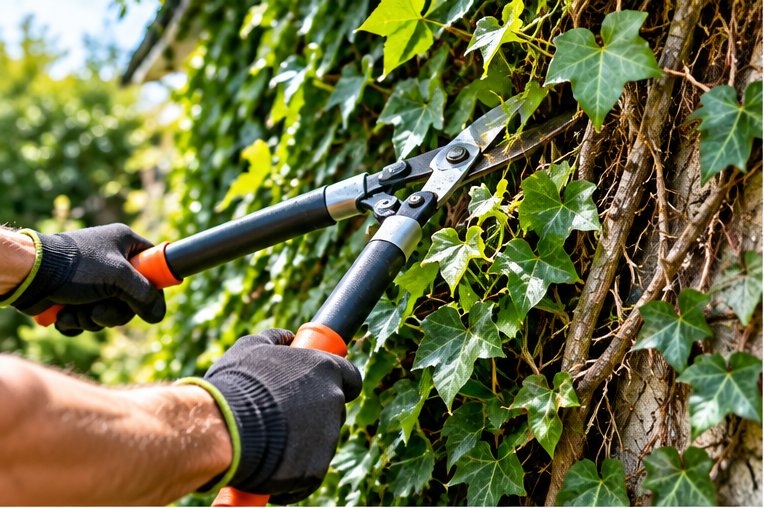
Conifers and hedges often line the back of Shirley gardens, and they hide ivy very effectively. The ivy sits on the inner side of the planting, climbing the fence behind, and you may only notice when it flops over the top. We reach in, cut each stem at the base and separate the ivy from the hedge or fence, working through gaps in the planting. It can be scratchy work.
Behind a dense conifer there may be little room to move, and dead lower branches are common. We take care not to snap or break healthy growth, and we are honest when a conifer is too tight to get behind. Cutting the ivy where we can reach it still stops the plant feeding growth above. Whatever is out of reach is left to die back in place, which is safer than forcing through the branches.
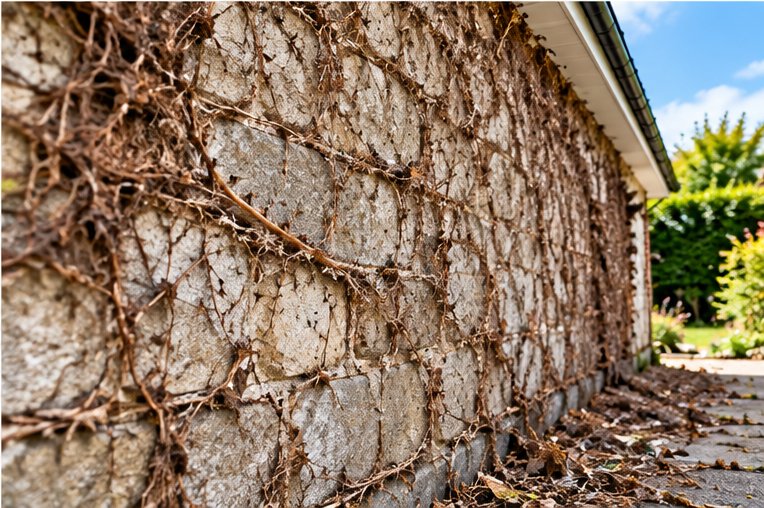
Sheds are where ivy does quiet damage. In Shirley gardens that run a long way back, an old shed or workshop may have ivy over the roof and in under the cladding. We cut it away from the base, wait for the dead leaves to loosen, then peel the stems off the walls and roof, watching for soft or lifted felt. Where felt tears, we tell you straight away.
Not everything is salvageable. If a shed is rotten, ivy may be the only thing holding it together, and removing it could bring the building down. We would rather tell you than risk a collapse. In that case, it is worth deciding whether to repair, rebuild or leave the ivy for now. Shirley's longer gardens give you room to rebuild if it comes to that.
In a long Shirley garden, ivy waste mounts up quickly. We cut, bag and carry it back to the vehicle, so you are not left with sacks at the bottom of the garden. Nesting birds are checked for in hedges and trees beforehand. We also cover Solihull, Hall Green and Monkspath, and we treat every garden size the same way. Shirley Park is close by, though we only work in private gardens.
Based in Hall Green, so we are never far from the gardens we work in.
We look at the job before we price it, so you know what is involved.
Branches, clippings and rubbish from our jobs are cleared and the garden left tidy.
Call, or send photos on WhatsApp, and we will come back to you.
From our base in Hall Green we work across Birmingham, the Black Country, Solihull and parts of Worcestershire. Choose your area.
Yes. We walk the full length with you, cut the ivy at the base and clear what we can reach along the fence, hedge and any outbuildings. Where the planting is too dense to reach safely, we say so and cut the ivy where we can get to it.
A heavy blanket of ivy can weaken a conifer by shading its foliage and adding weight, particularly if the tree is already stressed. Cutting the ivy at the base cuts it off from the soil. Brown patches on a conifer are not always the ivy's fault, so we do not promise to cure them.
Nesting season is the main constraint. Birds nest in ivy from spring into summer, so work in those months is limited to areas we have checked and found clear. Late autumn and winter are simpler for access and birds, but ivy can be cut whenever it is clear of nests.
Tell us what needs doing and where. We will get back to you to arrange a visit and a free, no-obligation quote. Photos sent on WhatsApp help.