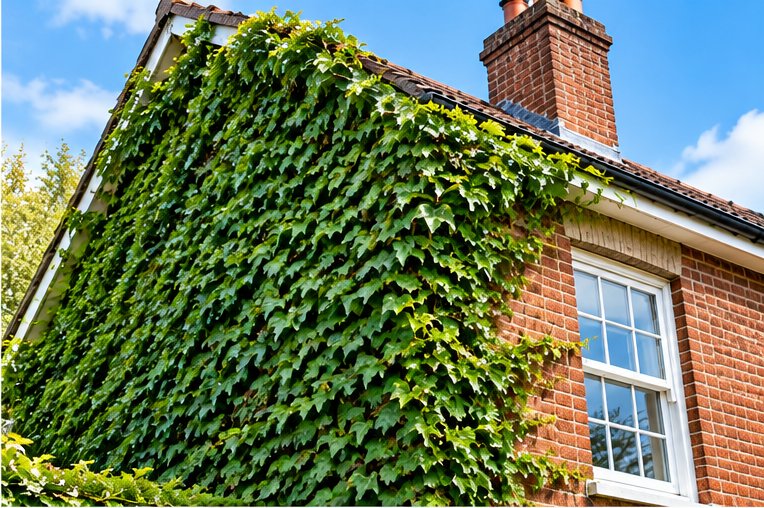
Kings Norton has a mix of older properties near the village green and inter-war homes further out, and ivy grows well on all of them. Older walls need a gentler approach than a modern fence, so we adapt the method to what is underneath. We cut, ease off and clear ivy from walls, outbuildings, fences and trees across B30.
Part of the village centre is a conservation area, which does not stop ivy being removed from a wall or fence but does make care worth taking where trees are involved. We keep the work simple, explain what we plan to do, and leave anything that needs a council check for you to confirm.
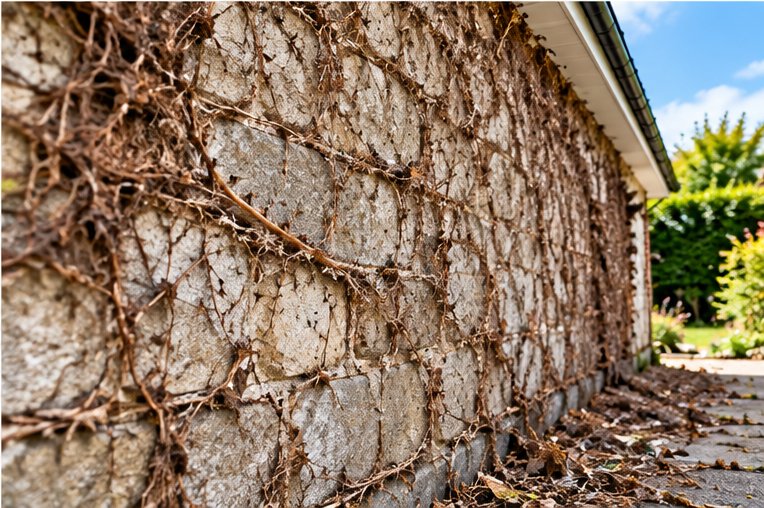
The older the wall, the more carefully ivy has to come off it. Soft brick and aged mortar in Kings Norton can crumble if live stems are torn away, so we cut each stem at the base and wait for the growth above to wither. Dry, brittle ivy lets go of the surface far more readily, and the wall suffers less than it would from a sudden pull.
Sticky roots are the part nobody enjoys. They grip into pores and joints and can stay on the wall long after the stems have gone. We loosen what we safely can with brushes and hand tools and leave the rest, because scrubbing too hard takes the face off old brick. The leftover traces fade as the surface weathers, and we say so up front, so you know what to expect.
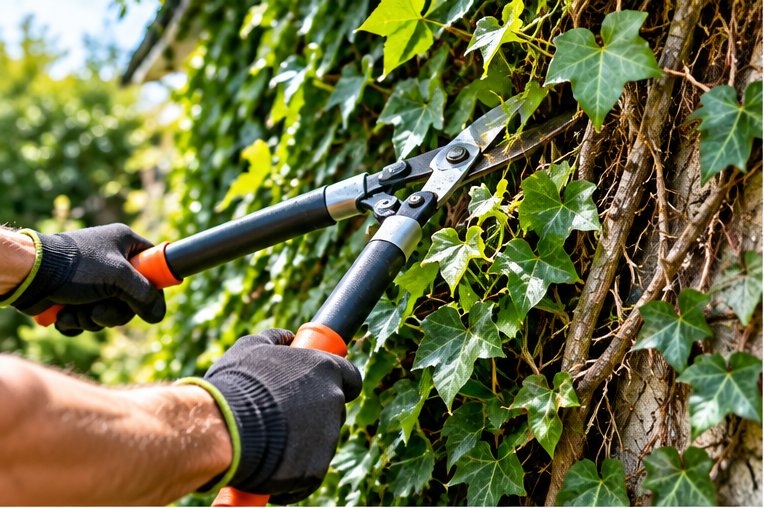
Gardens close to the canal in Kings Norton can be damp and shaded, which suits ivy perfectly. Moist ground keeps the stems vigorous and the leaf cover thick, so growth can be heavy even where the wall looks modest. We deal with the base stems first, wherever the ground allows. Our work stays inside your own boundary and well away from the water's edge. Heavy growth is treated in sections.
Damp also affects what we find. Timber fencing and sheds close to the water can be softer than they look under a blanket of ivy, and we handle them gently and slowly. Wet timber also holds ivy roots tightly. If a board snaps or a panel is clearly past saving, we will show you before going any further, so removal is never confused with repair.
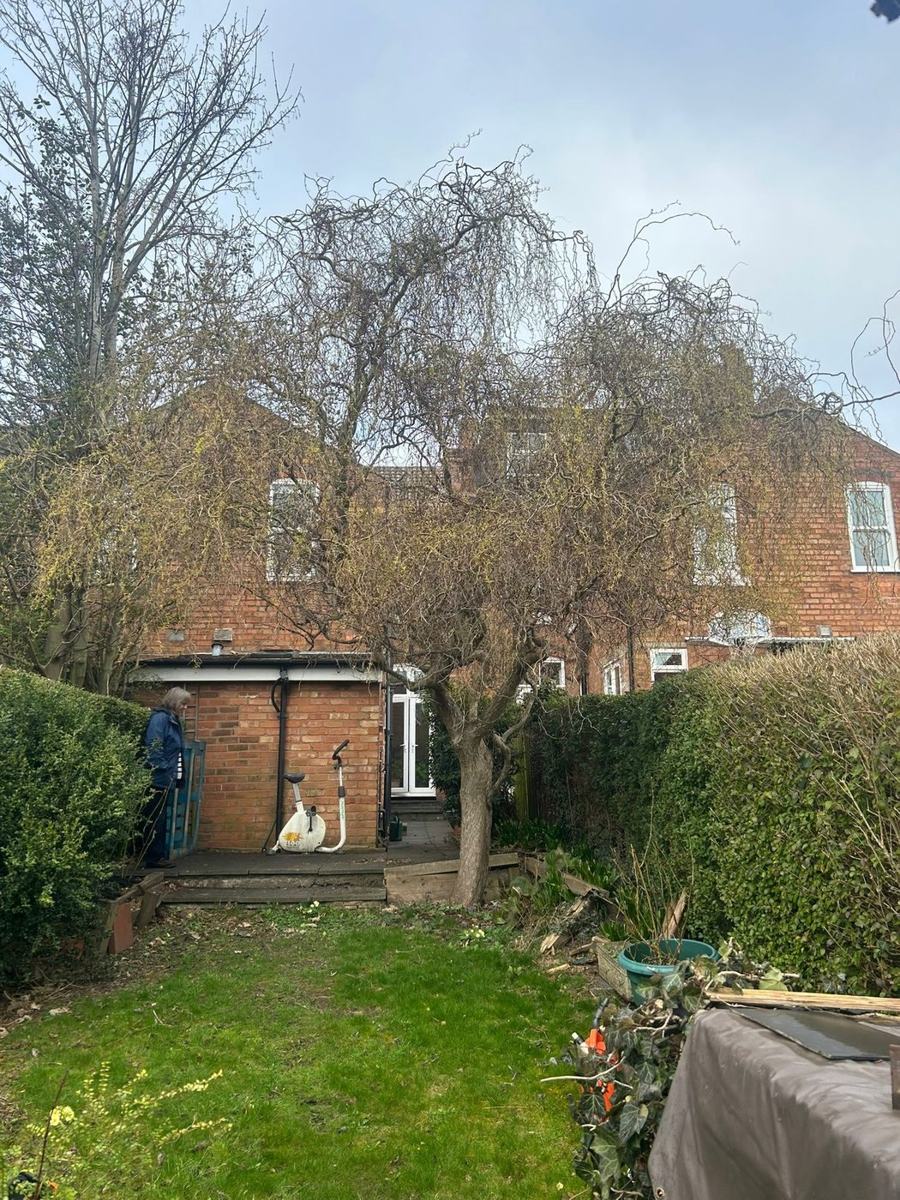
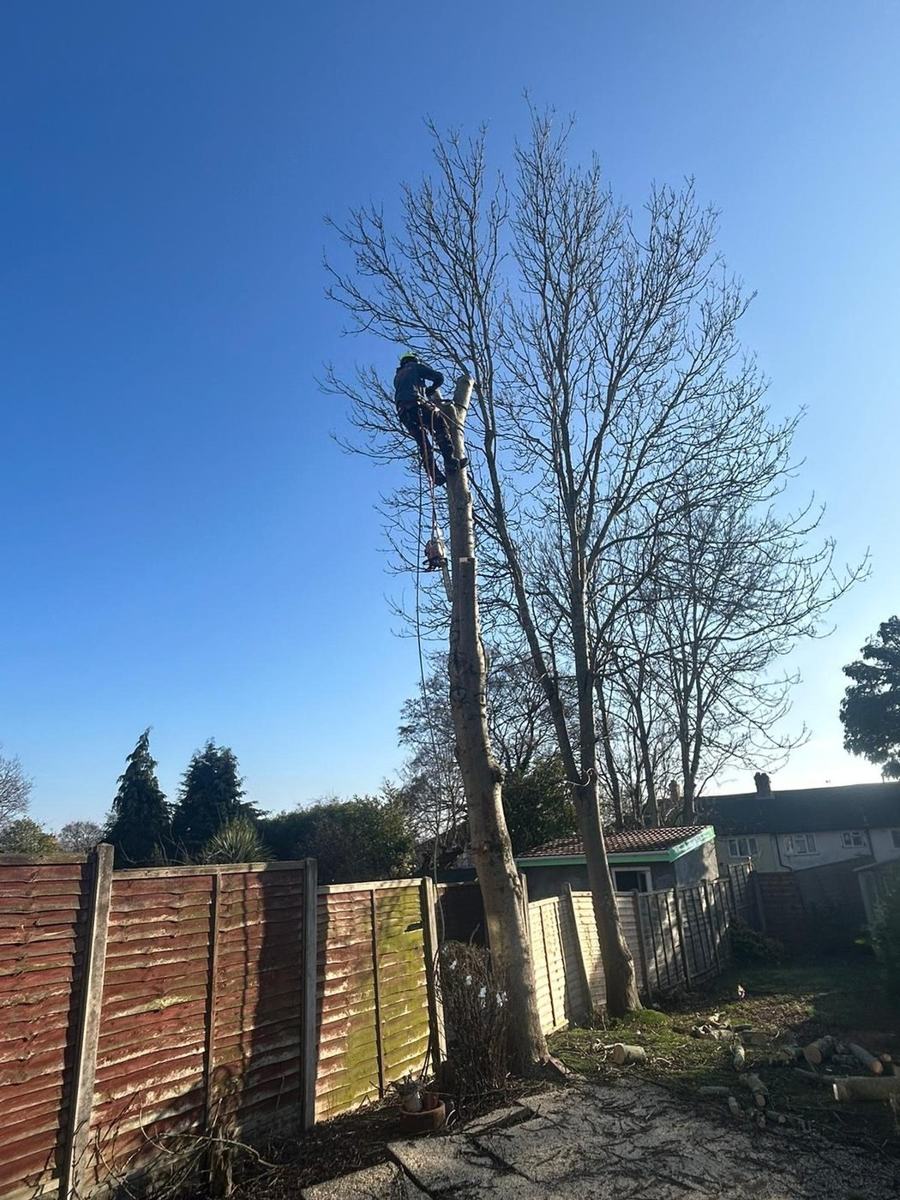
Mature trees are a feature of Kings Norton, and ivy on their trunks is common. We cut the stems at the base to separate the ivy from the soil, then leave the higher growth to die back naturally. We do not haul growth down from the branches. Nesting birds are checked for beforehand. We also cover Cotteridge and Stirchley, and all cut ivy is taken off site.
Based in Hall Green, so we are never far from the gardens we work in.
We look at the job before we price it, so you know what is involved.
Branches, clippings and rubbish from our jobs are cleared and the garden left tidy.
Call, or send photos on WhatsApp, and we will come back to you.
From our base in Hall Green we work across Birmingham, the Black Country, Solihull and parts of Worcestershire. Choose your area.
Taking ivy off your own wall or fence normally does not. Work on trees is different, because trees in a conservation area can need notice to the council before they are cut. Cutting ivy stems at the base of a tree is much lighter than tree surgery, but if you are unsure, ask the council first.
The rootlets push into tiny pores and cracks in the brick. When the ivy dies they dry out and stay behind as brown or grey fuzz. Brushing shifts most of it, but some traces can remain until the wall weathers or is cleaned. We would rather leave a mark than scrape the face off the brick.
Yes, if the shed is within your boundary and we can reach it from your garden. We cut the stems at the base, let the growth die back and ease it away from the walls and roof felt. We do not work from the towpath or on the canal side of the boundary.
Tell us what needs doing and where. We will get back to you to arrange a visit and a free, no-obligation quote. Photos sent on WhatsApp help.