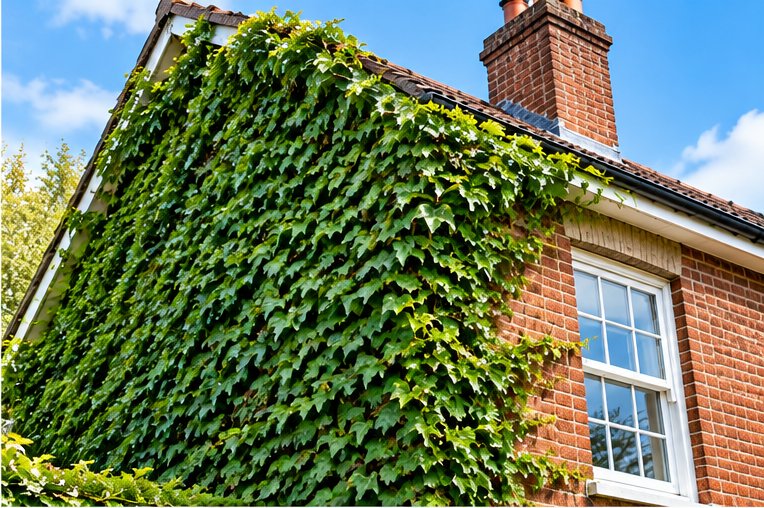
Older terraces and inter-war housing make up much of West Bromwich, and ivy is a familiar sight on both: climbing a gable end, covering a back wall, or wrapping the trunk of a garden tree. We take it off brick, render, fences, sheds and trunks, and we start every job by cutting the stems at the base.
Medium gardens give us room to work, but we still keep the area tidy as we go. Cut ivy is bagged or loaded as we clear it, and the lot leaves with us at the end of the job.
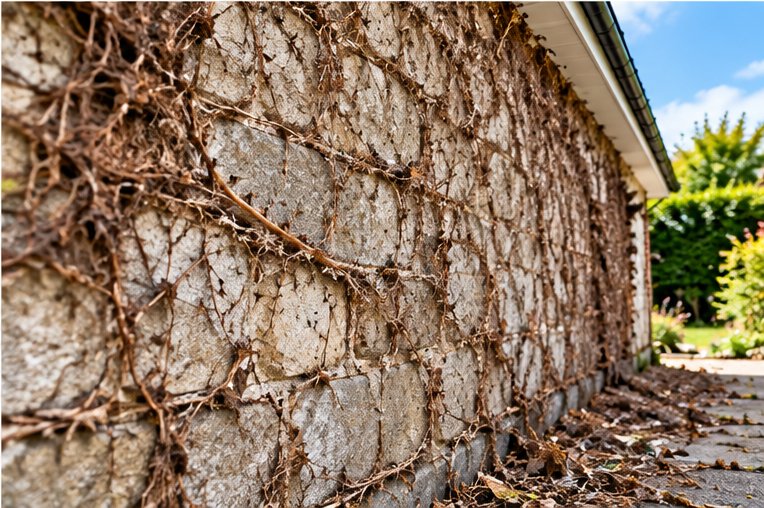
If you pull healthy ivy off a wall, you pull the wall with it. That is why the cut comes first. We take out a short length of every main stem low down, so nothing above is fed, and the ivy starts to die. This is quiet, hand-tool work, and it also shows where each stem enters the wall. Waiting lets the stems shrivel and the rootlets lose their strong grip on the surface.
Older West Bromwich terraces often have soft brick and lime mortar. After the die-back, we lift the dry ivy away by hand, working from the top and not dragging stems across the face. Small sticky roots that stay on the masonry are left to weather, not scrubbed, which protects the finish. Window frames and sills get the same patient handling, since ivy likes to creep behind them.
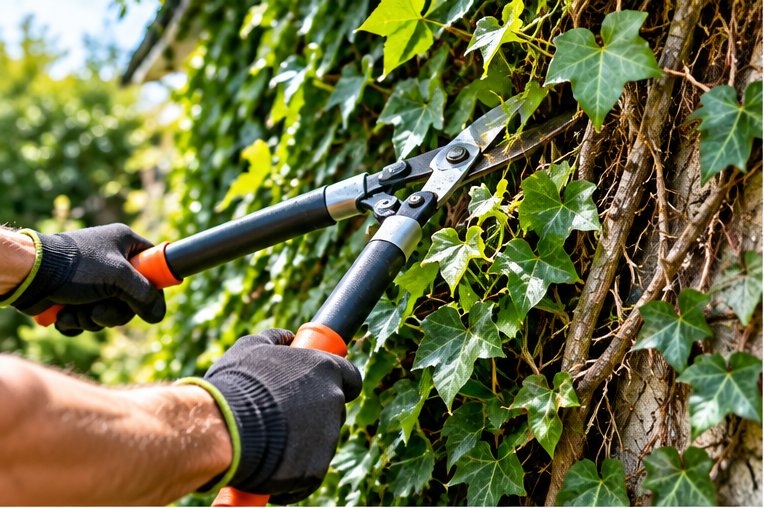
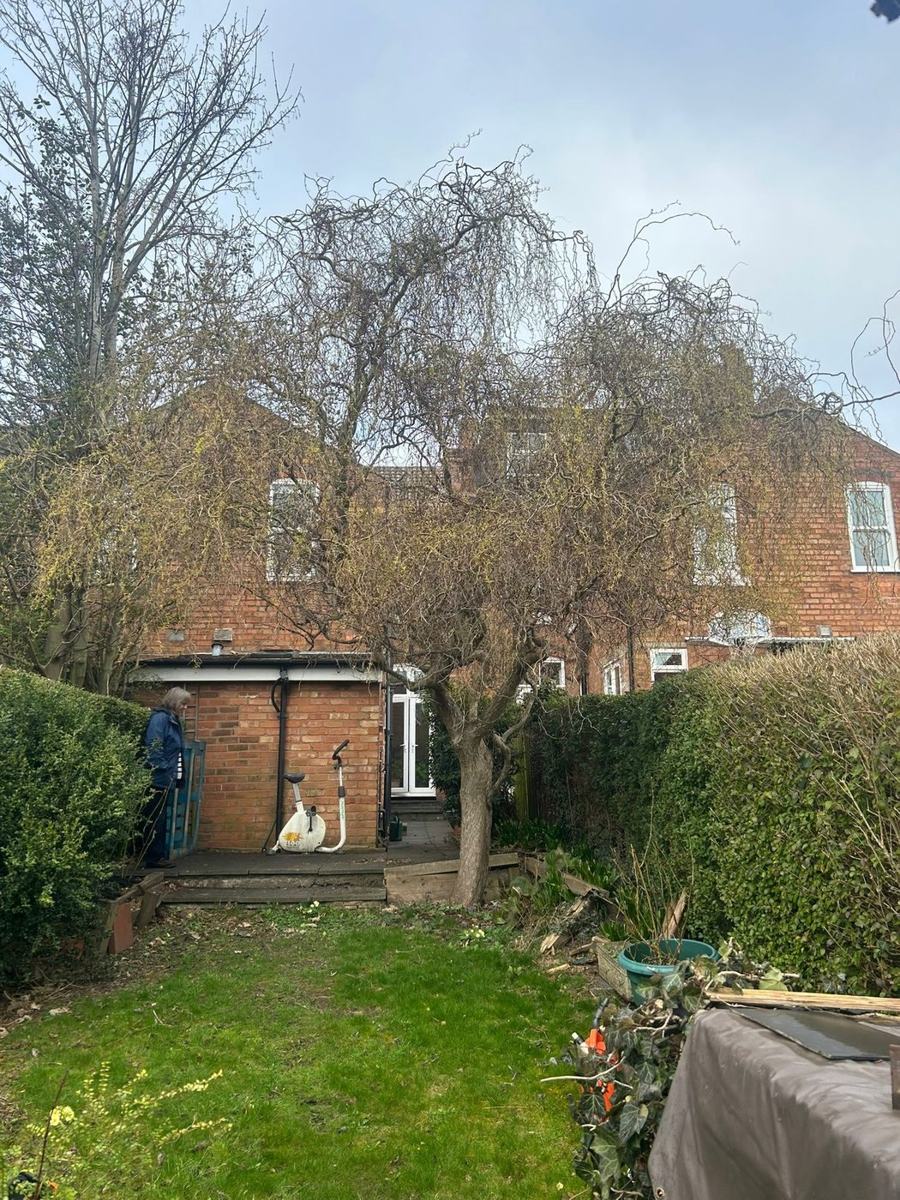
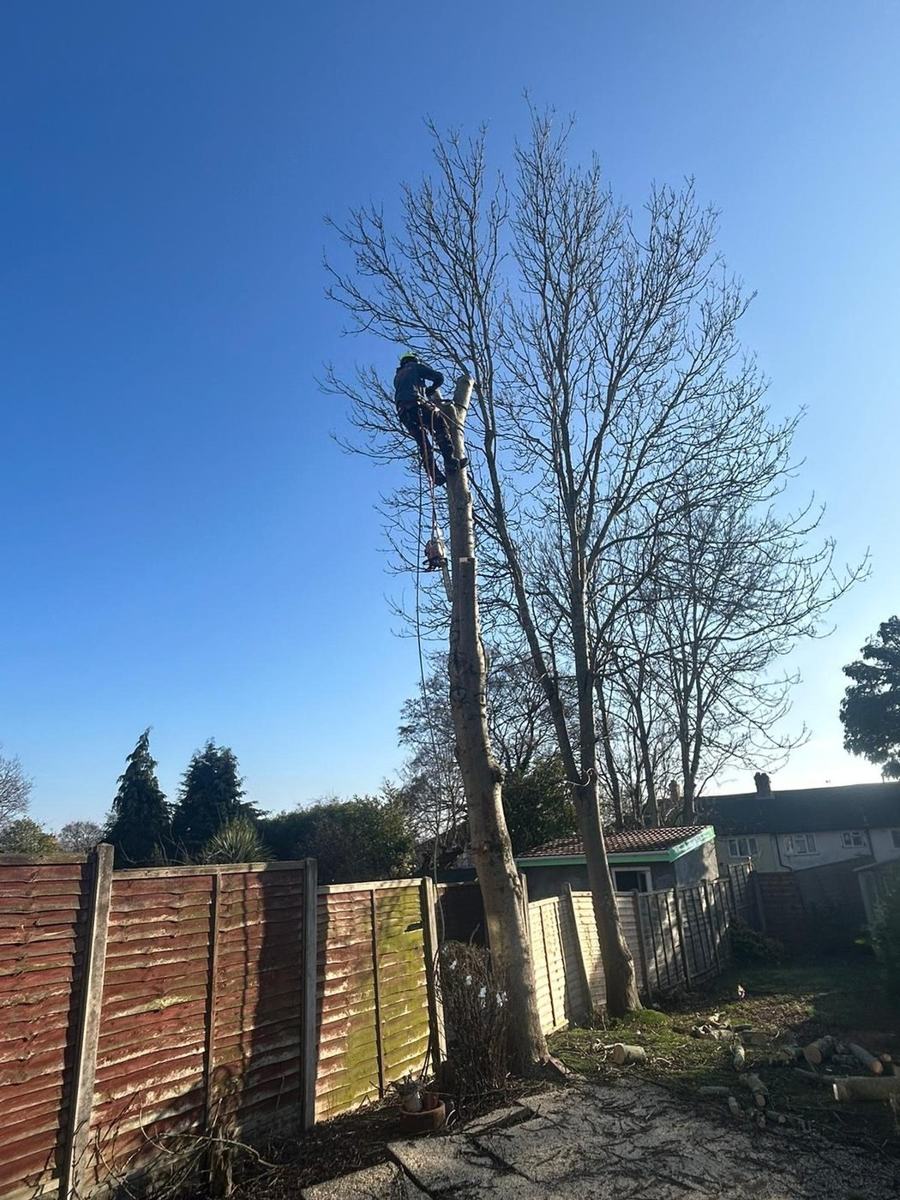
Some West Bromwich gardens have well-grown trees, particularly the larger plots on the inter-war roads, and those can carry a lot of ivy. We cut through the stems at the foot of the trunk and leave the ivy above to die. The bark is not stripped, since pulling live growth can tear it. The dead stems can then be cleared from the lower part of the tree by hand, and anything out of safe reach is left to drop in its own time.
Heavy ivy on a trunk hides the bark and can make it difficult to spot problems such as splits or dead branches. Once it is gone, you can see the tree properly, and if we notice anything worrying we will say so and suggest it is looked at by a tree specialist, which may well be us if it needs cutting back.
Ivy loves a gable end or a garage wall in West Bromwich, because nobody looks at them closely. We clear these surfaces just as carefully, checking roofs, guttering and felt as they appear. Before work starts we check for nesting birds and leave any active nest. We also cover Oldbury and Great Barr, and remove the green waste.
Based in Hall Green, so we are never far from the gardens we work in.
We look at the job before we price it, so you know what is involved.
Branches, clippings and rubbish from our jobs are cleared and the garden left tidy.
Call, or send photos on WhatsApp, and we will come back to you.
From our base in Hall Green we work across Birmingham, the Black Country, Solihull and parts of Worcestershire. Choose your area.
We cannot promise zero marks on old brick, but the die-back method keeps them to a minimum. We cut the stems, let the growth dry, then lift it away by hand without scraping the surface, and tell you about any loose pointing.
Those are the aerial rootlets that ivy uses to grip. They stay behind after the stems are gone and can take time to fade. We avoid hard scraping, because that removes the face of the brick, and a faint mark weathers off far better than a scar.
Cutting through the stems at the base is simple enough, but taking away the dead growth safely can be harder, especially higher up. We can do the whole job, check the growth for nesting birds first, and clear away the waste for you.
Tell us what needs doing and where. We will get back to you to arrange a visit and a free, no-obligation quote. Photos sent on WhatsApp help.