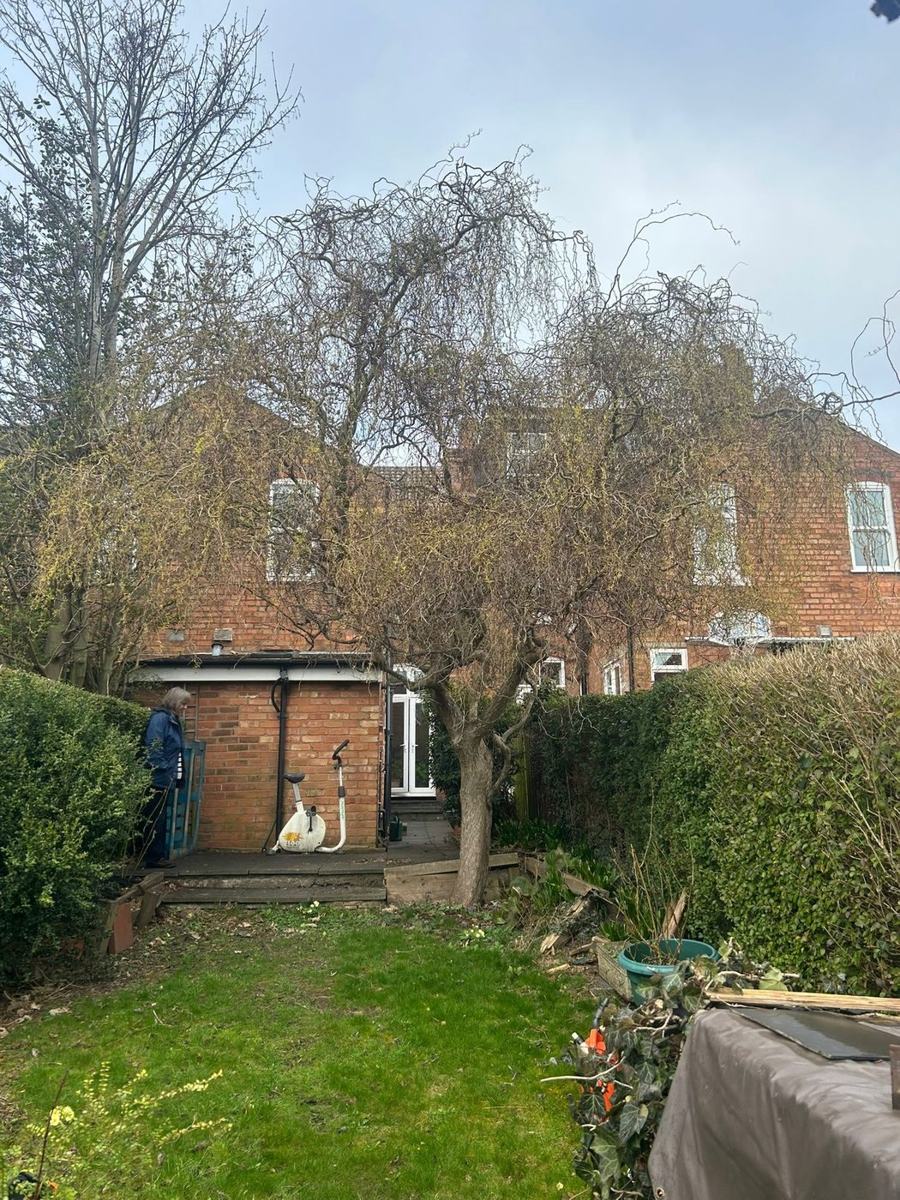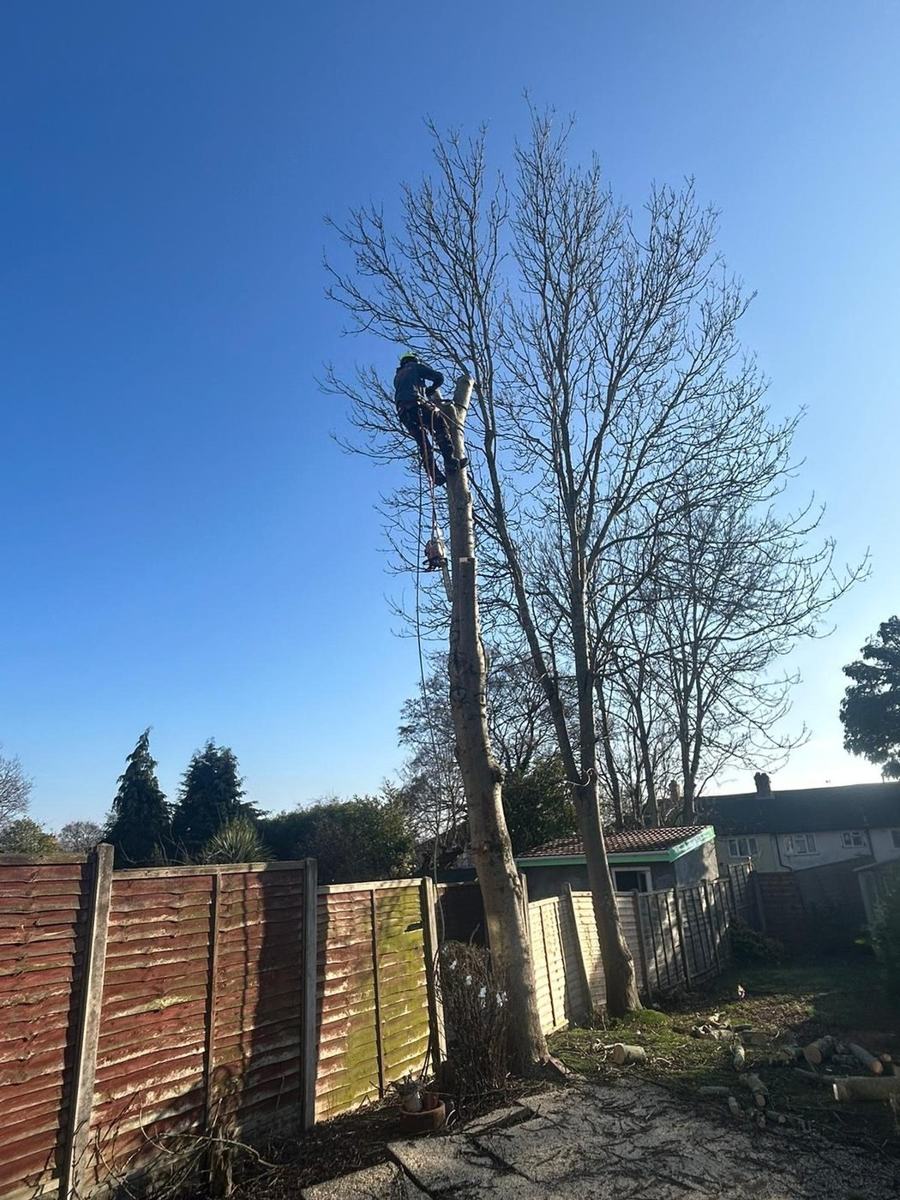
Terraces and 20th century estates make up most of Willenhall, and the gardens behind them are small to medium, which is where ivy does its quiet damage. It climbs the back wall, weighs down the fence and swallows the shed. We remove it carefully, beginning by cutting the stems at the base.
The aim is a clear wall or fence with the surface intact. We keep the work tidy in tight spaces, and all the cut ivy leaves with us as green waste, so you are not left to deal with a pile.
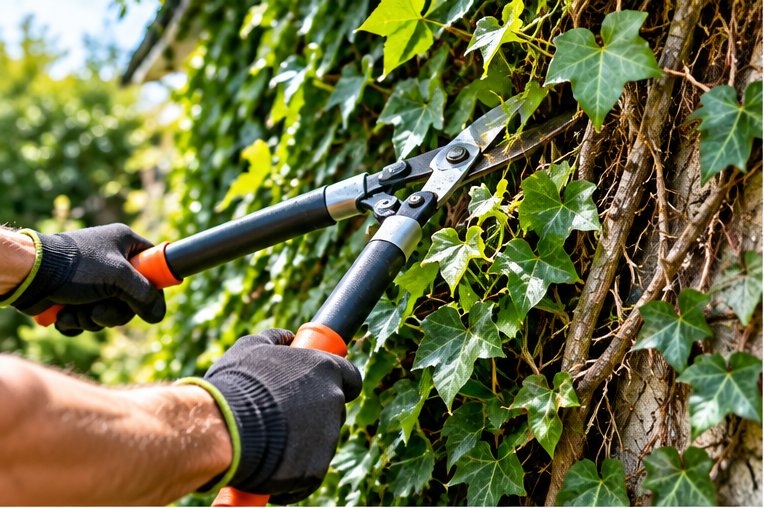
Small gardens leave little room to manoeuvre, and ivy gets into the corners where a wall meets a fence or a shed sits tight to the boundary. We cut the stems wherever they come out of the ground, even if that means working in a narrow gap behind a shed or water butt, then clear the growth above once it has died back.
Working in that way avoids the scramble of tearing live ivy out of a confined space. It also means fewer broken fence panels and less debris flung across your lawn. In a Willenhall back garden where every square metre counts, a tidy approach matters as much as the cutting itself, so we work in sections and clear each one before moving on.
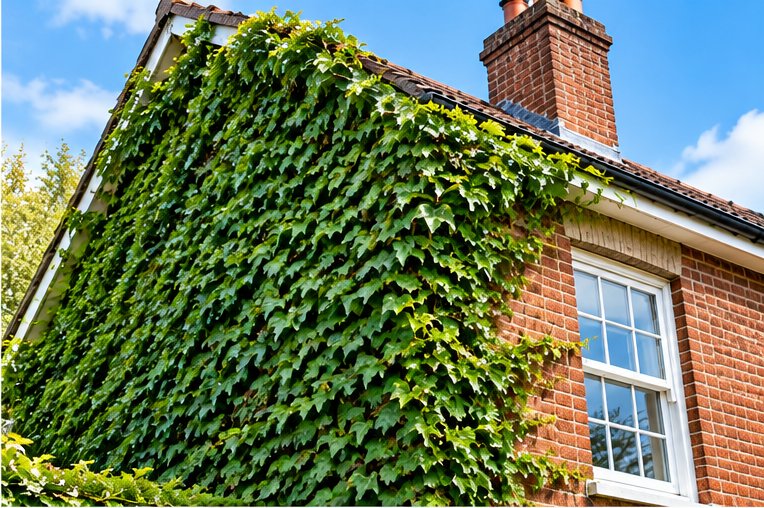
Brick walls under ivy stay damp, and the rootlets can bed into worn mortar. Pointing can look sound under a green blanket while being held in place largely by ivy root, and that only becomes obvious when the cover comes off. After the die-back, we take the ivy down gently so we do not drag out more mortar than the roots have already loosened. Older Willenhall brick is often soft, so we keep pressure low.
If a wall looks weak once exposed, we say so and explain what we can see. We do not do that kind of repair, but you will at least know about loose bricks or open joints before a wet winter finds them first. Bare brick also dries out far faster, which helps the wall in the long run and stops moss taking over in its place.
Garden sheds and timber fences in Willenhall suffer when ivy sits on them, because it holds water against the wood and lifts felt at the edges. We free them in the same order, cutting first and clearing later. Before starting, we check for nesting birds and leave an active nest untouched. We also cover Short Heath and Darlaston, and take the waste away.
Based in Hall Green, so we are never far from the gardens we work in.
We look at the job before we price it, so you know what is involved.
Branches, clippings and rubbish from our jobs are cleared and the garden left tidy.
Call, or send photos on WhatsApp, and we will come back to you.
From our base in Hall Green we work across Birmingham, the Black Country, Solihull and parts of Worcestershire. Choose your area.
Yes. We cut the stems at the base, wait for the growth to die back, then take it off the boards and roof carefully. Felt and thin timber tear easily, so we never pull living stems off them.
Sometimes it contributes, because rootlets work into worn mortar and the leaves keep the wall damp. Often the pointing was already tired. Once the ivy is off, we tell you what we see so you can decide on repairs.
Yes. We bag or load the ivy as we work, take all of it away, and sweep the path, patio or lawn edge. In a small garden, a pile of cuttings would take up half the space, so we do not leave one.
Tell us what needs doing and where. We will get back to you to arrange a visit and a free, no-obligation quote. Photos sent on WhatsApp help.