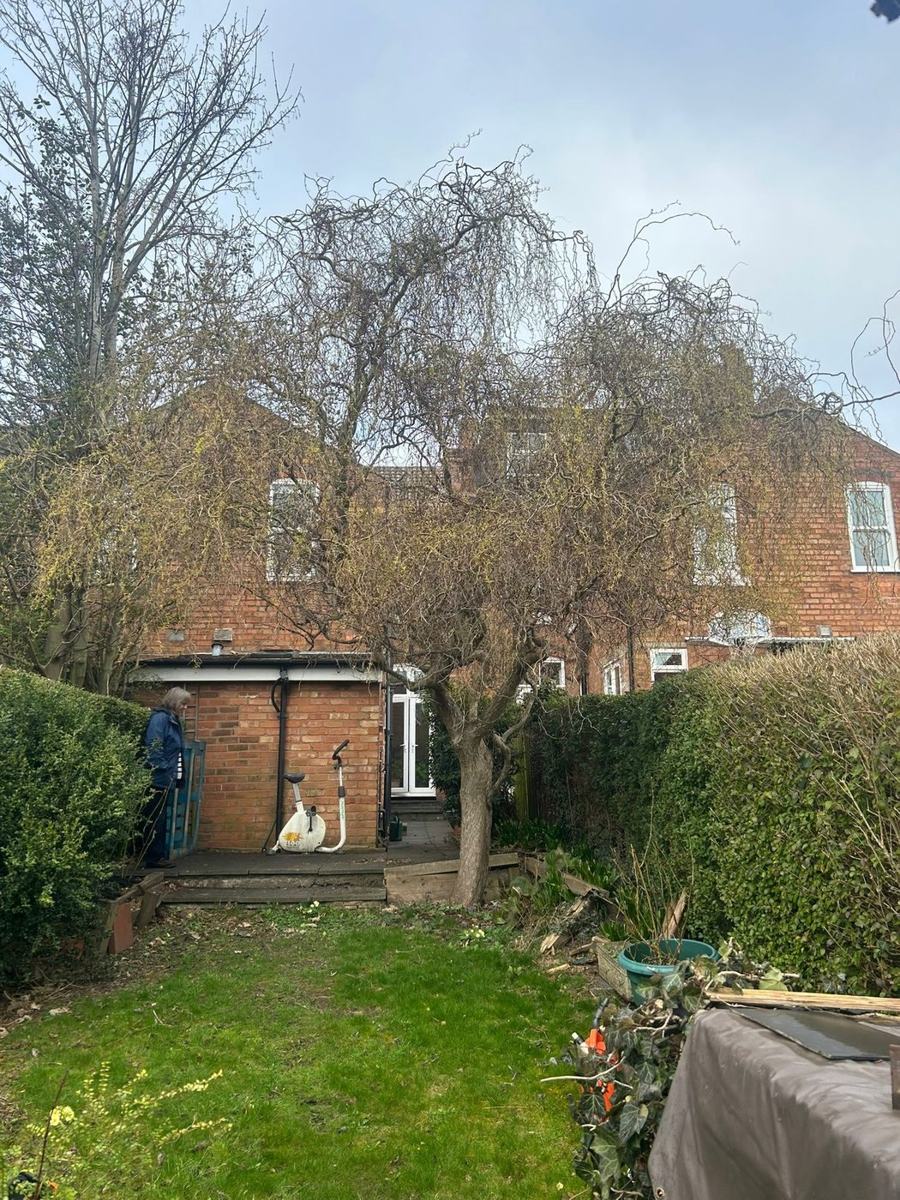
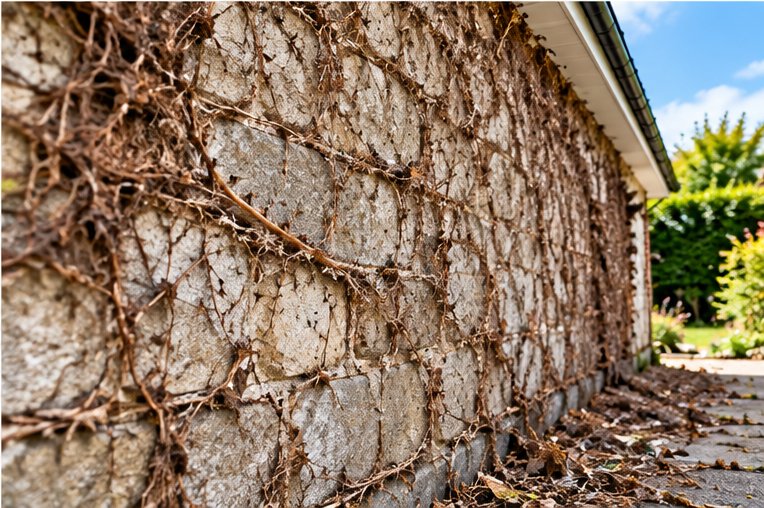
Wolverhampton covers a lot of ground, from Victorian villas to inter-war semis and newer estates, and ivy climbs all of them. We remove it from brick and render walls, fences, outbuildings and trees, always cutting the stems at the base before anything is pulled down, so that the surface underneath keeps its finish.
Some of the older roads have mature trees that carry heavy ivy as well, and we deal with those too. Wherever the job is in Wolverhampton, the green waste goes with us and the area is left swept.
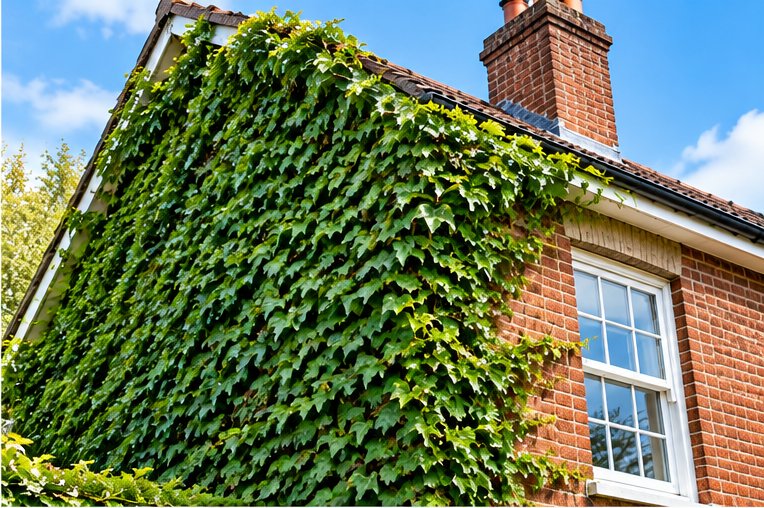
A Victorian villa has plenty of detail for ivy to bury: bay windows, stone sills, decorative brick, old chimneys. Left to grow, it fills the gaps and lifts the edges of anything loose. We cut the stems first and let them die, so what comes off is dry and light and gives the old brickwork much less of a fight. Higher up, we reach what is safe from steady ladders and leave the rest to drop away.
If you have lime mortar or soft brick on a Wolverhampton villa, we use hand tools, keep pressure low and do not scrub. A faint outline may stay for a while where the ivy grew, and that is much easier to live with than damaged pointing or a roughened face. Window sills and stone dressings are done last and slowest, since they mark most easily and are the hardest to put right.
Inter-war semis often have pebbledash, painted render or brick with a dense hedge alongside. The ivy usually starts on the hedge and ends on the house. We cut every stem at ground level on both, then clear the loosened growth in stages, taking care along the wall where the hedge meets the render. A Wolverhampton semi with a long side passage gets the same treatment right along its length.
On newer estates, fences and garages are the usual targets. Timber panels, shed roofs and the felt on them are easily torn, so living ivy is never yanked free. We wait until it browns and loosens, and we point out any panel or post that was relying on the ivy to stay upright, so you are not surprised when it moves, and can plan a repair around the weather rather than around a collapse.
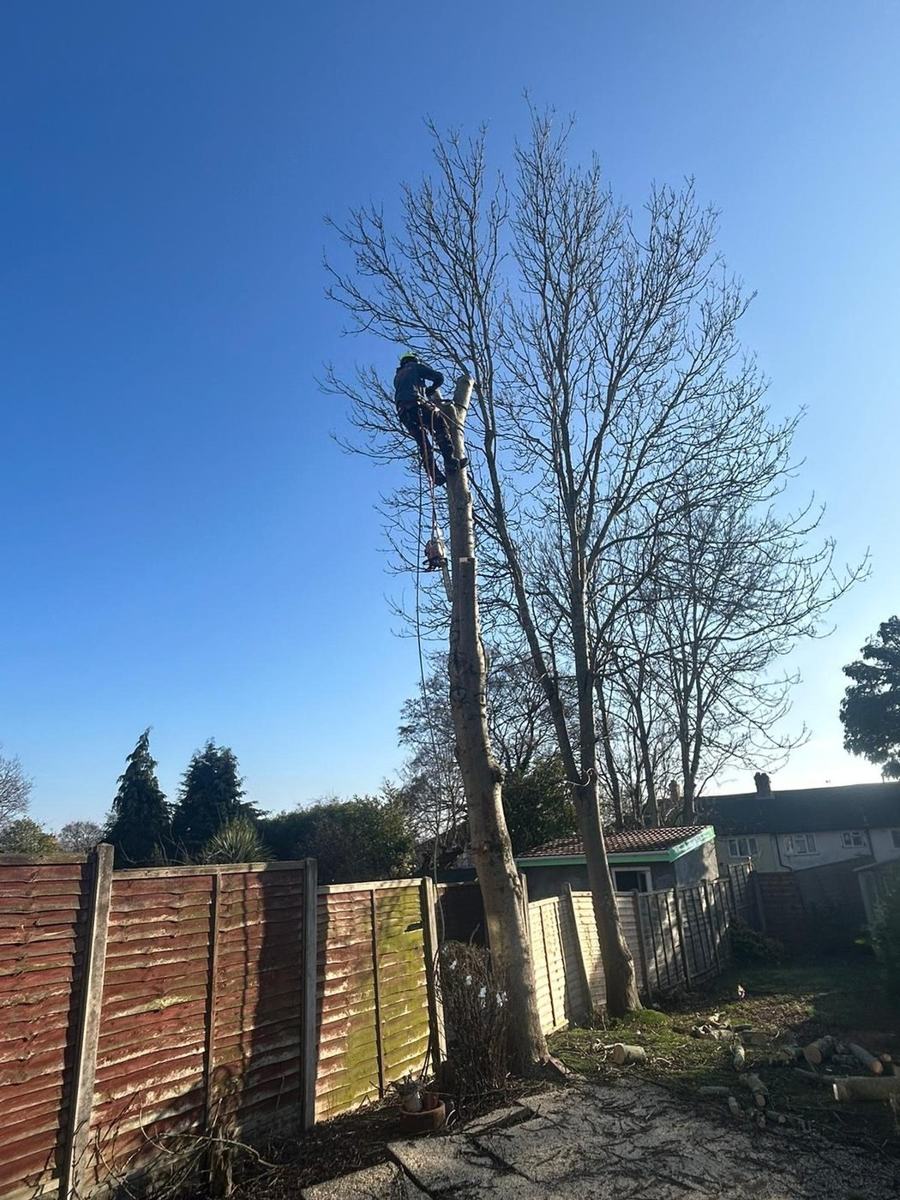
Around the leafier parts of Wolverhampton, large garden trees can carry ivy right up their trunks. We cut a clear gap in the stems at the base rather than stripping the bark, and clear what we can safely reach once it has died. We check for nesting birds first and leave active nests. We also cover Wednesfield and Bilston.
Based in Hall Green, so we are never far from the gardens we work in.
We look at the job before we price it, so you know what is involved.
Branches, clippings and rubbish from our jobs are cleared and the garden left tidy.
Call, or send photos on WhatsApp, and we will come back to you.
From our base in Hall Green we work across Birmingham, the Black Country, Solihull and parts of Worcestershire. Choose your area.
It should not if it is done carefully. We cut the stems, allow the growth to die back, and then lift it off by hand without scraping. Stone and soft brick can retain faint marks, but they are not damaged.
Yes, as far as we can reach safely. Once the main stems are cut and the growth is dead, we pull stems out of gutters, downpipes and behind fascias, then clear the debris so water can run again.
Yes. On trees we cut through the stems at the base and leave the ivy above to die back, rather than pulling it from the bark, which can scar it. We then clear the lower dead growth and take it away.
Tell us what needs doing and where. We will get back to you to arrange a visit and a free, no-obligation quote. Photos sent on WhatsApp help.