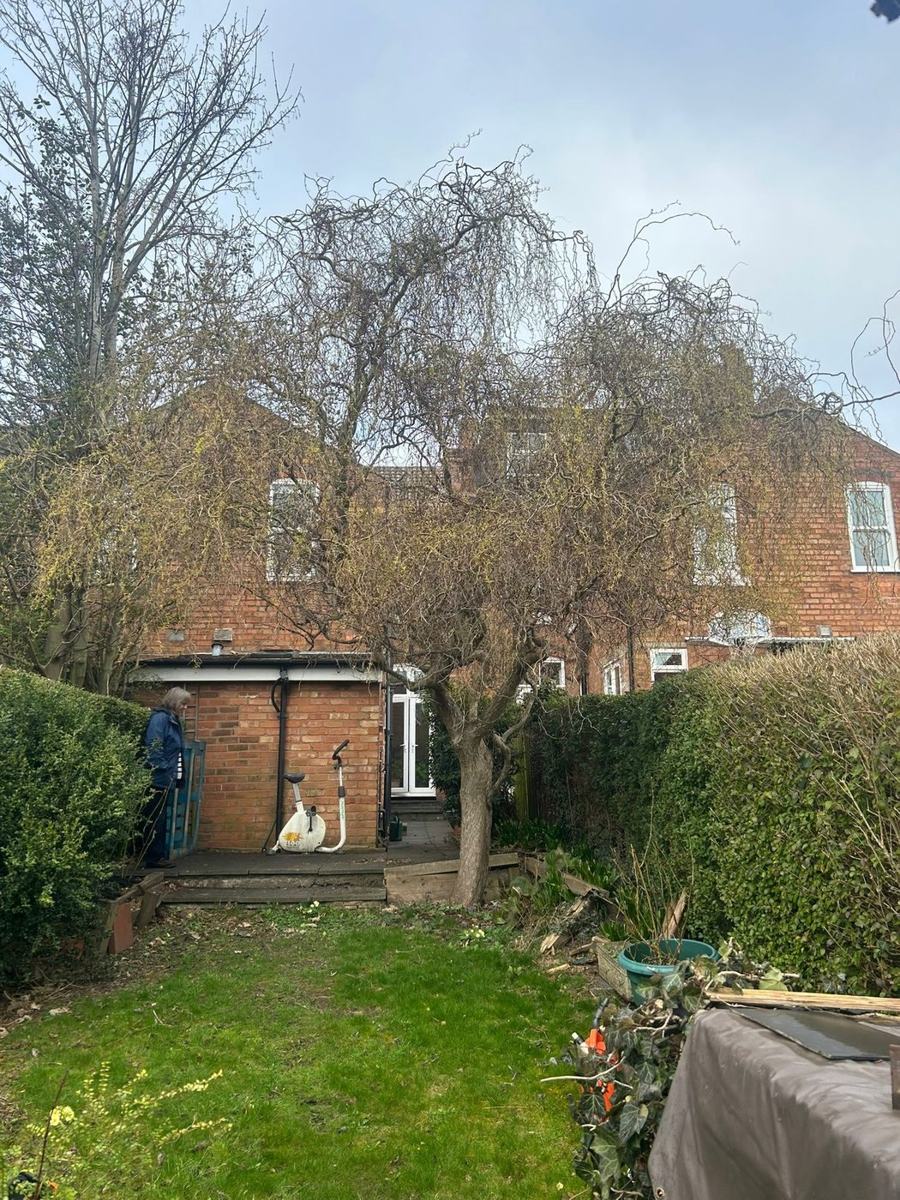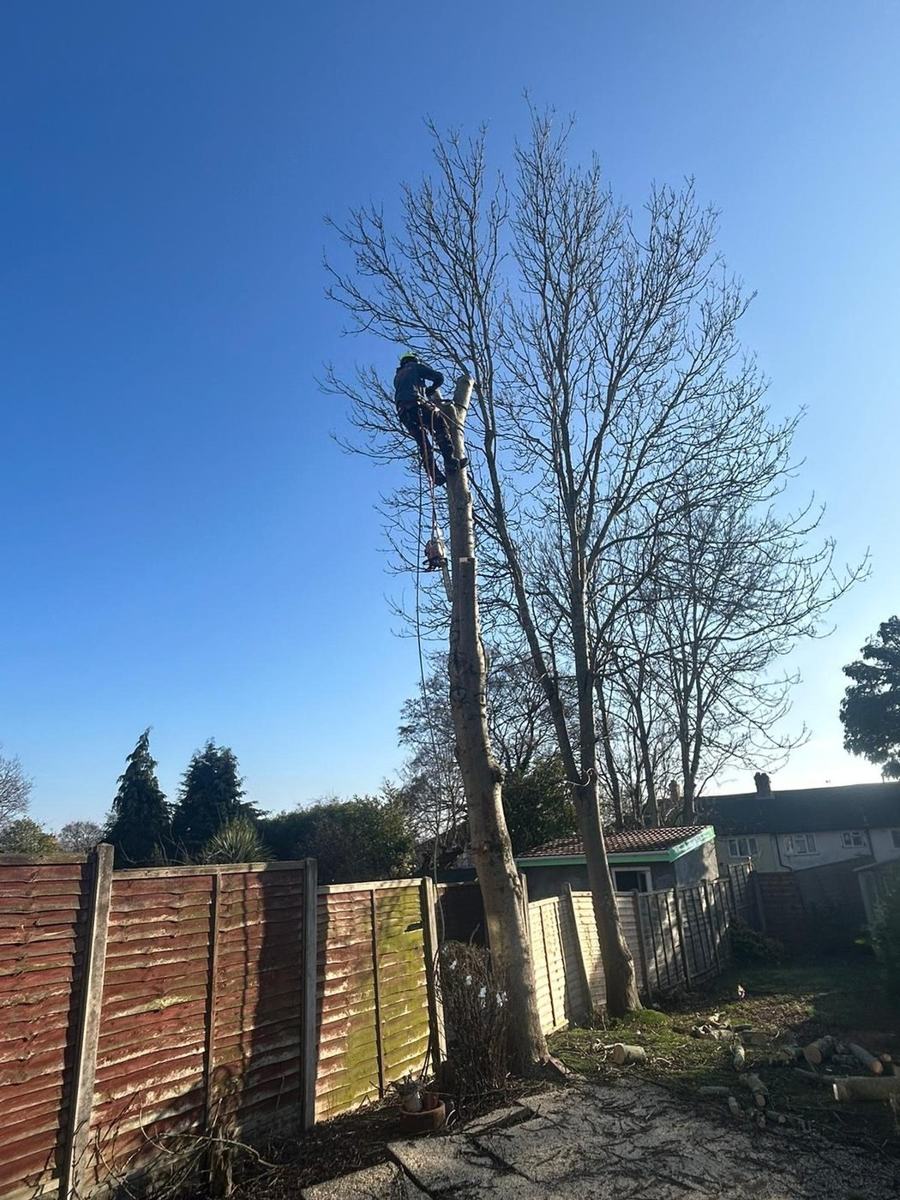
Ivy climbs quickly up the brick of a Victorian terrace, along a rear boundary fence and over the shed at the end of a small garden. In Sparkhill we cut it back and take it off walls, fences, outbuildings and trees, working to a method that protects the surface underneath rather than simply ripping it down.
Most of the houses along and around the Stratford Road have bay fronts and narrow side passages, so we plan the job around the access you actually have. Green waste is bagged or loaded and taken away with us, leaving the garden clear.
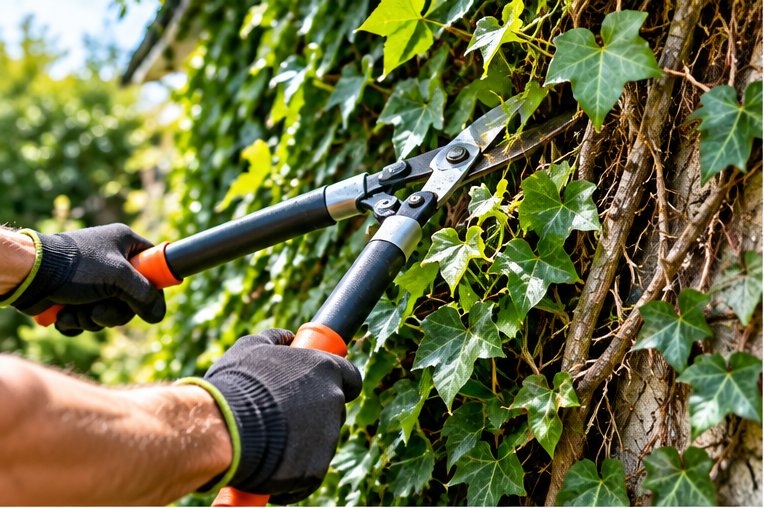
The first job is always to cut each main stem near the ground, taking out a short section so the top growth is no longer joined to the roots. Pulling living ivy straight off a wall is the quickest way to tear mortar and paint away with it, because the stems grip hard when they are still alive and full of sap.
Once the stems are cut, the leaves above start to wither and the growth loosens its hold. That gives us a far gentler job when we return to take it down, and on a Sparkhill terrace with soft old brickwork and thin pointing, that patience makes a real difference to how the wall looks afterwards. Stems that have crept under a window sill or behind a downpipe get cut back to clear it.
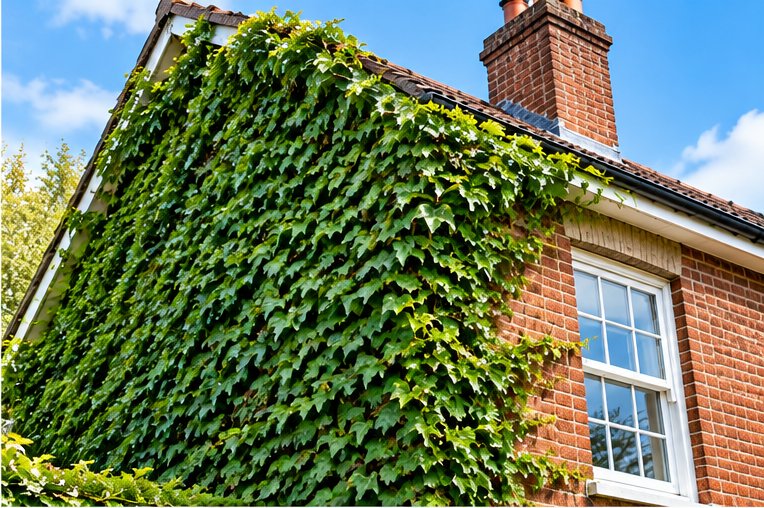
Dense ivy hides things. On older brick we often find loose pointing, cracked render, a blocked downpipe or a gutter bracket that has pulled away, and none of it shows until the cover is gone. We point out anything we notice so you can have it looked at by the right person, rather than finding out in the next wet spell. Stems often push into the gap between a fence panel and a wall, and we clear those too.
The tiny sticky roots left on masonry can take time to come away, and we will not scrub or scrape hard enough to damage the face of the brick just to hurry things along. Where a faint mark stays behind, it tends to weather and fade far more kindly than a gouge in the surface ever would. Painted brick and old render need the most care, so we go slowly there.
Many Sparkhill gardens are small to medium, with the rear reached only through the house or a tight side gate. We bring what we can carry, keep the work tidy and sweep up as we go. Before any cutting we check the growth for nesting birds, because ivy is a favourite place for them, and we leave a section alone if a nest is in use. We also cover Hall Green and Tyseley.
Based in Hall Green, so we are never far from the gardens we work in.
We look at the job before we price it, so you know what is involved.
Branches, clippings and rubbish from our jobs are cleared and the garden left tidy.
Call, or send photos on WhatsApp, and we will come back to you.
From our base in Hall Green we work across Birmingham, the Black Country, Solihull and parts of Worcestershire. Choose your area.
Done properly it should not. We cut the stems and let the growth die back before taking it off, so the roots release gently. Some marks can remain on soft brick, but that is far better than pulling live ivy away with the surface attached.
Usually yes. We carry tools and bags through narrow passages by hand and work from the garden side. Tell us about steps, gates and any shared access when you get in touch, and we will plan the job around them.
We take it away as green waste, so you are not left with a heap in a small garden. Cuttings are bagged or loaded as we go, and we sweep the paths and patio before we leave, so nothing is left lying behind us.
Tell us what needs doing and where. We will get back to you to arrange a visit and a free, no-obligation quote. Photos sent on WhatsApp help.