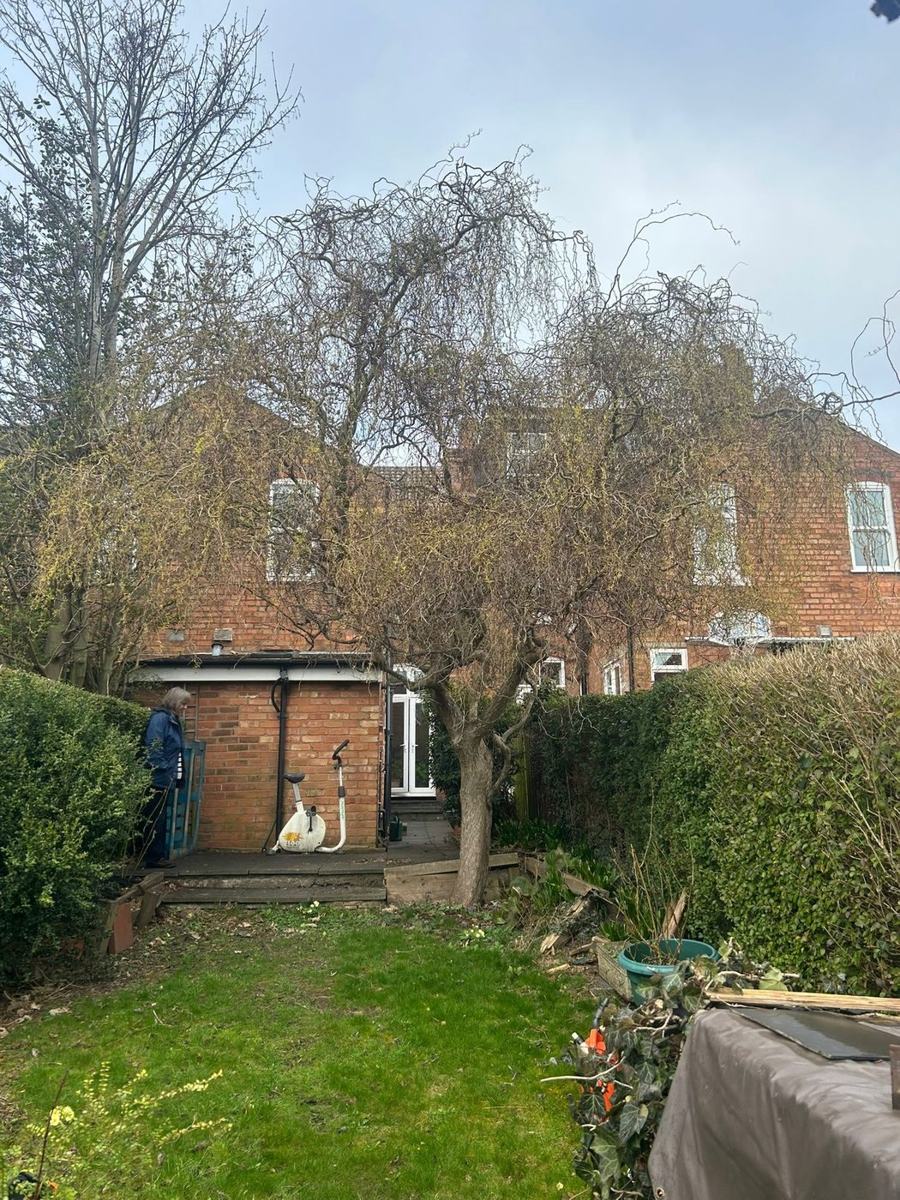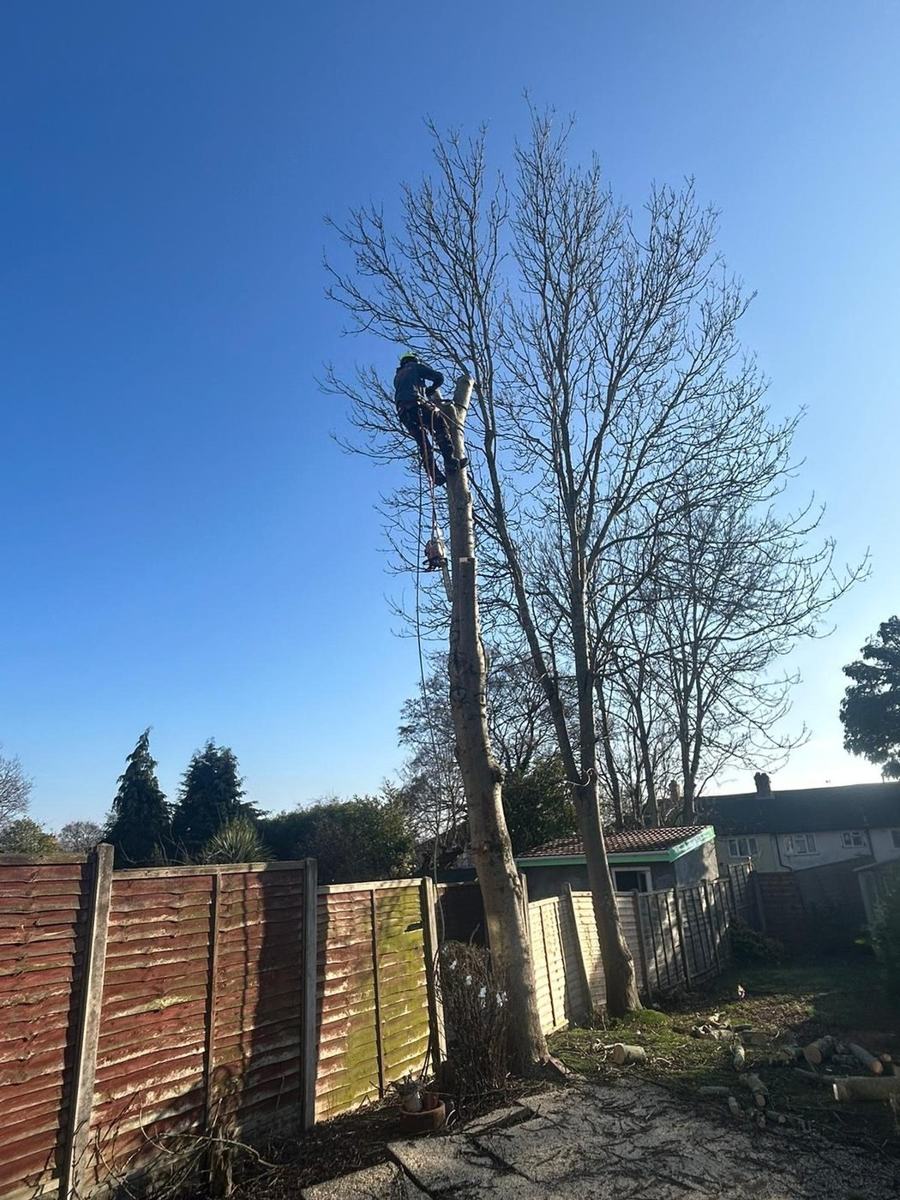
Most gardens in Willenhall are small to medium, so there is not much room for a tree that has grown too big. A sycamore, a birch or a fruit tree left for a few seasons can overshadow the lawn and press on a fence or a roof. We cut it back to a sensible size and tidy its shape without spoiling it.
Our jobs here range from a quick tidy of a small ornamental to a proper reduction of a mature garden tree. We explain what we would remove before we begin, and we clear up everything when we have finished.
Terraced streets in Willenhall tend to have narrow back yards, and the later 20th century estates have slightly larger lawns bordered by fences. In both, trees quickly become a boundary issue. Branches stretch across, leaves collect on the neighbour's side, and shade falls where it is not wanted. A neat reduction usually settles the matter for a good while. We look at where the cuttings will land before we start, so nothing ends up in a neighbour's garden.
Our usual method is to take out dead and crossing wood first, thin the crowded centre and then shorten the outer branches back to proper joints. That keeps the tree balanced and healthy, and avoids the tufty regrowth that appears when a tree is simply topped. Willenhall plots are small enough that a well-shaped tree really does show, so we take our time over the finish.
Plenty of Willenhall gardens have an apple, plum or cherry that is now too tall to reach and too dense to crop well. Pruning opens the crown, improves air movement and keeps fruit within reach. Timing varies by species, and some, like cherries and plums, are better left until the leaves are on. We explain this when we visit, so you know why the work might be booked for a particular season.
Ornamental trees, such as flowering cherries or small maples, need a lighter hand. We remove only what spoils their shape or crowds them, and avoid heavy cuts that leave large wounds. A good prune should make the tree look more graceful, not smaller and scarred. If an ornamental has simply got too big for the spot, we will say so, and talk through shaping it or replacing it.
Small plots mean careful handling. We use ropes where space is tight and protect your garden from falling branches. From spring onward we check for nesting birds and pause if any are found. We also cover Walsall, Bilston and Short Heath. Tell us what bothers you about your Willenhall tree and we will let you know what we think is sensible.
Based in Hall Green, so we are never far from the gardens we work in.
We look at the job before we price it, so you know what is involved.
Branches, clippings and rubbish from our jobs are cleared and the garden left tidy.
Call, or send photos on WhatsApp, and we will come back to you.
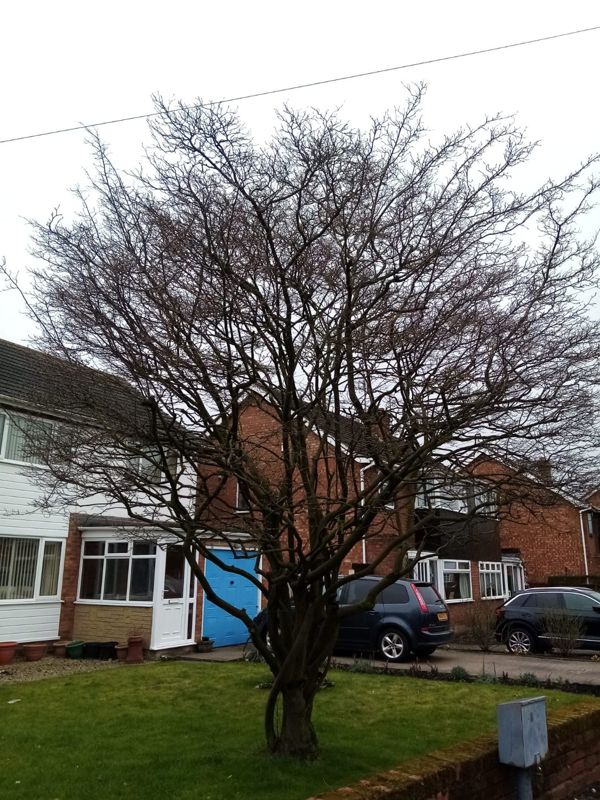 Tree Pruning
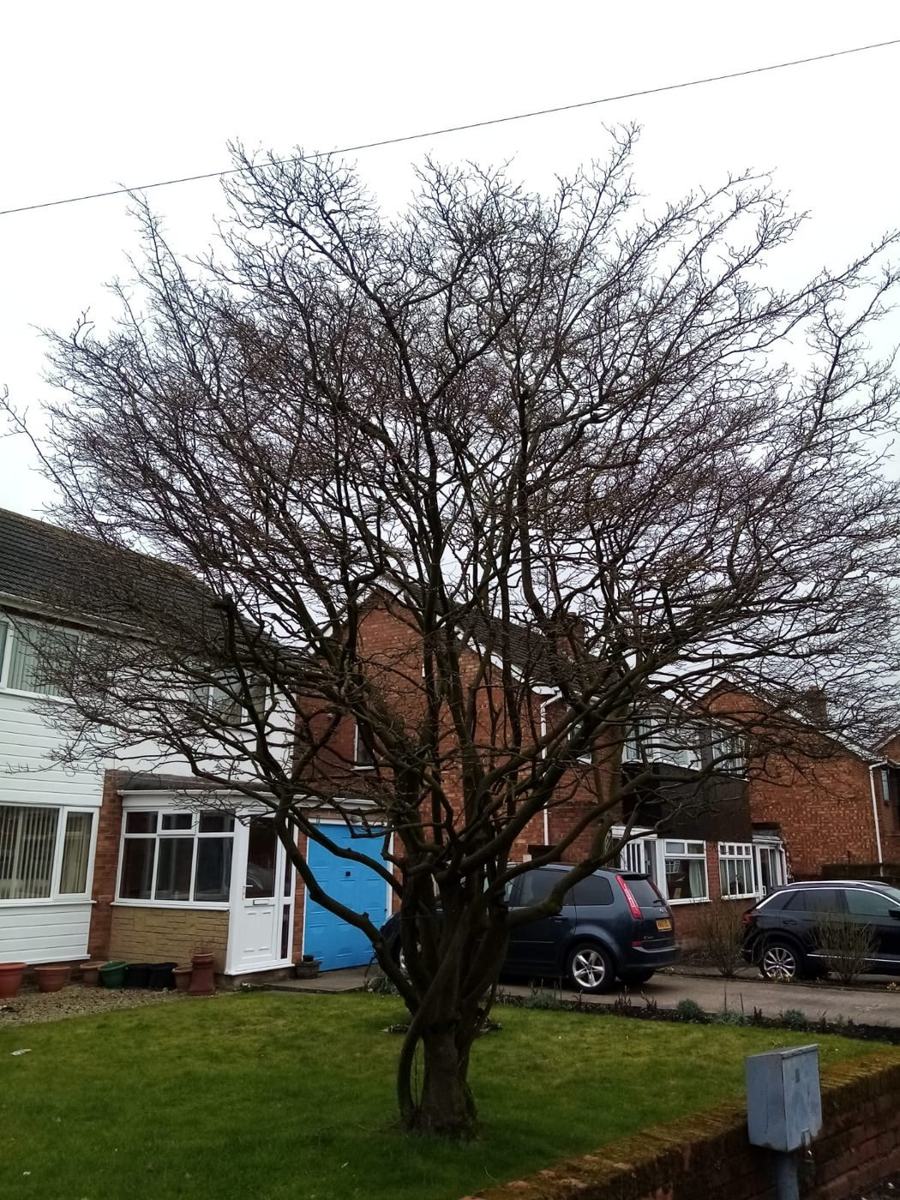
A dense, multi-stemmed tree on a Willenhall front lawn, shown before and after we cut it back hard.
View project →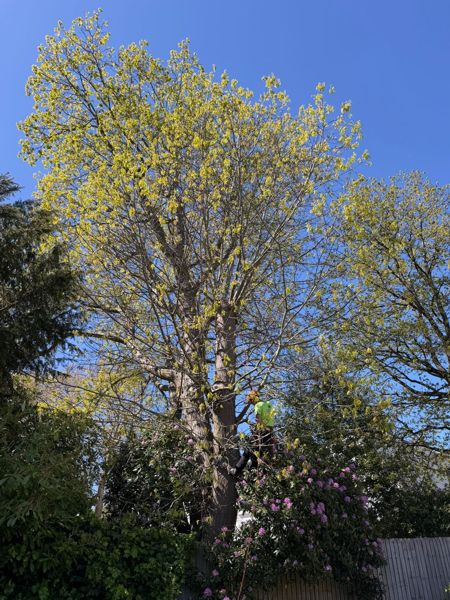 Tree Pruning
A climber cut back a tall garden tree in spring, shortening one of its stems and thinning the top of the crown.
View project →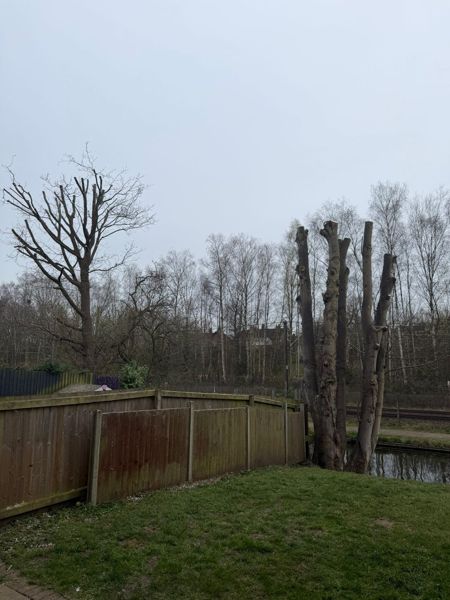 Tree Pruning
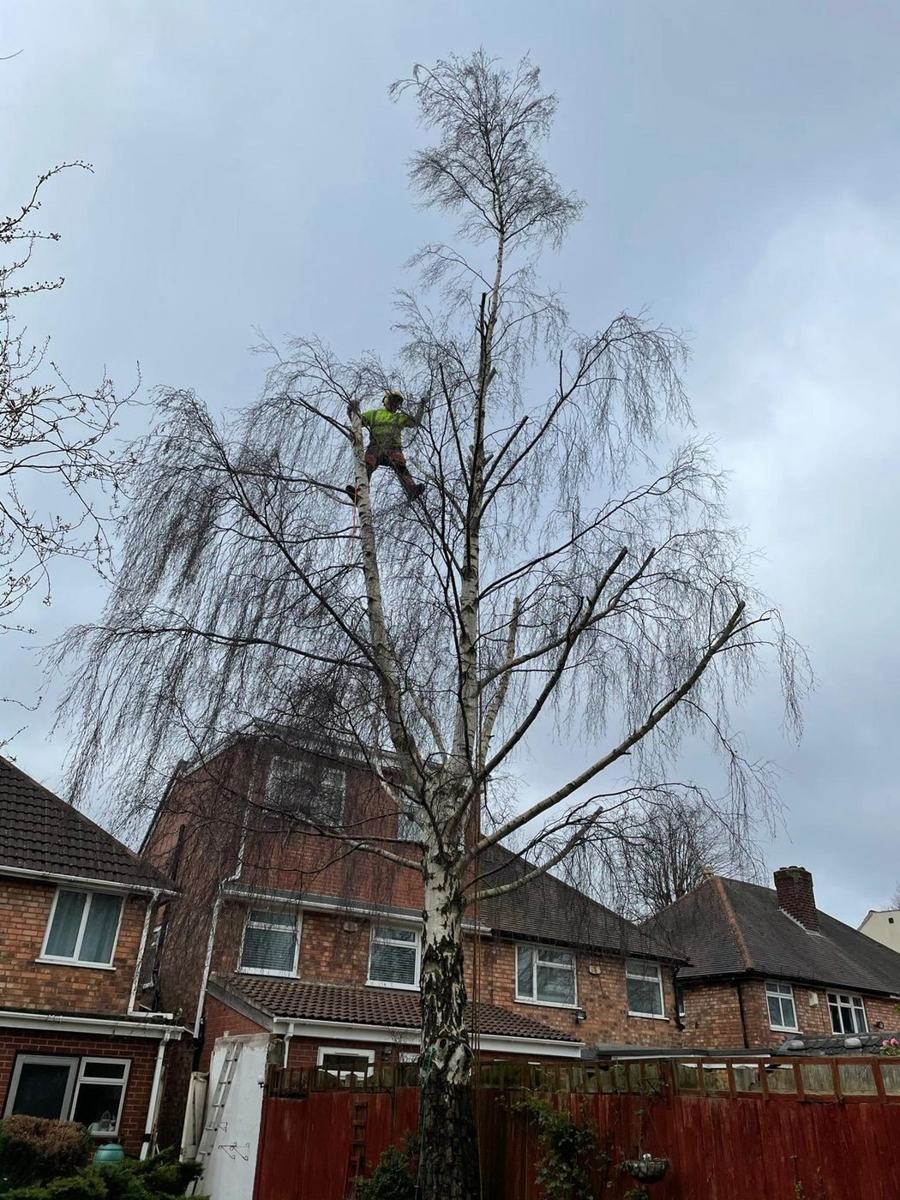
Tall trees at the end of gardens beside a canal were reduced in height by climbers working in winter.
View project →From our base in Hall Green we work across Birmingham, the Black Country, Solihull and parts of Worcestershire. Choose your area.
Yes. We plan where each branch will fall, lower the larger pieces on ropes and use protective sheets where needed. Fences, sheds and greenhouses are checked before the first cut so that nothing is damaged on the way down.
Plums and cherries are usually pruned in late spring or summer, when the leaves are on, because cutting in winter can let in disease. Apples and pears are normally done in winter. We choose the timing to suit each tree.
Thinning and lifting the crown can let a surprising amount of daylight through. Results depend on the tree and how dense it is. We can explain what to expect, and whether a reduction or a thin would help more.
Tell us what needs doing and where. We will get back to you to arrange a visit and a free, no-obligation quote. Photos sent on WhatsApp help.