Why timing matters at all
Pruning removes living tissue, and a tree responds differently depending on the season. Cut at a poor time and a tree may bleed sap, struggle to heal or invite disease. Cut at a good time and wounds close cleanly and growth is easy to steer. The reason for the work matters as well. Taking out deadwood can be done at almost any time, whereas shaping or reducing a tree benefits from more thought about the season.
Winter for many trees
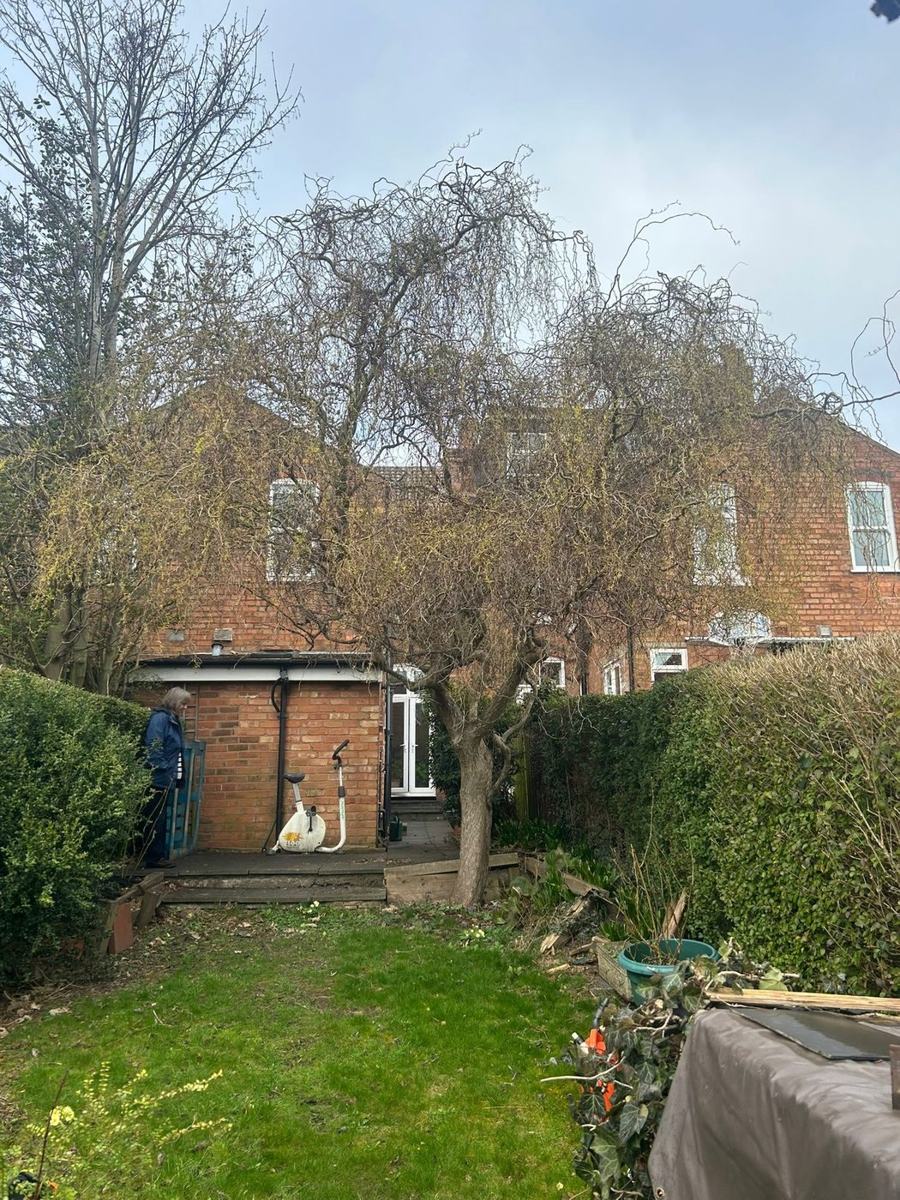
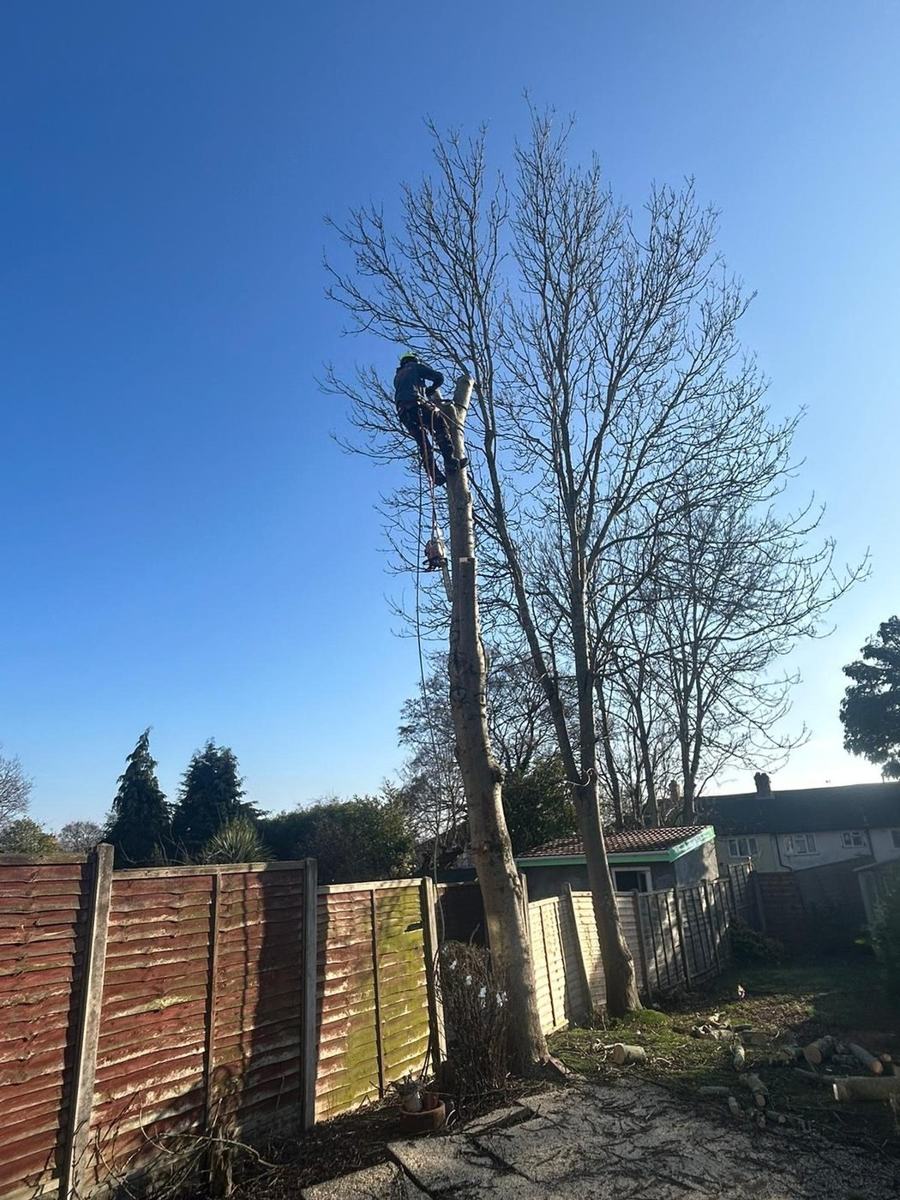
For a good number of garden trees, the dormant period from late autumn to late winter is a sensible time. Without leaves, the branch structure is easy to see, so cuts can be planned precisely and the tree is not putting energy into new growth. Winter is also kinder to the lawn and borders, because the ground is less used. Mature trees on the long, narrow gardens of Birmingham's inter-war semis often fit this pattern well.
If a tree is close to a house or garage, winter also makes it simpler to see how branches sit over the roof and gutters, which helps us decide which limbs to shorten and which to leave. Winter pruning also suits timber that needs to be removed, since logs can be cut and stacked without the weight of leaves and the green waste is easier to manage.
Trees that prefer a different season
Not every tree follows the winter rule. Some species bleed heavily if cut in late winter or early spring, and others are better left until after flowering so you do not remove the blossom. Fruit trees, flowering trees and certain stone fruit have their own preferences, and some are better left to summer to reduce the risk of disease entering the cuts. It is worth identifying the tree before deciding, and we are happy to advise.
- Spring-flowering trees are often pruned soon after the blossom fades
- Some trees bleed sap if cut at the wrong point in late winter
- Fruit trees may need winter or summer pruning depending on the type
- Conifers do not regrow from old bare wood, so never cut right back to brown
Nesting birds and wildlife
Birds nest in trees from early spring into the summer, and disturbing an active nest is something to avoid. Before any work in this period, the tree should be checked carefully, and if a nest is in use the work should wait. This is one of the reasons winter is so popular for pruning. Bats and other wildlife can also use mature trees, which is another good reason to have a proper look before anything is cut.
Protected trees and permission
Timing is only half of the picture if the tree is protected. Trees can be covered by a Tree Preservation Order or stand in a conservation area, and in either case you will normally need to speak to the local council before pruning. Larger felling may also need a felling licence from the Forestry Commission, so check. It is wise to contact the council well in advance, as that can affect when the work is actually able to go ahead.
Planning the work with us
The simplest approach is to tell us what you want from the tree, whether that is more light, less overhang, a safer canopy or a tidier shape. We look at the species, its condition and the access, then suggest a sensible time and the right amount of work. We take away the green waste and leave the garden tidy. Booking ahead for the quieter months often gives more choice of dates for your pruning.
Large trees can need more than one visit, and some jobs are split across seasons so the tree is never asked to cope with too much change at once. Bring photographs of the tree if you can, and tell us about any known protection, so we can plan around the council as well as the calendar.
Want it looked at properly?
Tell us what you have and we will arrange to visit, explain what is needed and give you a free, no-obligation quote. See our tree pruning page, or send us photos on WhatsApp.
Common Questions
Can I prune a tree in summer?
Often yes, and for some trees summer is actually the preferred time. Light pruning, deadwood removal and shaping can be done in leaf. Heavy cuts are generally better left to the dormant season, and nesting birds must always be considered before starting.
How much can be taken off a tree at once?
As a general rule, taking too much in one go stresses a tree, so moderate cuts are safer than drastic ones. The right amount depends on the species and its health. We assess each tree and plan the work so it stays balanced.
Is it too late to prune if the tree is already in leaf?
Not necessarily. Some work is perfectly suitable once leaves are out, and in leaf you can judge how much shade or weight the tree carries. If it is nesting season, birds come first, so we may suggest waiting until the nest is empty.
Do I need to prune my trees every year?
Most mature trees do not need yearly attention. Many are fine with a check now and then and work only when something needs correcting, such as deadwood or crossing branches. Young trees, fruit trees and hedged specimens often need more regular shaping.