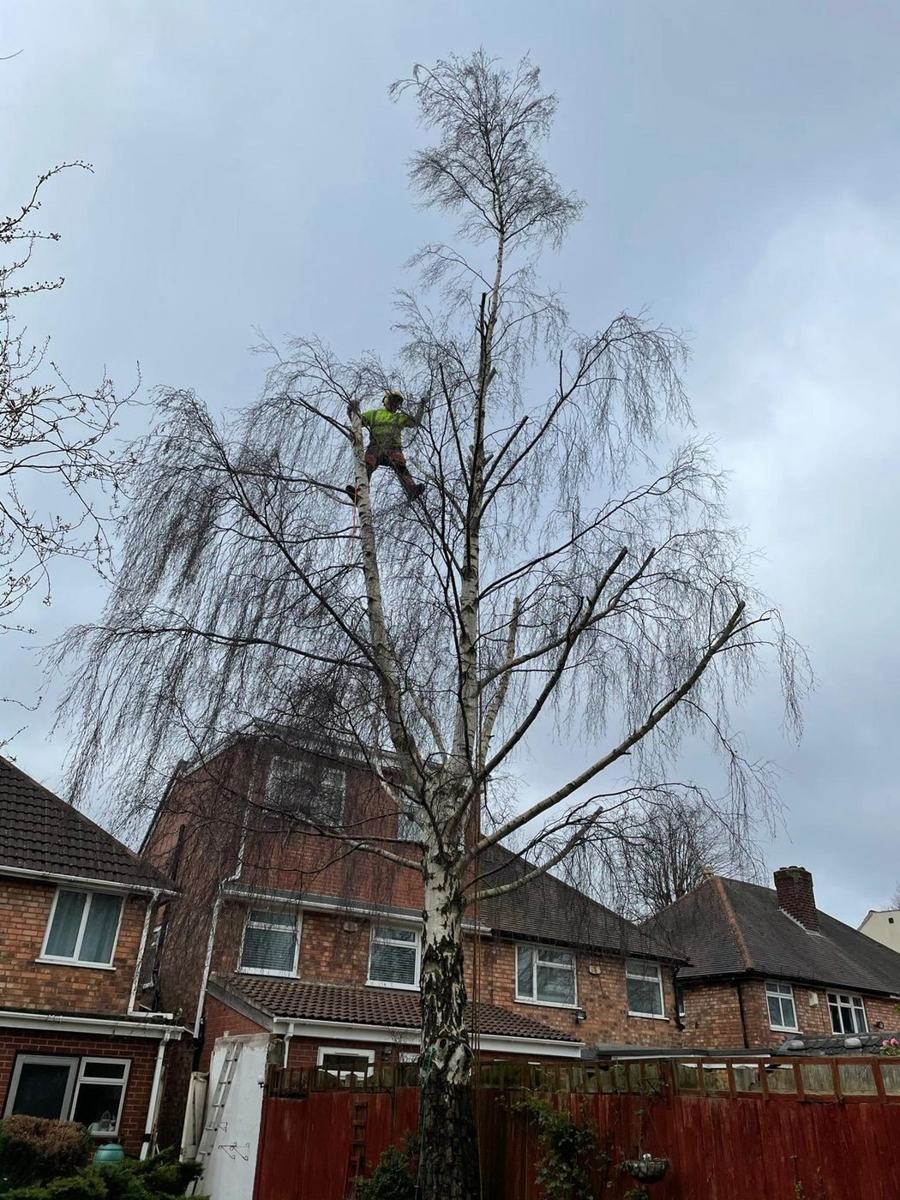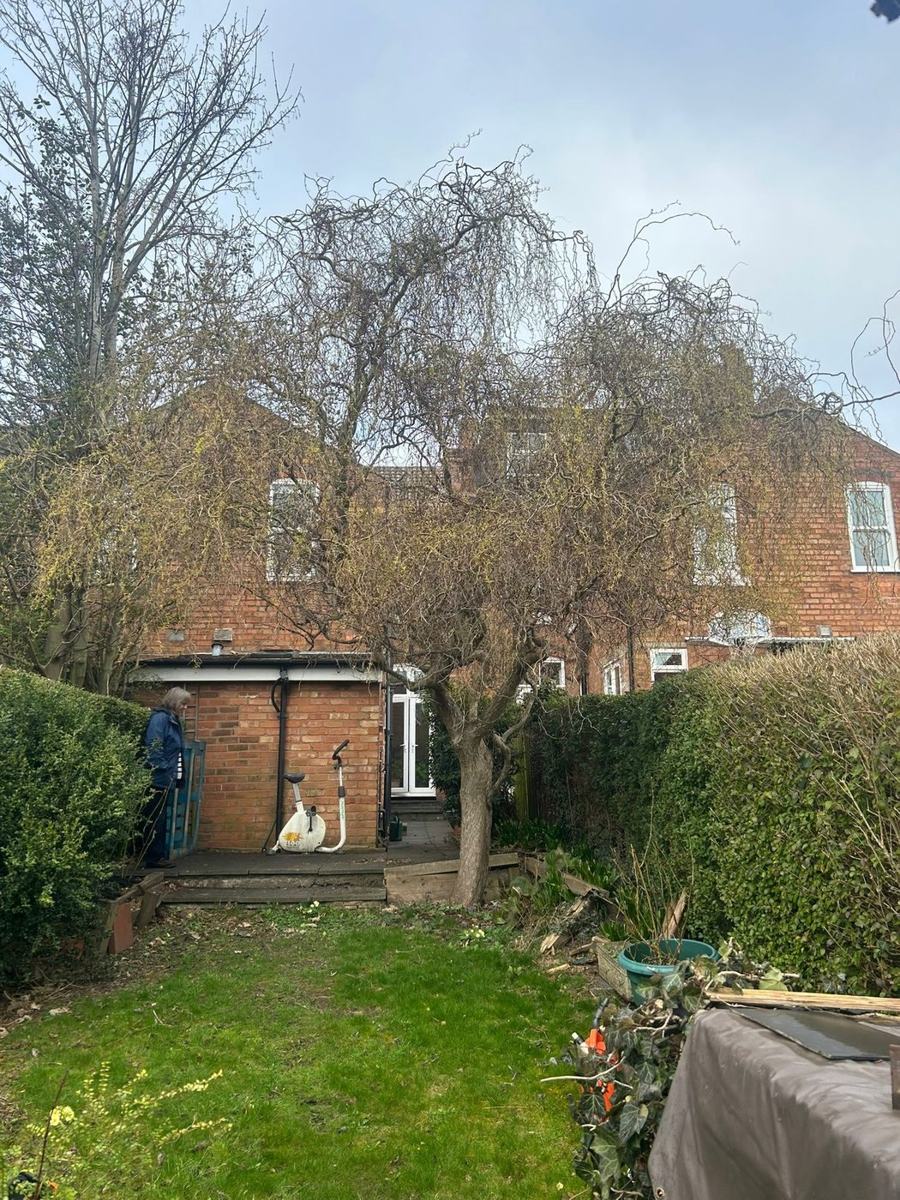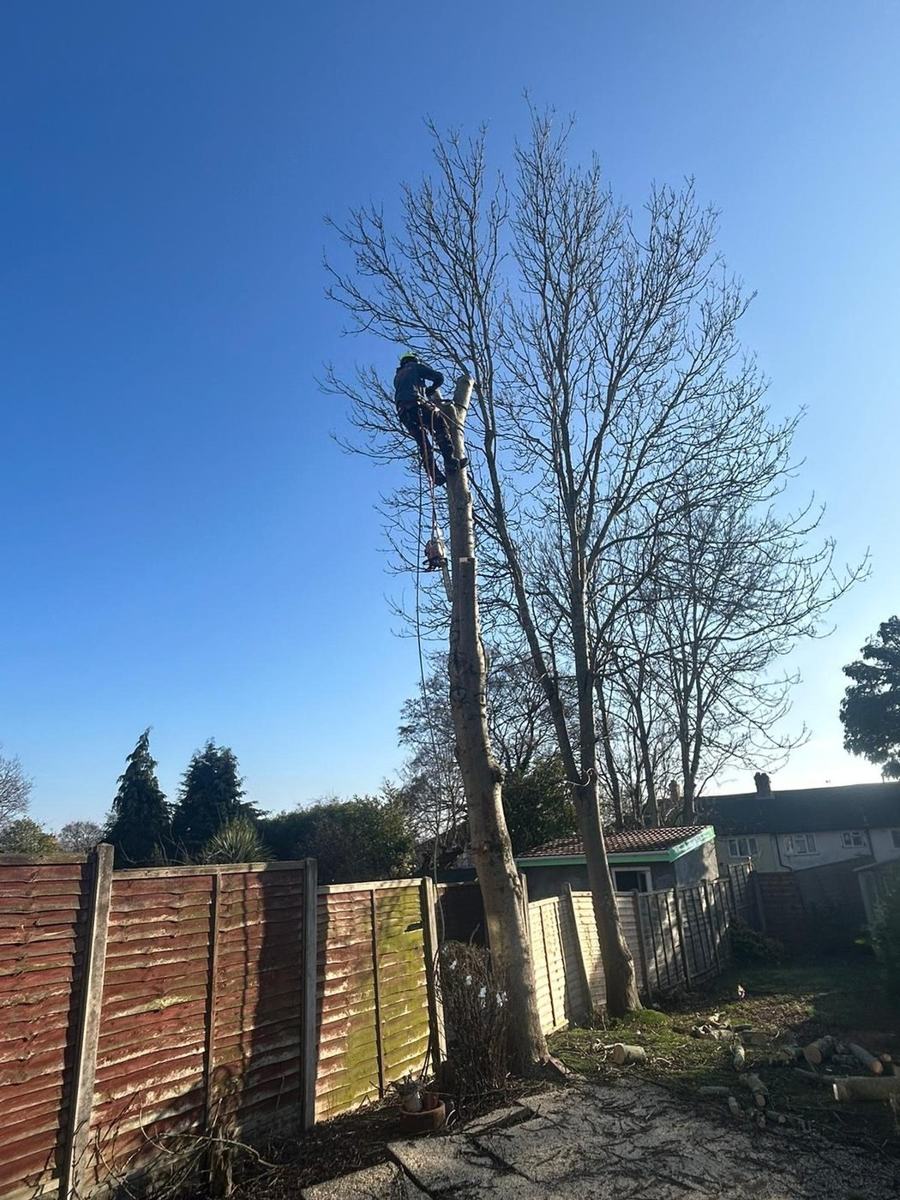
Halesowen sits where the Black Country meets the Clent and Lickey hills, so gardens climb and fall and trees catch plenty of weather. Our tree pruning in Halesowen is aimed at keeping those trees balanced and tidy, with thinning, reductions and deadwood removal that suit the tree and the slope it grows on.
We keep things simple. We look at the tree with you, agree what is causing the trouble, and prune only as much as that needs. You get a healthier tree, a lighter garden and a neat finish with the cuttings cleared.
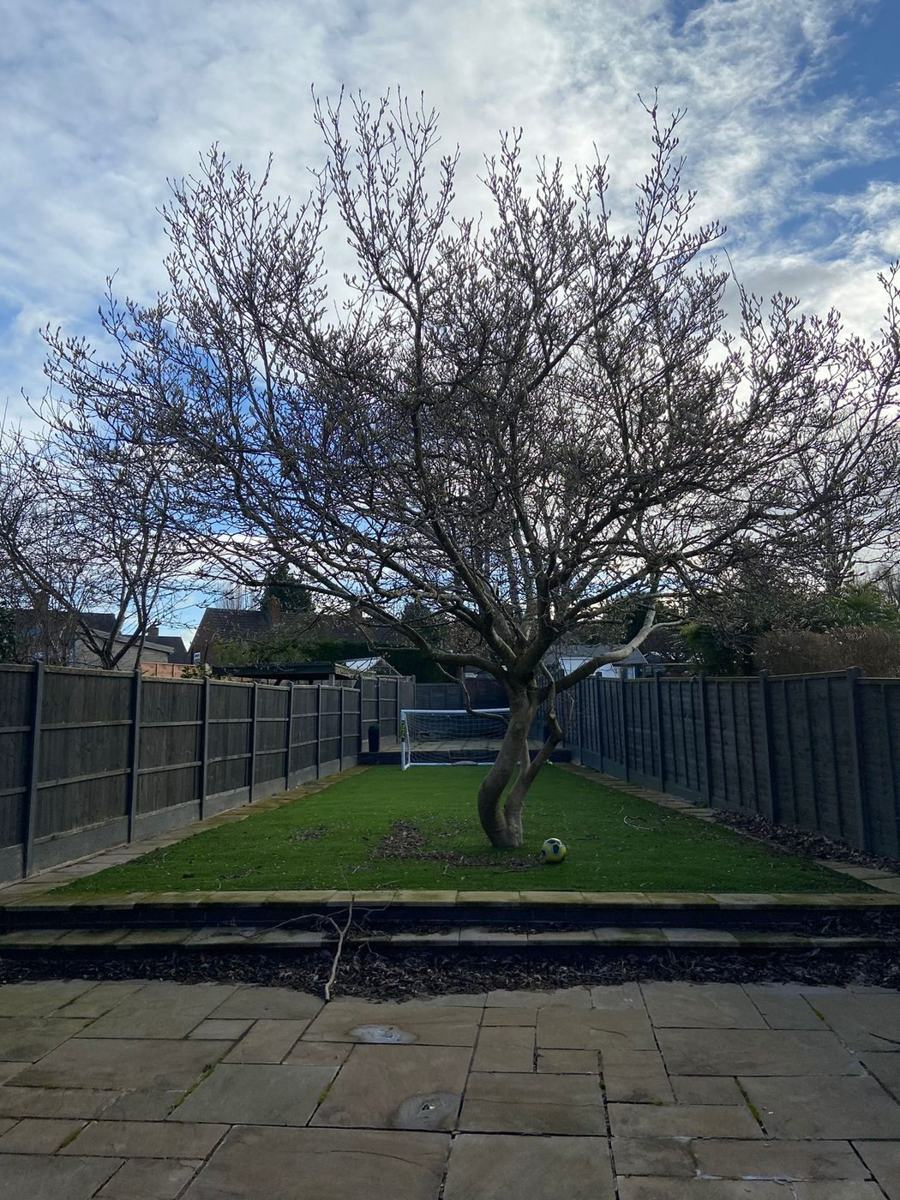
Many Halesowen homes are interwar semis with gardens that slope away behind them, and the trees in those gardens are often as old as the houses. On exposed hillsides, long heavy branches can be stressed by the wind. Thinning the crown lets gusts pass through, and shortening the longest limbs takes strain off the trunk and keeps the shape even. Halesowen's hillsides make this especially useful.
Garden slopes also complicate access, with steps, walls and tight gaps. We plan the work so that cut branches are lowered or carried out without damaging your plants or paths. Estates built after the war usually have more room, and open-grown trees there often respond well to a simple reduction that restores clearance from the house. Neighbouring gardens are often close, so we keep the work tidy.
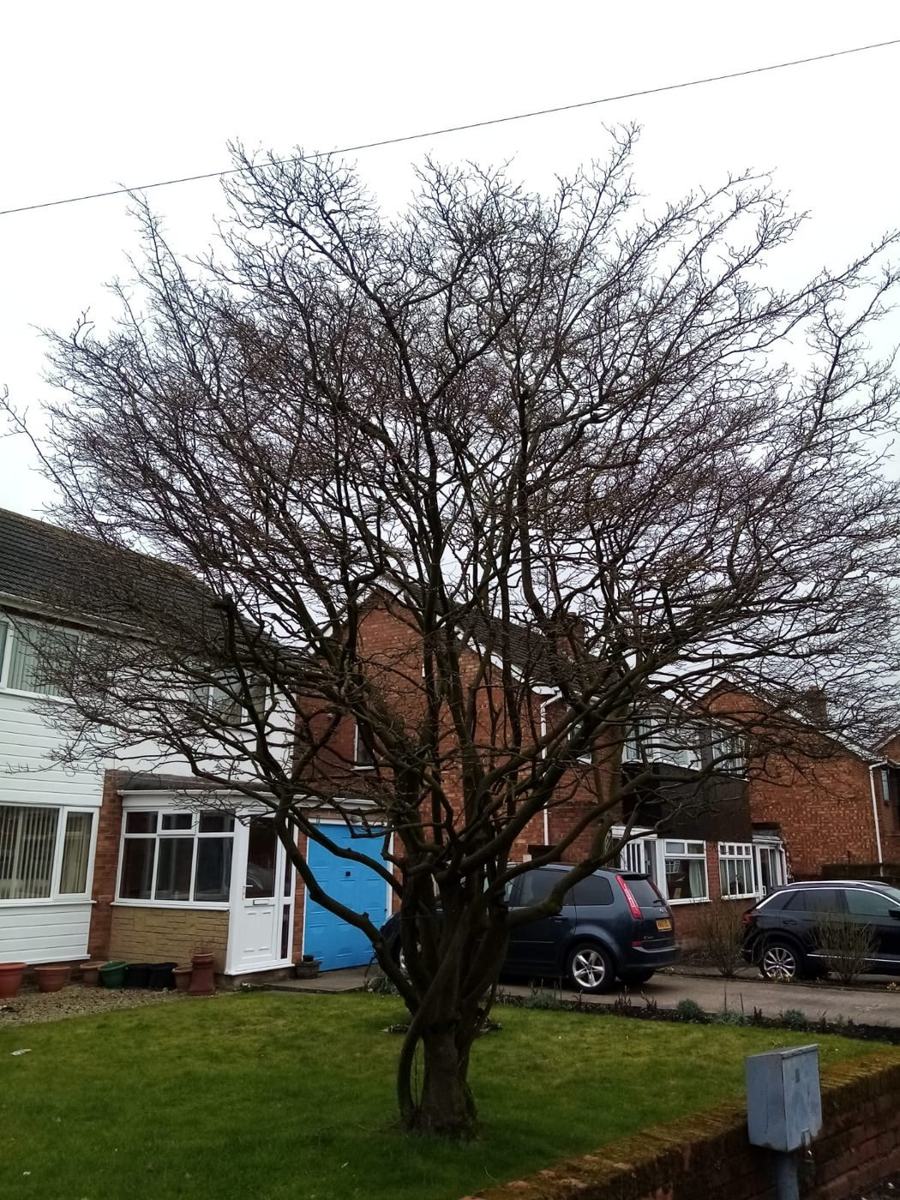
Parts of Halesowen fall within conservation areas, and trees there normally need the council told before pruning, with some trees carrying a protection order too. We always suggest checking this first. Once we know the position, we can describe the work clearly so a notification is straightforward and nothing is cut that should not be. The council's tree officer is the right person to ask.
Older trees do better with restrained work. We remove dead wood, ease overextended branches and avoid large wounds, which heal slowly on mature specimens. Fruit trees and ornamentals are treated with finer cuts, to keep their form and flowering. If a tree is clearly in decline, we say so, rather than pruning it for the sake of it. That honesty saves you effort later.
Conifers are common in Halesowen gardens, and we reduce them only within the green because they do not regrow from brown wood. Winter works for many trees, and we take care to avoid nests in spring. We also cover Cradley Heath, Hasbury and Quinton, so contact us about your tree and we will advise on timing. Ask us which month suits your own tree.
Based in Hall Green, so we are never far from the gardens we work in.
We look at the job before we price it, so you know what is involved.
Branches, clippings and rubbish from our jobs are cleared and the garden left tidy.
Call, or send photos on WhatsApp, and we will come back to you.
 Tree Pruning
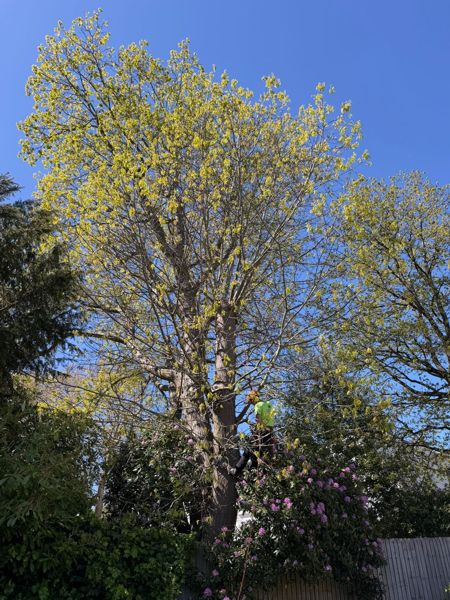
A climber cut back a tall garden tree in spring, shortening one of its stems and thinning the top of the crown.
View project →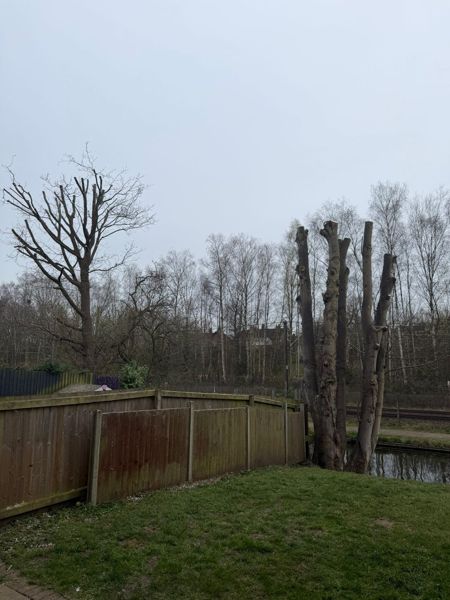 Tree Pruning
Tall trees at the end of gardens beside a canal were reduced in height by climbers working in winter.
View project →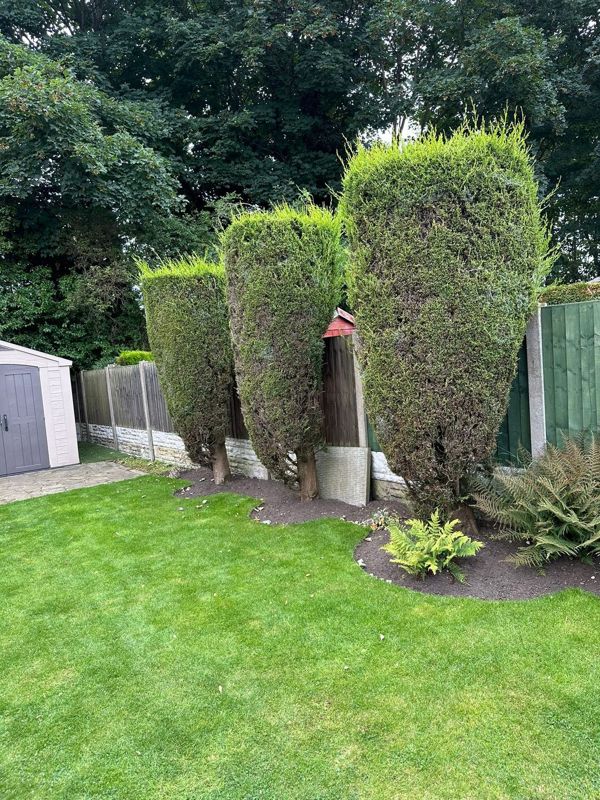 Tree Pruning
Three tall garden conifers trimmed into neat, tapered shapes along a fence, with fresh mulch around their bases.
View project →From our base in Hall Green we work across Birmingham, the Black Country, Solihull and parts of Worcestershire. Choose your area.
It can help. Removing a share of the smaller branches lets wind pass through the crown rather than pushing against it, which reduces strain on the larger limbs. Pruning cannot make a weak tree safe, but it improves most healthy ones.
Yes. Slopes need more planning, not a refusal. We think about where branches will fall and how they will come out, and we protect your garden as we go. It helps to tell us about the steps and gates.
The council can tell you, usually from its online maps or by phone. Trees in a conservation area normally need notice before pruning. Once you know, we can describe the work so your notification is accurate and complete.
Tell us what needs doing and where. We will get back to you to arrange a visit and a free, no-obligation quote. Photos sent on WhatsApp help.