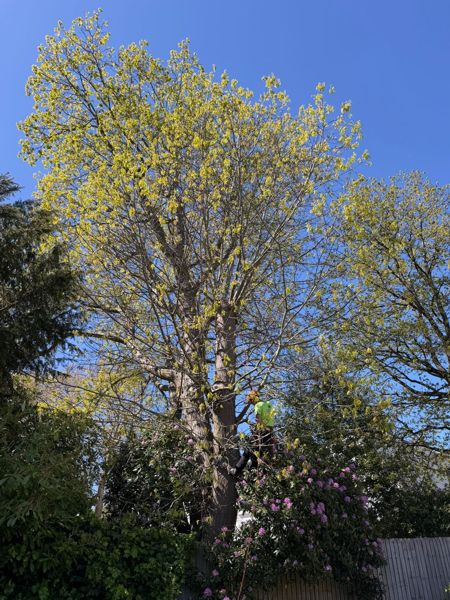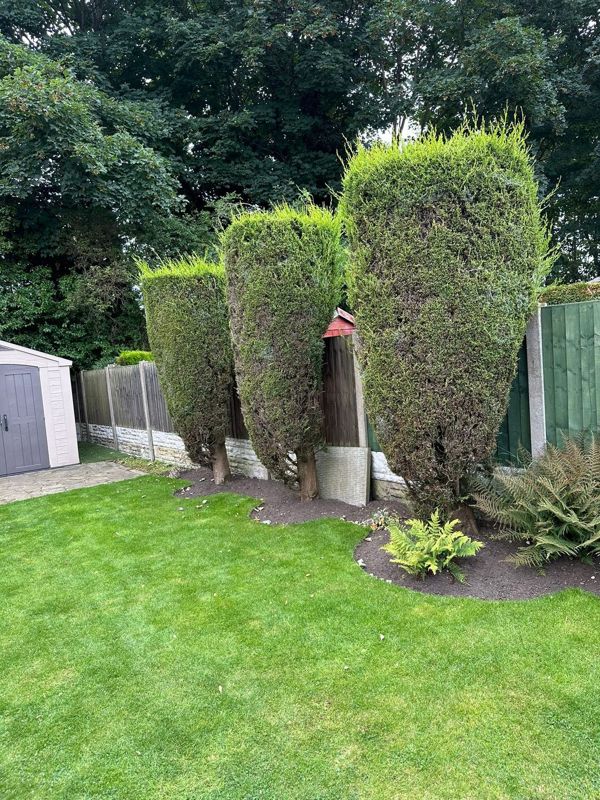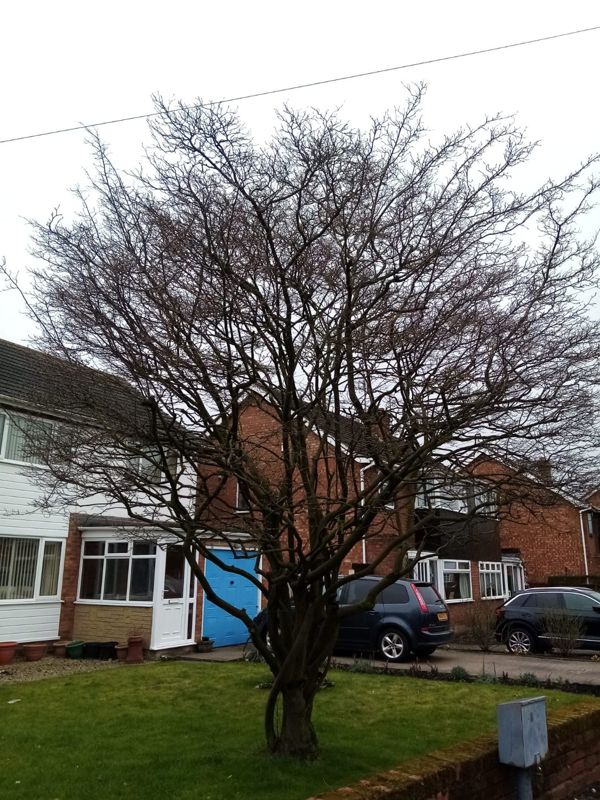
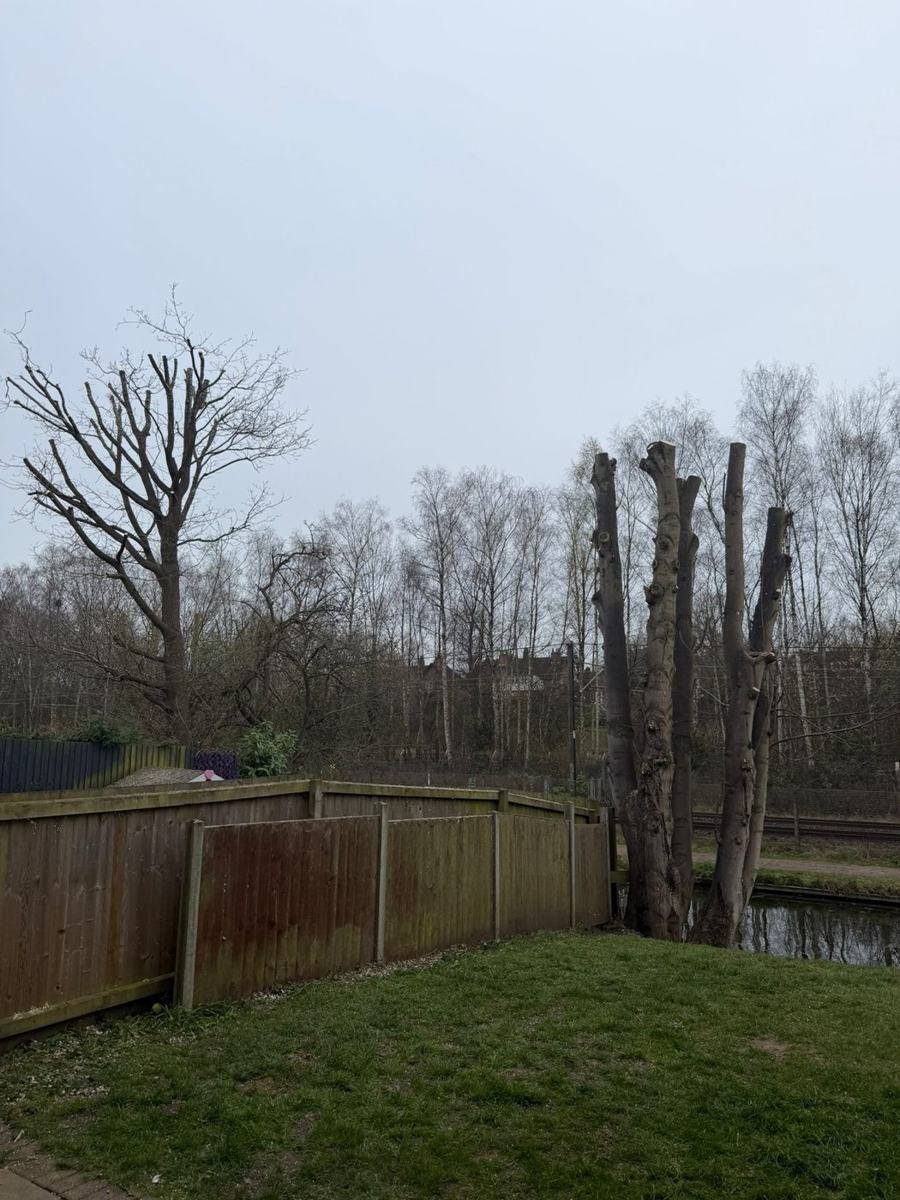
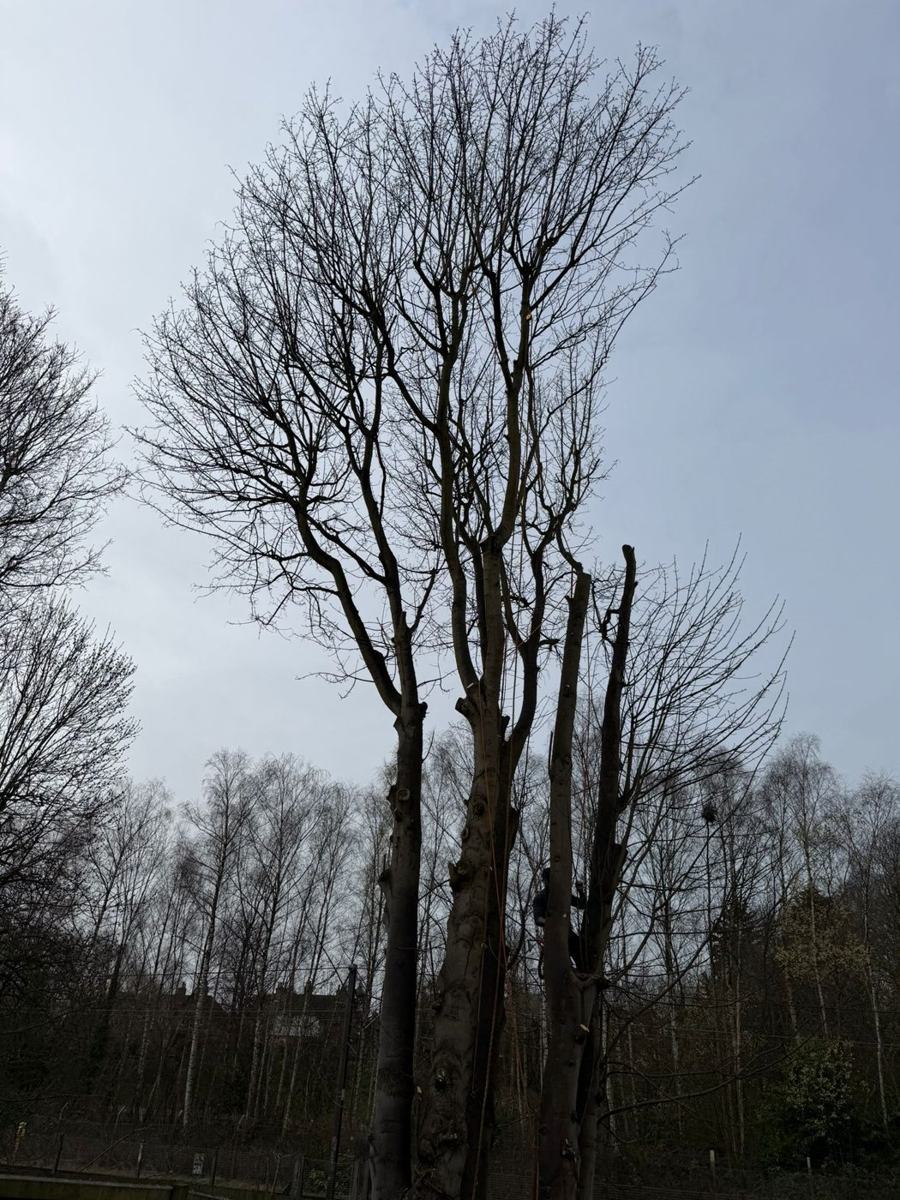
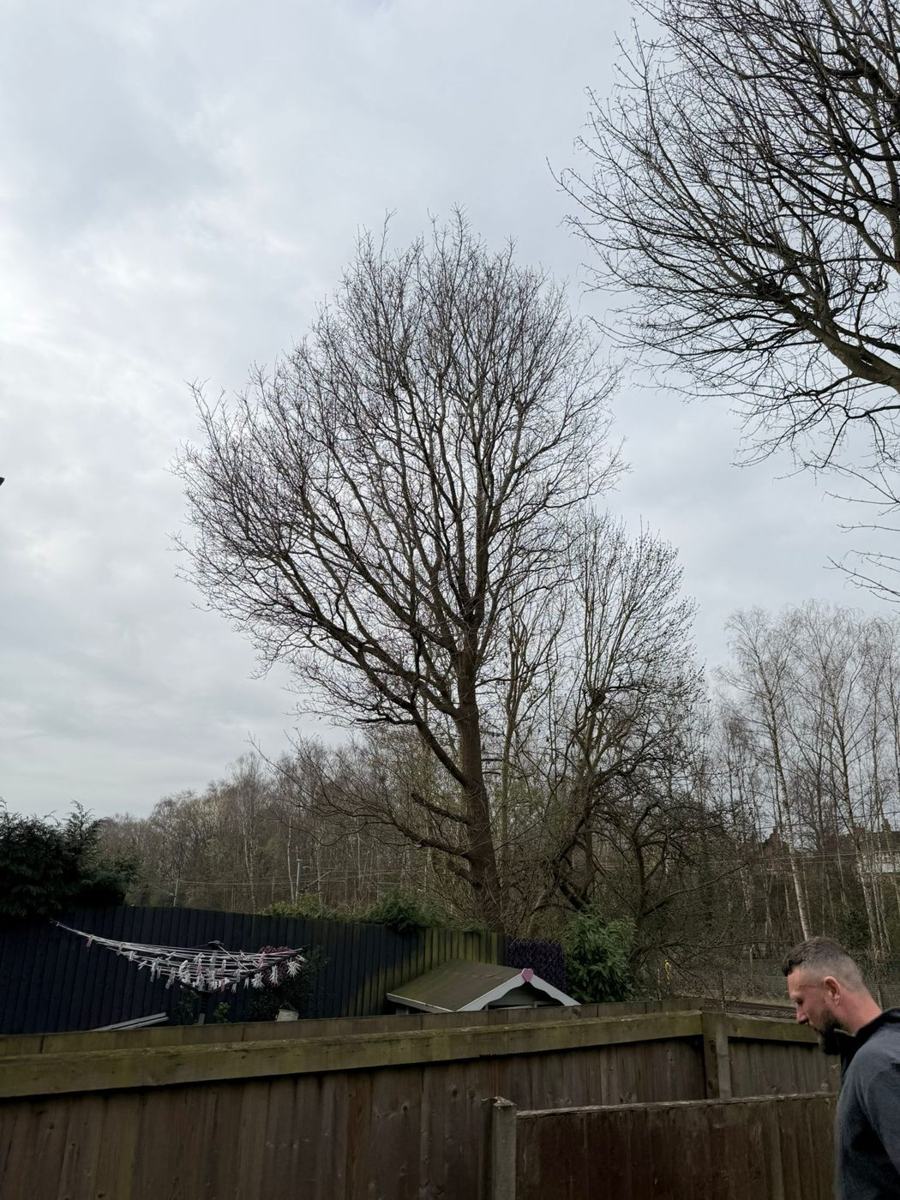
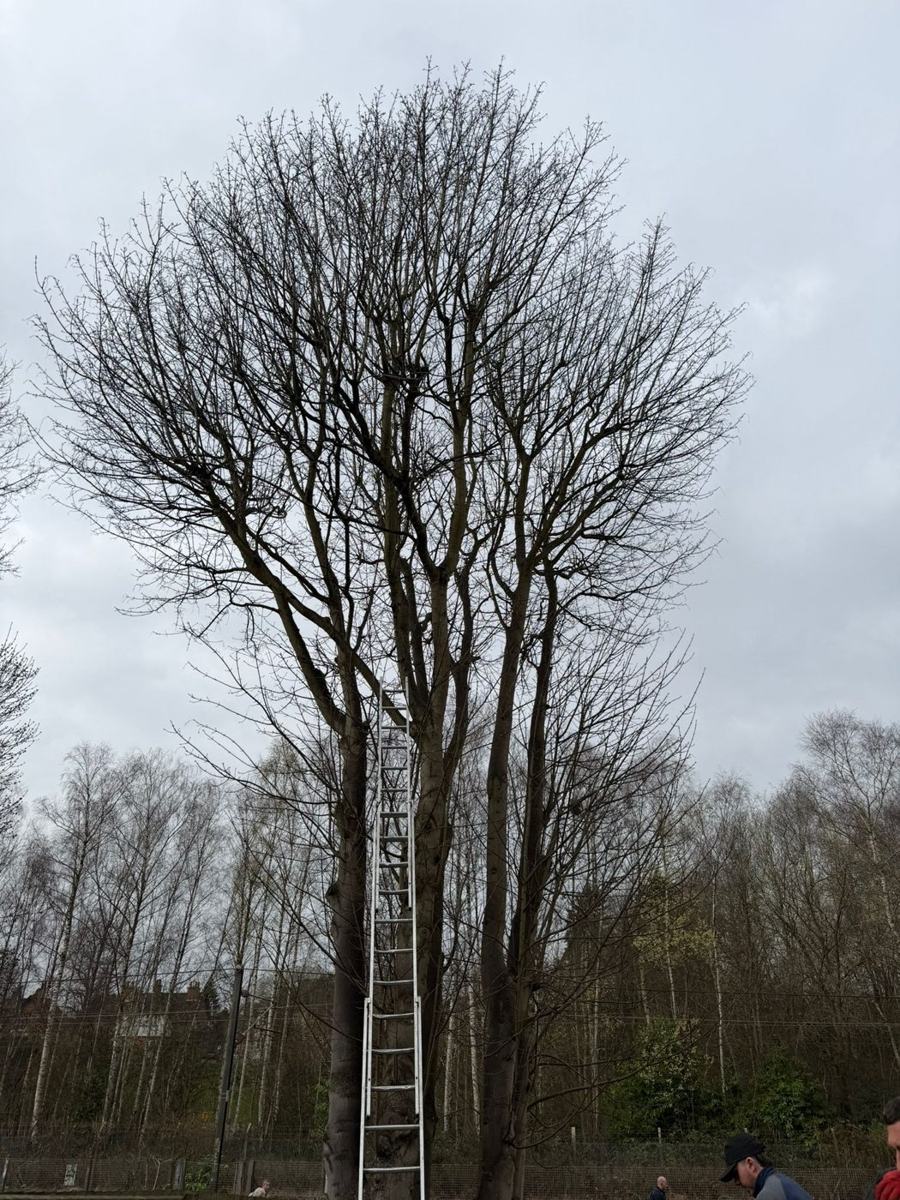
These photos come from a tree reduction in Selly Oak, where tall trees stand at the back of gardens next to a canal and a railway line. The work was done in winter with the trees bare, and the pictures show the canopy before cutting, a climber high in the crown, and one tree already cut back to a set of short, thick limbs.
What a reduction involves
A reduction shortens the branches of a tree so that it ends up smaller, while keeping as much of its natural shape as possible. Cuts are made back to a suitable branch or junction rather than leaving stubs, and the work is spread through the crown so the tree can recover. Winter suits many deciduous trees, as the bare branches make the structure easy to read and each cut easy to plan. Nesting birds still need checking for.
What the photos show
One photo shows a tree reduced to several tall limbs with clean cut ends, standing between a garden fence and the canal. Another shows a climber high in the crown with ropes in place, and the last two show tall, rounded crowns before work, with a ladder resting against one trunk. If trees at the back of your garden are growing into light, fences or wires, a reduction is worth discussing, along with any tree protection that may apply.