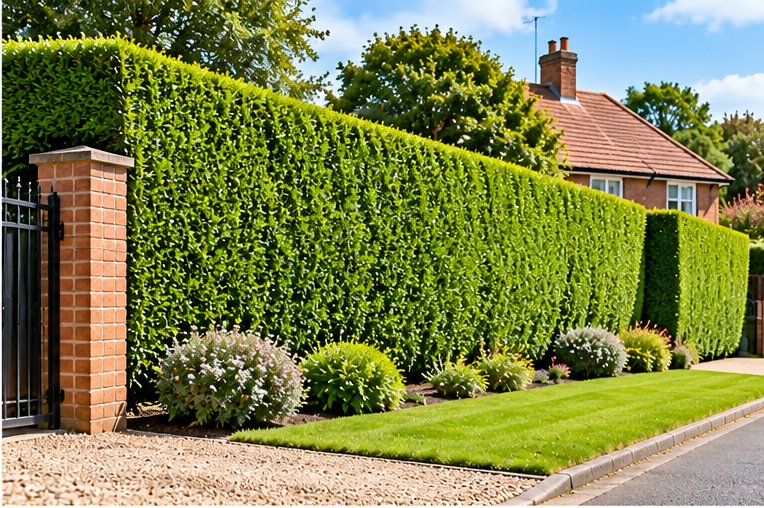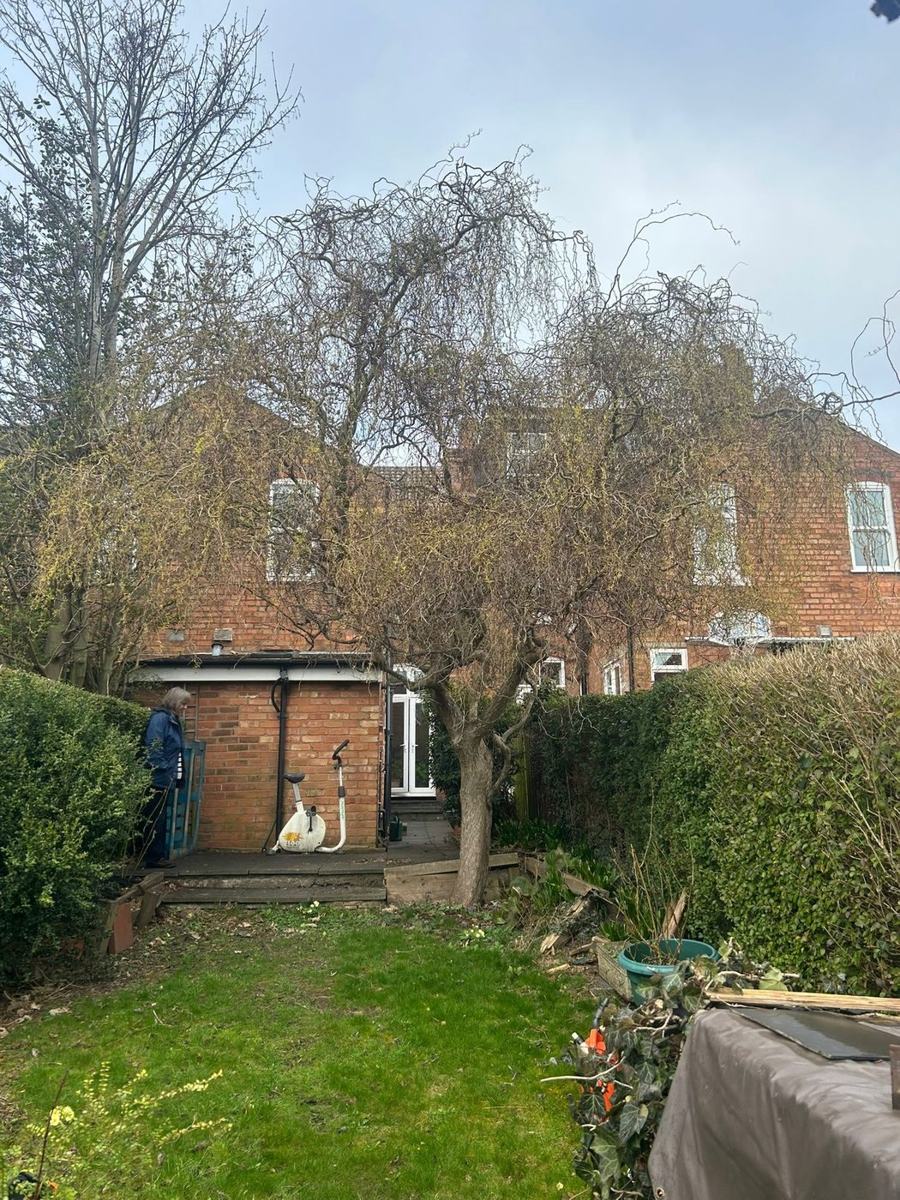
Bromsgrove lies at the foot of the Lickey Hills, and many of its homes have the kind of garden that comes with a tall, mature hedge. Period houses near the centre, newer estates and larger properties on the village edge all rely on hedging for privacy and shelter. We carry out hedge trimming in Bromsgrove for all of them, keeping the shape tidy and the growth under control.
Some hedges only need a light annual tidy. Others have been left for a season or two and need a proper cut back before they can be kept up again. We look at each one on its merits, tell you what we would do, and then leave the garden clean, with the clippings taken away and the paths swept.
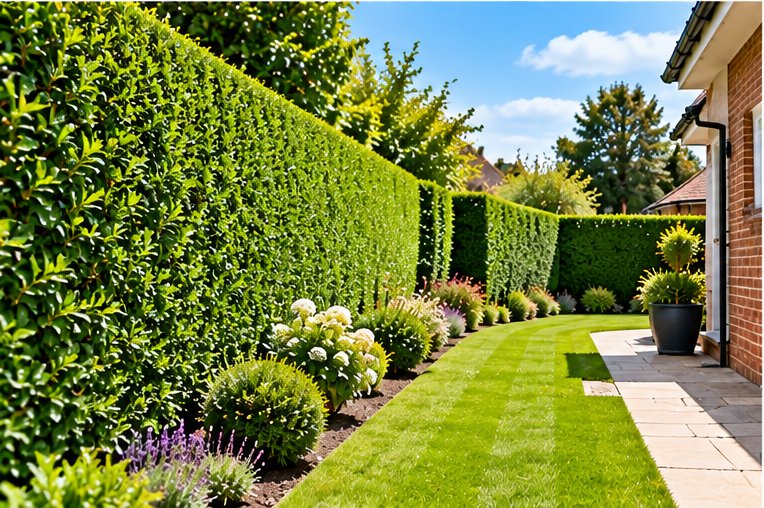
Older properties in Bromsgrove often have substantial boundary hedges that have been growing for a long time. They give a house character and privacy, but they also get wide and heavy, pushing out over paths and gates. We cut them back to a clean face, keep the top level and make sure the hedge keeps its natural proportions, narrower at the top than at the base.
That slight taper matters on a tall hedge, because it lets light reach the lower growth and stops the base thinning out. We work from a secure ladder or platform and take care around gate posts, walls and gutters. A well-cut hedge on a period home in Bromsgrove looks settled and tidy, which suits the house far better than a hard, flat edge.
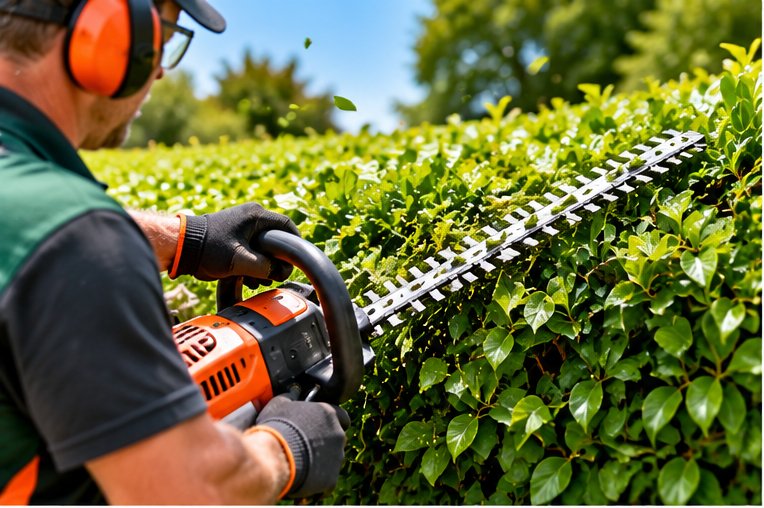
On the newer estates, hedges tend to be privet, laurel or a conifer screen between neighbours. These grow faster than people expect, and an uncut front hedge can soon swallow a path. A regular visit keeps them in check, and because we know how each species responds, we cut at a time and depth that helps the plant rather than shocking it.
Larger gardens at the edge of Bromsgrove often have long mixed hedges bordering fields or lanes. We trim these more gently, aiming for a tidy but natural outline, and we check for nests and wildlife before cutting. If a hedge has become too big, we can bring it down over more than one visit instead of cutting it hard in one go.
The sensible plan for most Bromsgrove hedges is a main cut once the worst of the growth has slowed, then a light tidy if the hedge is a fast grower. If you are not sure which suits yours, we are happy to advise. We visit gardens across the area, including Catshill and Barnt Green, so you may find we are already working nearby.
Based in Hall Green, so we are never far from the gardens we work in.
We look at the job before we price it, so you know what is involved.
Branches, clippings and rubbish from our jobs are cleared and the garden left tidy.
Call, or send photos on WhatsApp, and we will come back to you.
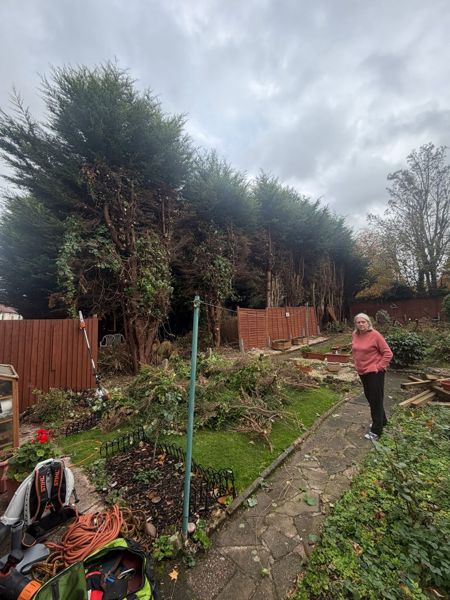 Hedge Trimming
A tall conifer screen at the end of a long garden cut back, with cuttings on the lawn and tools nearby.
View project →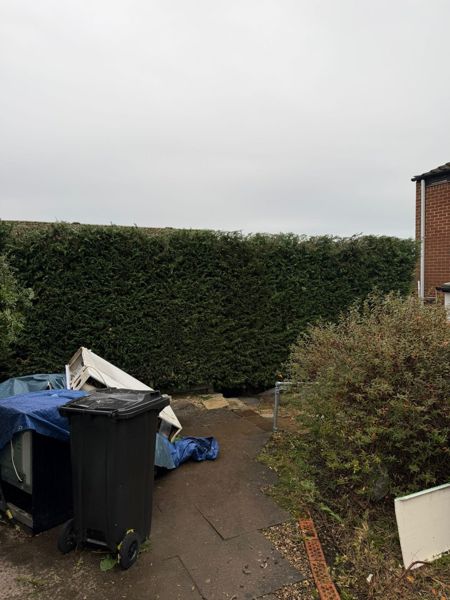 Hedge Trimming
A tall, thick Leylandii hedge on a Birmingham plot was reduced and topped off, with the clippings chipped on site.
View project →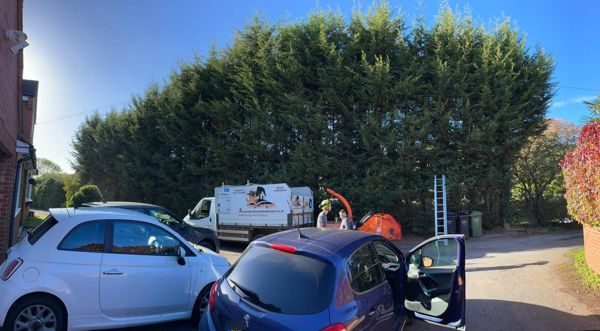 Hedge Trimming
A very large conifer hedge beside a Solihull driveway was reduced in height, with the clippings fed through the chipper.
View project →From our base in Hall Green we work across Birmingham, the Black Country, Solihull and parts of Worcestershire. Choose your area.
For most hedges, late summer is a good time for a main cut, once nesting has finished. Fast growers like privet may also want a lighter trim earlier. Because of nesting birds, we check each hedge before cutting and adjust our plans to suit it.
Yes. Hedges beside lanes and footpaths often need cutting back to keep the way clear, and we do this regularly. We keep the edge neat, collect the clippings and sweep up so that the lane or path is left safe for others to use.
Not necessarily, but it depends on the species. Many broadleaf hedges regrow well after a hard cut, while conifers often do not. We identify what you have and explain what is safe. If a hard cut is risky, we reduce it in stages.
Tell us what needs doing and where. We will get back to you to arrange a visit and a free, no-obligation quote. Photos sent on WhatsApp help.