The stump is a separate decision
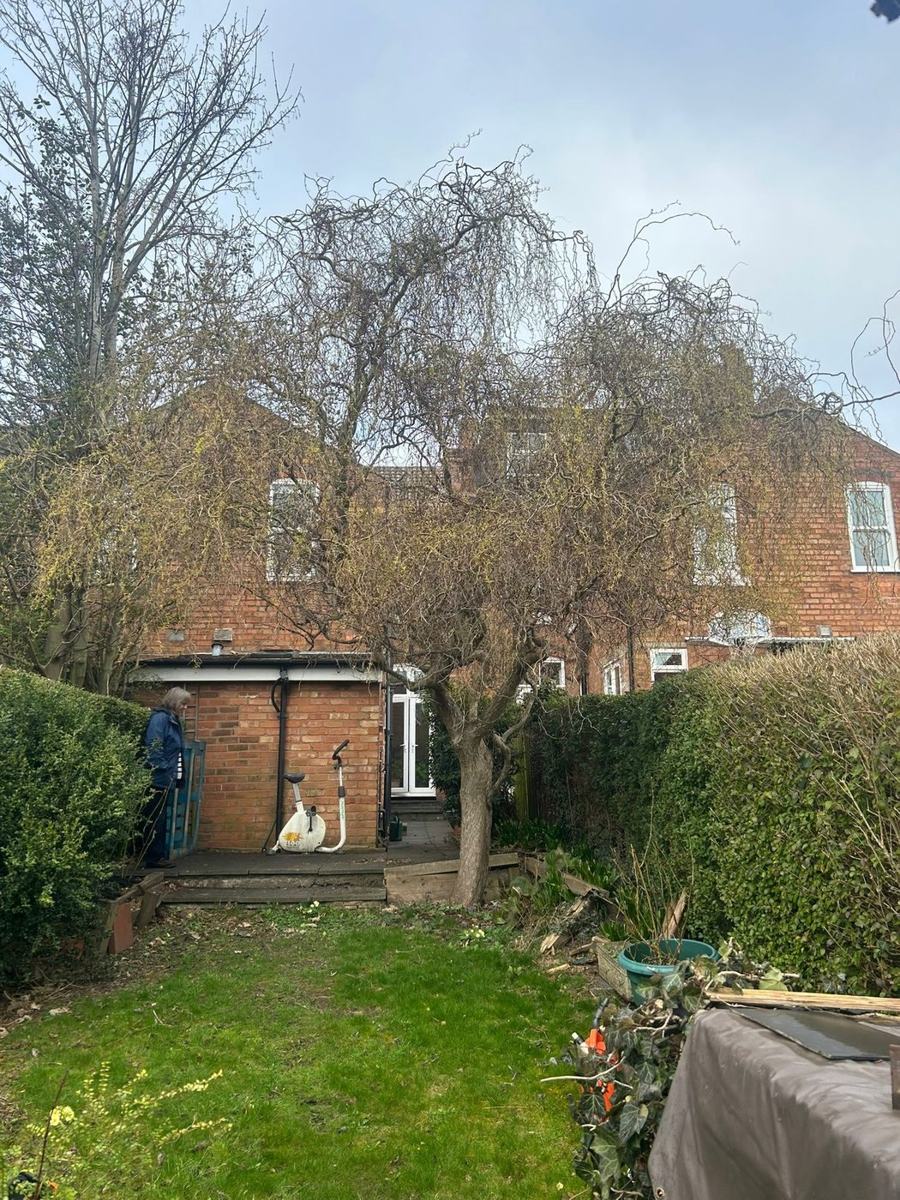
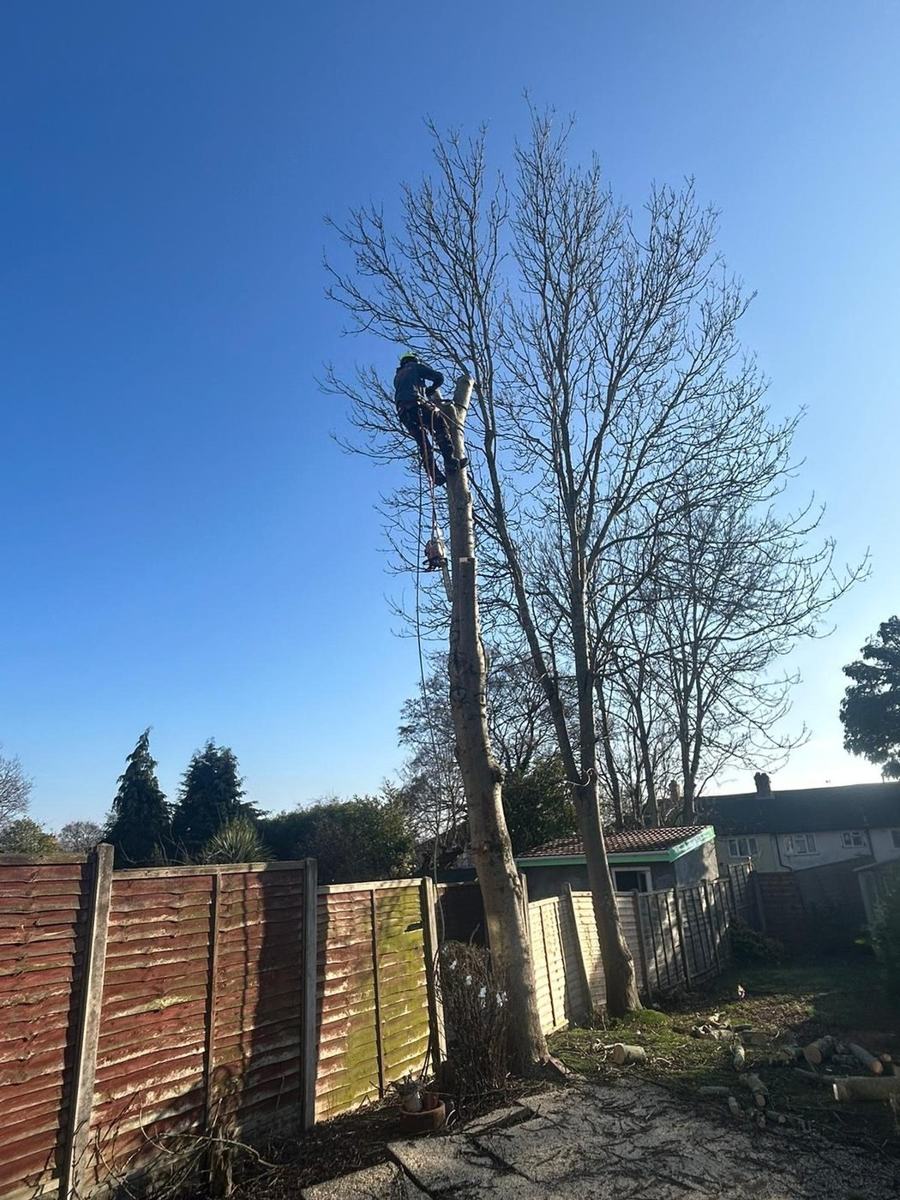
When a tree is felled, the trunk and branches are cut and cleared, but the stump and the roots below it stay in the ground. Many people assume the stump goes with the tree, so it helps to settle what you want before the work is booked. In older Birmingham gardens, where trees often stand close to paths, walls and outbuildings, the answer usually comes down to what you want that spot to become afterwards.
Option one: leave it low
The simplest choice is to cut the stump close to the ground and leave it. It costs the least effort, causes the least disturbance and can be perfectly reasonable at the back of a border or beneath other planting. A left stump will slowly decay over time, but it can take a long while, and some trees regrow from the stump with new shoots, which then need cutting back. It can also be a trip hazard or an eyesore in a lawn, so it suits some spots better than others.
Option two: grinding it out
A stump grinder chews the wood down below ground level, leaving a pit of wood chippings that you can fill and level. It does not need the whole root system to be dug out, so there is far less mess and disturbance than digging. It suits stumps in lawns, near paths and patios, or anywhere you want to replant or lay turf. The grinder needs access, so narrow side passages and tight terraced gardens are worth mentioning when you ask for a quote.
- Good for lawns, borders and the base of a new patio
- Leaves chippings that can be used or removed
- Access to the stump decides how it is done
- Roots can remain below, though they decay
Option three: digging out
Full removal means digging out the stump and the main roots by hand or with a small machine. It is more disruptive and the hole is larger, so it is normally reserved for cases where grinding will not do, such as a stump that must come out completely for a new structure or deep foundations. Ground conditions matter too. Heavy clay, which is common across much of the West Midlands, can make digging hard going.
What happens to the wood afterwards
Whichever route you choose, the waste should not be left for you to deal with. The timber from the tree can be logged if you want it for a stove or fire pit, and the chippings and green waste can be taken away. If you plan to replant, it is worth asking for the ground to be left level and clear, and avoiding planting a new tree too close to where the old one stood.
Checks before any tree comes down
Trees can be protected by a Tree Preservation Order or by being in a conservation area, and the local council is the place to check. Larger felling may need a licence from the Forestry Commission, so ask if you are unsure. If the tree is on or near a boundary, talk to the neighbour before the work starts. Nesting birds can also affect timing.
Choosing and getting a quote
The cost of dealing with a stump depends on its size, the type of tree, access to the spot, the ground and how much waste there is. That is why seeing the stump is the reliable way to know. Tell us what you want the space to be, and we will suggest the most sensible route.
Want it looked at properly?
Tell us what you have and we will arrange to visit, explain what is needed and give you a free, no-obligation quote. See our tree felling page, or send us photos on WhatsApp.
Common Questions
Can I just leave a tree stump in the garden?
Yes, many people do. A low stump is the simplest option and will decay slowly. Be aware that it can take a long time to rot, may send up new shoots, and can be awkward in a lawn. Grinding is better if you want a clear, level space.
Will a stump grow back after felling?
Some species, such as willow and some broadleaf trees, can sprout from the stump or roots after the tree is cut. Conifers generally do not. If shoots appear, they can be cut back repeatedly, but grinding the stump out usually settles the matter for good.
Is stump grinding better than digging it out?
For most gardens, yes. Grinding is quicker, creates less mess and avoids a large hole. Digging out suits cases where the whole stump and roots must go, for example under a new building. The right choice depends on access, ground and what you want afterwards.
Can I plant over a ground-out stump?
Once the chippings are cleared or the hole is filled with good soil and levelled, you can lay turf or plant a border. It is wiser not to put a new tree in exactly the same spot, as leftover roots and chippings can affect it.