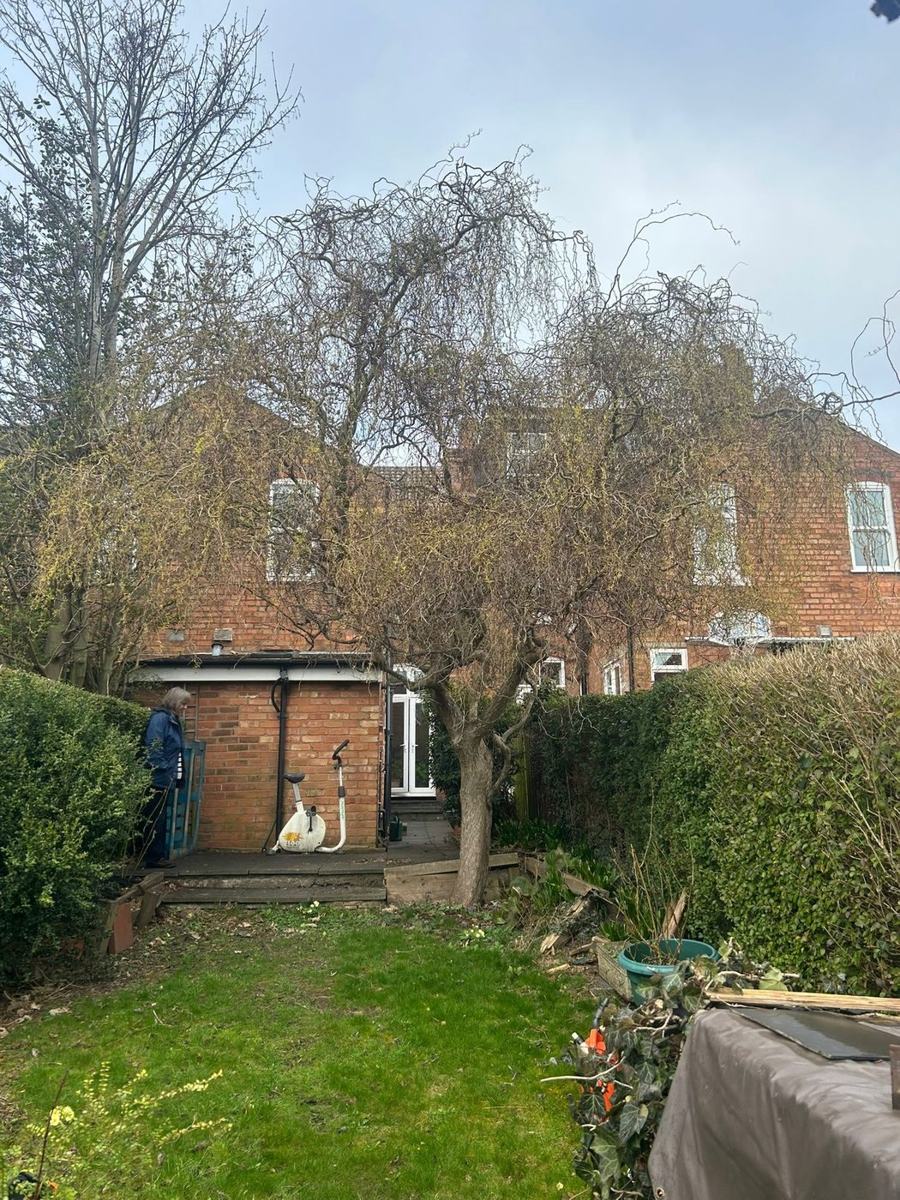
Why conifers get out of hand
Leylandii and similar conifers are fast growers, and a row planted as a neat screen can reach a great height surprisingly quickly. Across Birmingham and the Black Country they turn up in long inter-war back gardens, along the edges of Victorian terrace plots and beside driveways, often planted by a previous owner for privacy and then left to grow. The trouble is that they keep going upward and outward, steal light from lawns and windows, drink a lot of water from the soil and cast deep shade onto neighbouring gardens.
The rule that decides everything
Most conifers will not grow back from old, bare, brown wood. Cut into a branch that carries no green foliage and it usually stays bare for good, leaving a hole or a dead-looking patch. So reduction only works if there is living green growth to cut back to, and the cuts must stay within it. This is why a hedge or tree that has been left alone for a long time can be tricky. If the green is only a thin skin on the outside of a bare interior, taking it back hard may simply leave a brown wall.
When reduction is a sensible choice
If the tree still carries foliage well down its length and the problem is mainly height or spread, a staged reduction can bring it back to a manageable size. Taking it down in steps, rather than all at once, keeps the cuts in green wood and gives the tree time to fill out. It also suits cases where the conifer is a useful screen that you would rather keep, or where it sits in a conservation area and removal needs more thought.
- Green foliage still reaches well into the lower and middle parts of the tree
- The aim is a lower screen, not a bare trunk
- The tree is healthy, with no large dead or browning sections
- There is room to work and a way to clear the cuttings
When felling is the more honest answer
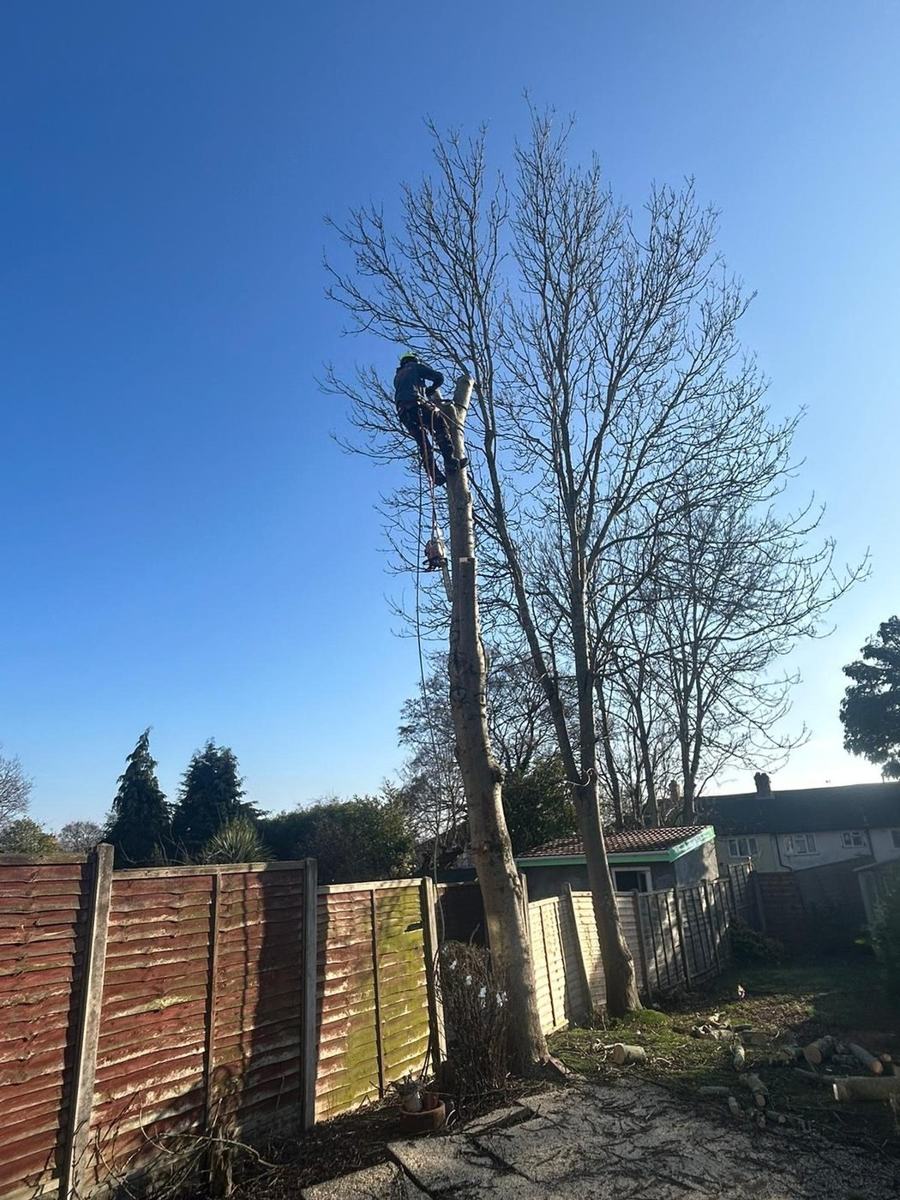
Sometimes the kindest advice is to take the tree out. If a conifer is bare at the base, browning through the middle, leaning, or so tall that any reduction would cut into dead wood, cutting it back will only give you a worse-looking tree that still needs removing later. Large conifers are normally taken down in sections, working from the top, which keeps everything controlled over fences, sheds and neighbouring gardens. The timber can be logged and the green waste taken away, and the stump can be left low or ground out by arrangement.
What you can safely do yourself
Low, small conifers that you can reach from the ground, with a hedge trimmer or shears, are fine for a keen gardener, provided you stay within the green growth and check first for nesting birds. Wear eye protection and keep well clear of any cables. Anything tall, anything needing a ladder, and anything near the house, garage or power lines is a job for a trained crew. Climbing and chainsaw work at height is where garden accidents happen, and it is not worth the risk to save a visit.
Rules and neighbours to check first
Trees can be protected by a Tree Preservation Order or by standing in a conservation area, and the local council is the place to check before anyone cuts. Larger felling may need a licence from the Forestry Commission, so it is worth asking if you are removing a good number of trees. Talk to neighbours as well, particularly where the conifers sit on or near a boundary. Birds may also be nesting in dense conifers in spring and summer, and that can mean waiting.
Getting the job planned
The right answer depends on the particular tree, so we would rather look at it than guess. We will tell you plainly whether reduction is possible or whether removal makes more sense, and talk through access, disposal and what is left afterwards. Seeing the site is the reliable way to know what the work involves.
Want it looked at properly?
Tell us what you have and we will arrange to visit, explain what is needed and give you a free, no-obligation quote. See our tree felling page, or send us photos on WhatsApp.
Common Questions
Can I cut a Leylandii back to the trunk?
Usually not. Most conifers do not shoot again from old brown wood, so cutting back to bare stems tends to leave dead-looking gaps that never fill in. Reduction needs to stay within the green foliage. If there is no green left to cut to, removal and replanting is often the better route.
Is it better to reduce a conifer or fell it?
It depends on how much living green growth remains and how much height you need to lose. A healthy tree with foliage down its length can often be reduced in stages. A bare, leaning or browning tree is usually better taken down, as reducing it only delays the job.
Do I need permission to cut down a conifer?
Not always, but check. A tree can be protected by a Tree Preservation Order or by being in a conservation area, and the local council can tell you. Larger felling may need a licence from the Forestry Commission, so it is sensible to ask before work is booked.
What happens to the stump and waste afterwards?
The branches and green waste are cleared away and the timber can be logged if you want it. The stump can be cut low and left, or ground out by arrangement, which is worth deciding early if you plan to replant or lay a lawn or patio.