What the term means
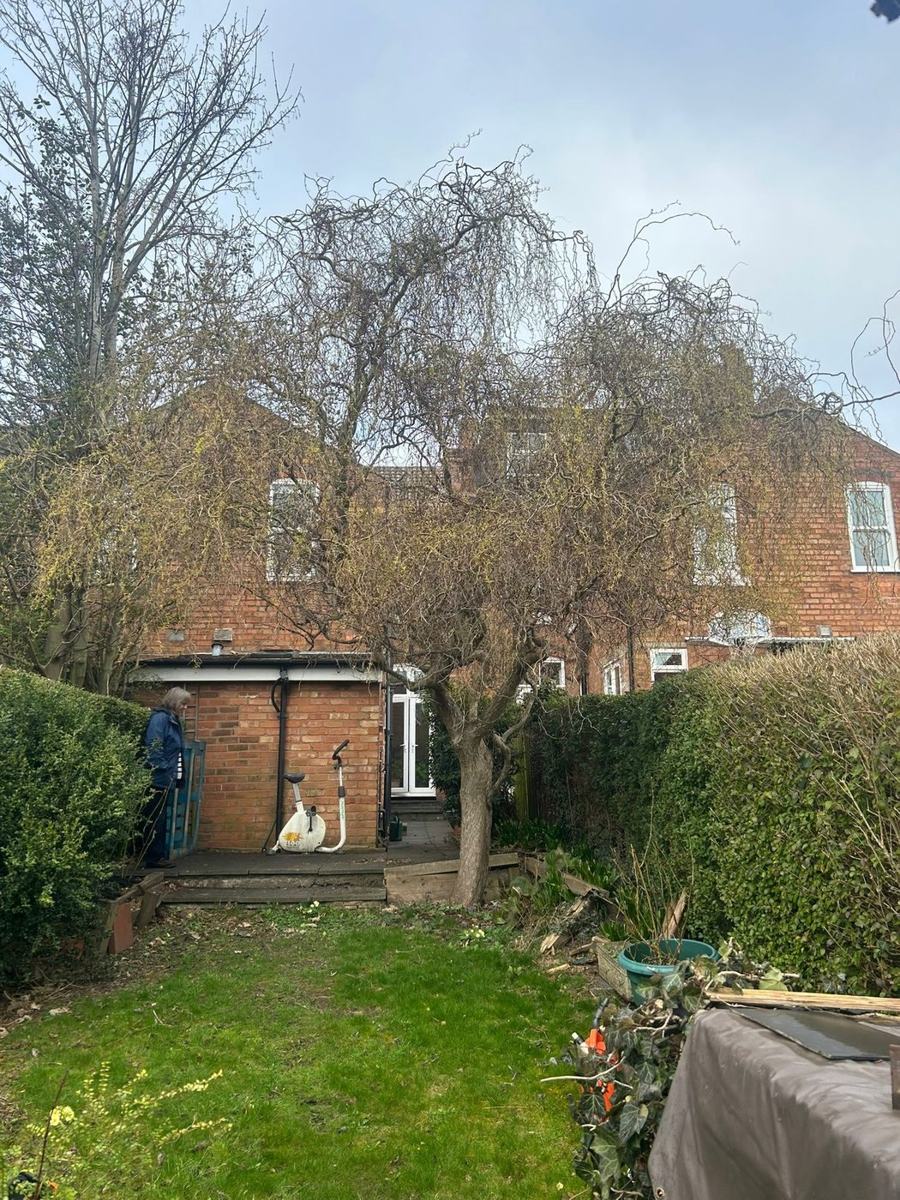
The crown of a tree is its head of branches and leaves. Crown lifting raises that canopy by taking off some of the lowest limbs, so there is more clear space beneath. The upper part of the tree is left alone, so the tree keeps its natural shape and size. It is a different job from a crown reduction, which makes the tree smaller overall, and from thinning, which opens up dense growth.
Common reasons for lifting a crown
In towns and suburbs, trees often hang over spaces people need to use. Low branches can brush against the roof of a van, block a pavement, scrape windows or shade a conservatory and extension. Across Birmingham and Solihull, with so many mature street and garden trees, it is one of the most common pieces of tree work. It is often a good alternative to felling a tree that is otherwise healthy and valued. Lifting is also useful where a tree has grown beside a driveway or garage and low limbs now rub the roof of a car or the guttering, a problem that tends to creep up slowly until it becomes a nuisance.
- Clearance over paths, driveways and roads
- Space around windows, extensions and outbuildings
- More light reaching the lawn or border beneath
- Opening up a view or an access route
How much is too much
Moderation matters. A tree makes food in its leaves, so taking off too much of the crown at once can stress it. A sensible approach is to lift in stages rather than remove all the low growth in one go, and to leave a healthy proportion of the tree in leaf. Cuts should be clean and made in the right place, just outside the branch collar, so that wounds can seal. Ragged stubs and flush cuts into the trunk are better avoided, as they invite decay.
Species and timing
Different trees respond differently. Many broadleaf species are usually pruned in the dormant winter months, while some, such as cherries and other stone fruit, are better cut in summer. Large wounds on some trees heal slowly, so smaller cuts are preferred wherever possible. Whatever the species, nesting birds are a consideration from spring into summer, and it is worth checking before cutting. Fruit trees such as apple and pear have their own timing needs as well, and we would rather ask than assume.
What you can safely do yourself
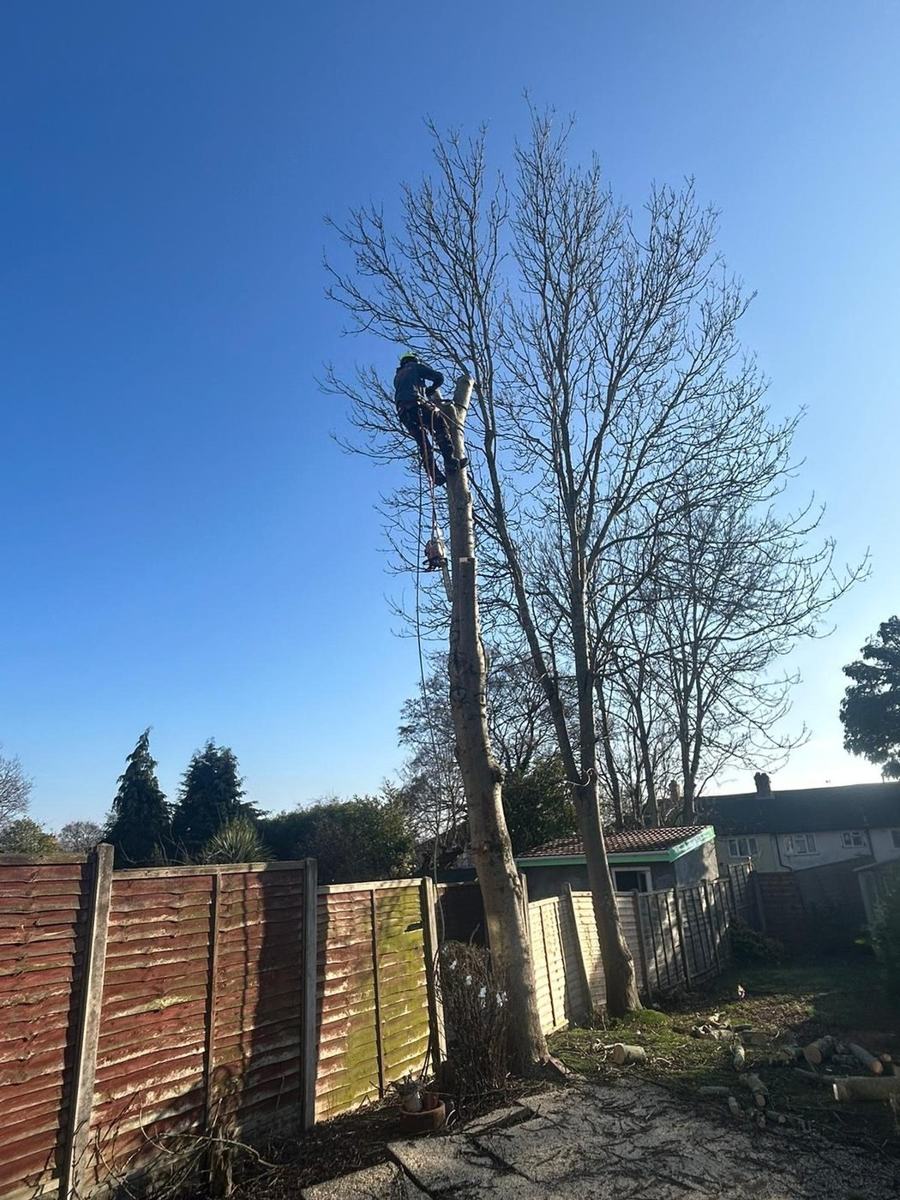
Very small trees with branches within reach from the ground can be tidied with hand loppers or a pruning saw. Keep the cuts tidy and small. Anything that needs a ladder, a pole saw overhead, a chainsaw or climbing, or that sits near the house or cables, should be left to a trained crew. Dropping heavy branches onto fences, cars and pavements is a real risk.
Protection and permissions
Trees can be protected by a Tree Preservation Order or by being in a conservation area, and many leafy parts of the West Midlands have both. The local council is the place to check before any pruning, because cutting a protected tree without consent can be an offence. Boundary trees are a shared matter, so a word with the neighbour first is wise. Even a small tree can be covered, so do not assume that a garden tree falls outside the rules.
Planning the work
Tell us what the tree is getting in the way of, and we will look at how much needs to come off and whether it can be done in one visit or in stages. We will explain the plan in plain terms, take the cuttings away and leave the area tidy. Seeing the tree is the reliable way to know what is involved.
Want it looked at properly?
Tell us what you have and we will arrange to visit, explain what is needed and give you a free, no-obligation quote. See our crown lifting page, or send us photos on WhatsApp.
Common Questions
Is crown lifting the same as crown reduction?
No. Lifting removes lower branches to raise the canopy, leaving the top of the tree as it is. Reduction shortens the branches across the crown to make the whole tree smaller. They solve different problems, so it helps to explain what the tree is blocking.
Will crown lifting harm my tree?
Done in moderation with clean cuts, it is generally well accepted by the tree. Problems arise when too much is removed at once or cuts are badly placed. Lifting in stages and keeping a healthy amount of leafy canopy is the safer approach, especially for older trees.
Do I need permission to lift a tree's crown?
Possibly. If the tree has a Tree Preservation Order or stands in a conservation area, you will usually need to tell or get consent from the local council first. It is quick to check with them, and it avoids the risk of breaking the rules.
When is the right time to do crown lifting?
For many trees, winter dormancy is a good time, though some species suit summer pruning. Nesting birds also matter from spring onwards. The right timing depends on the tree, so we will advise when we have seen it. Winter suits many species, summer suits a few, and it is always sensible to look for nests first, so a short visit to see the tree helps us give you proper advice on timing.