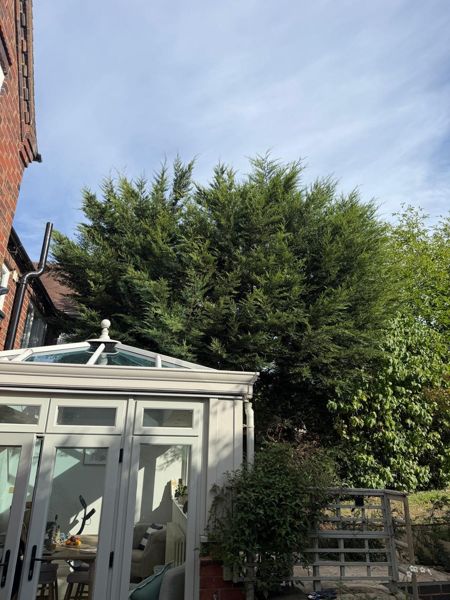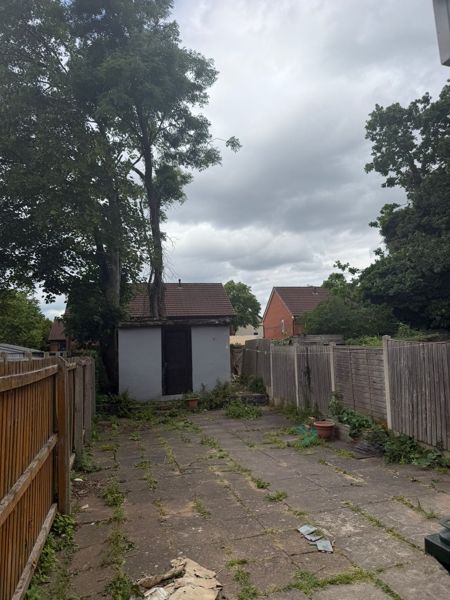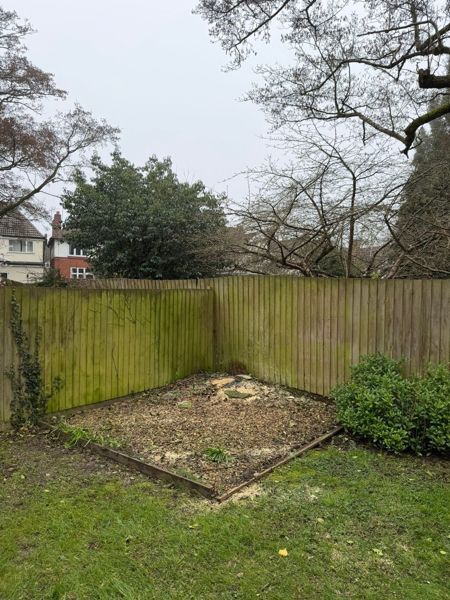
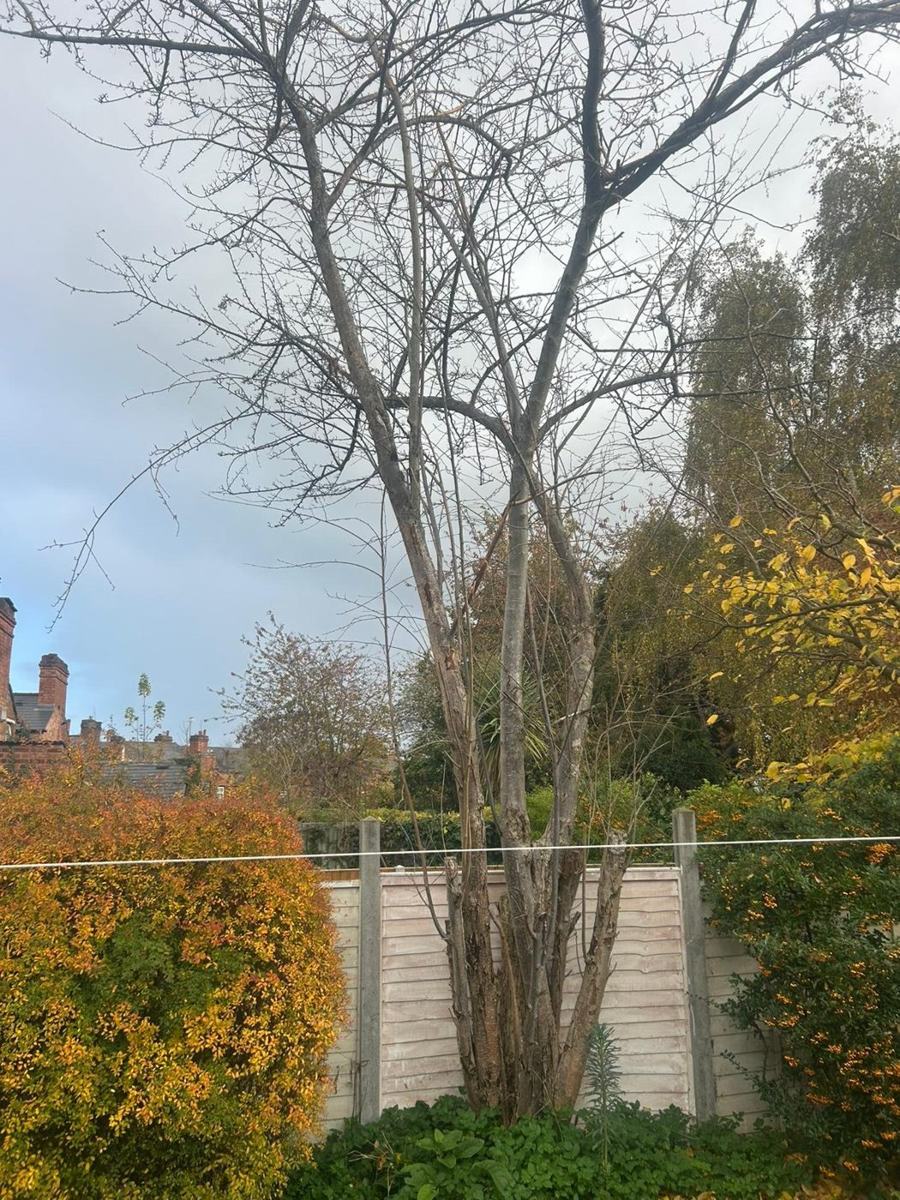
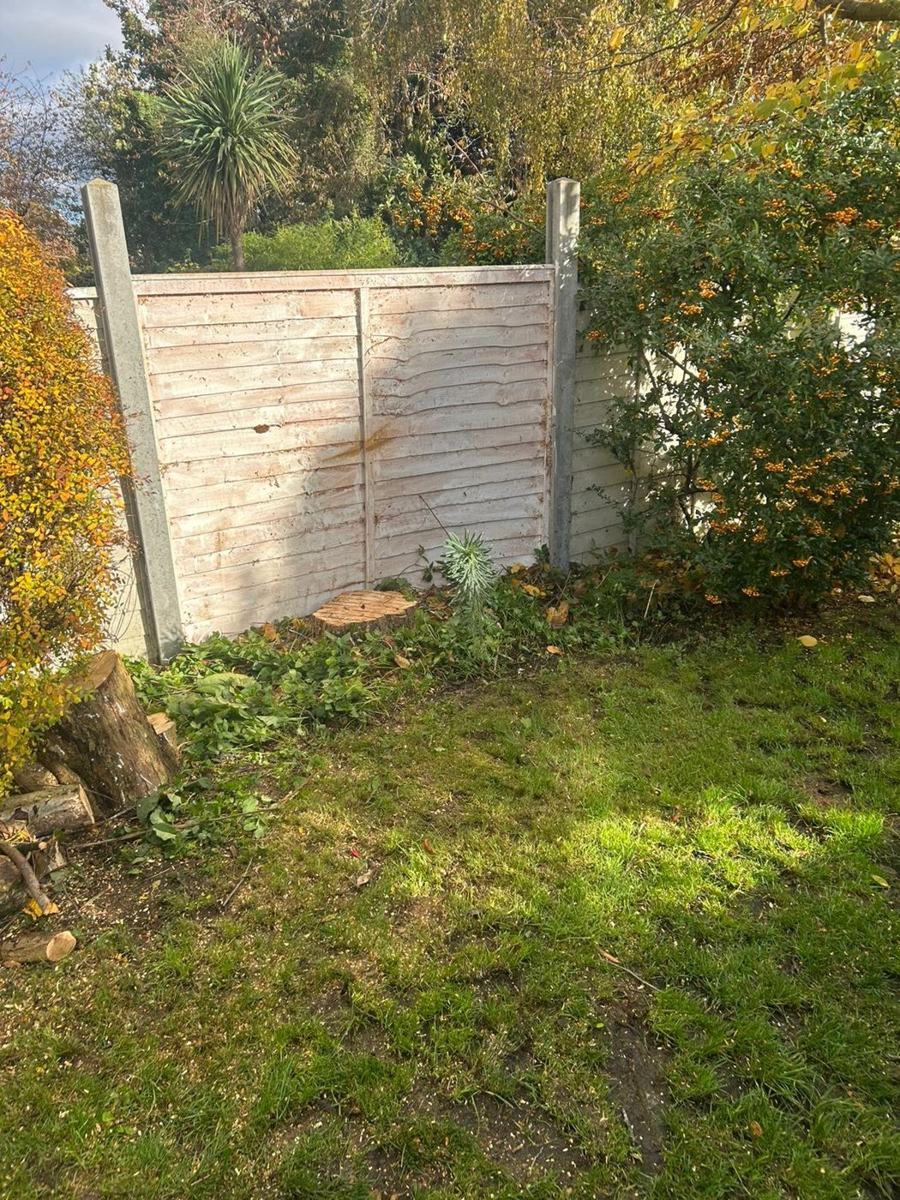
This project shows a tree removal in Harborne. The first photo has a tall, bare, multi-stemmed tree standing against a close-board fence, with shrubs packed in around its base. The second shows the same corner afterwards, with the tree gone, a low stump left beside the fence and cut logs stacked on the lawn edge.
Taking a multi-stemmed tree down
A tree that splits into several stems low down is usually taken apart piece by piece rather than dropped whole. Each stem is reduced from the top, with the lengths lowered or carefully placed, so nothing lands on the fence or the shrubs close by. In this garden the boundary panels sit right behind the trunk, which is why the work has to be controlled.
Once the stems are down, the wood is cut into rounds and the thinner growth is cleared away. The photos show the end of that process, with the logs set aside, the brash gathered up and the lawn edge left clear for the household to use again. Tidiness at the end matters as much as the cutting, because loose brash is easy to miss.
The stump and what comes next
The second photo shows a stump cut low beside the fence, with fresh pale wood on its top. A low stump is a common finish, and grinding it out is something that can be arranged separately if the space is needed later for planting, turf or a new border in that corner.
It is worth checking with the council about Tree Preservation Orders before any tree is taken out, and also looking for nesting birds in the warmer months. Neighbours who share the fence line should hear about the work beforehand, so nobody is surprised by the noise. A short word over the fence is usually all it takes to keep things friendly with the next door household.