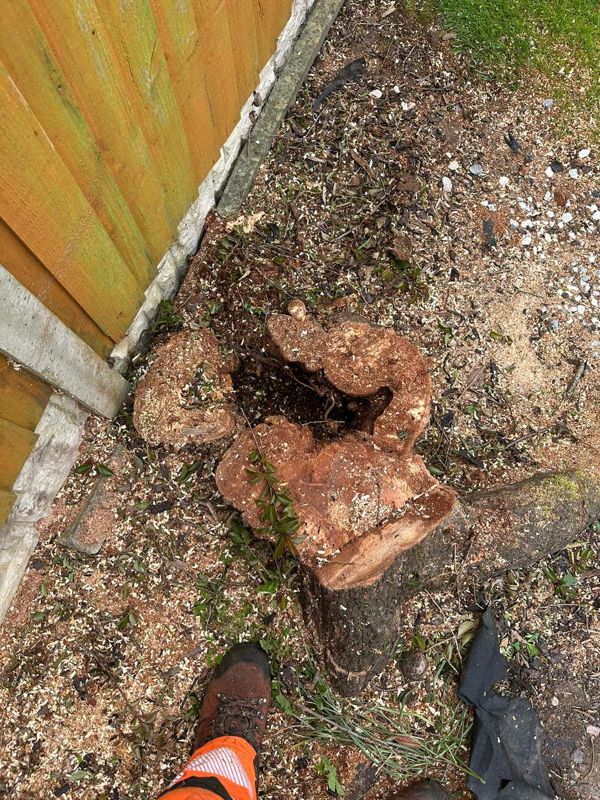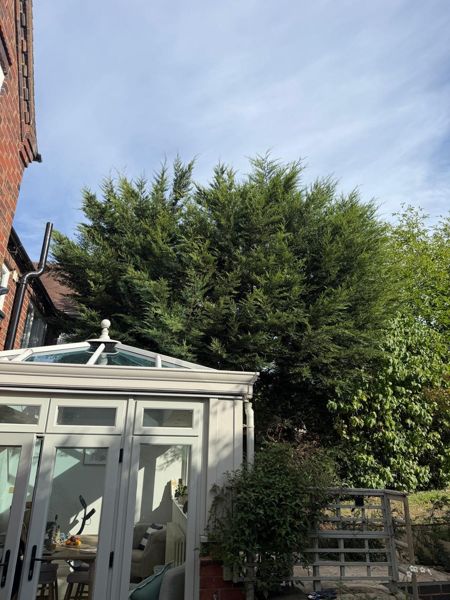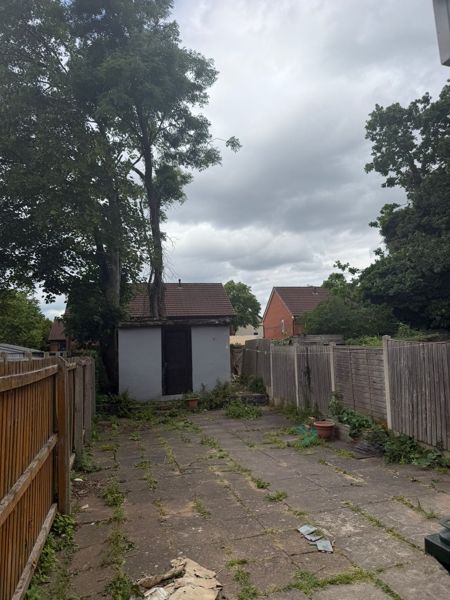
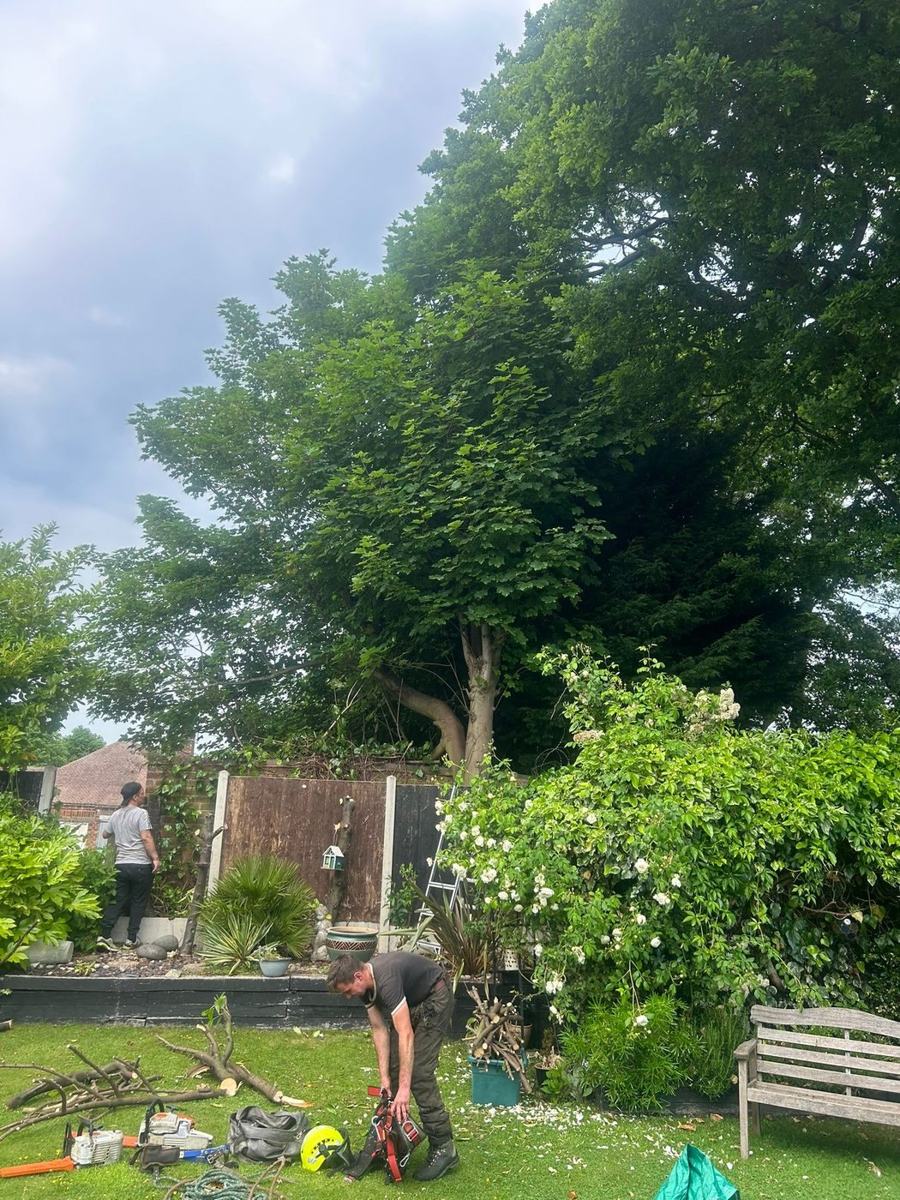
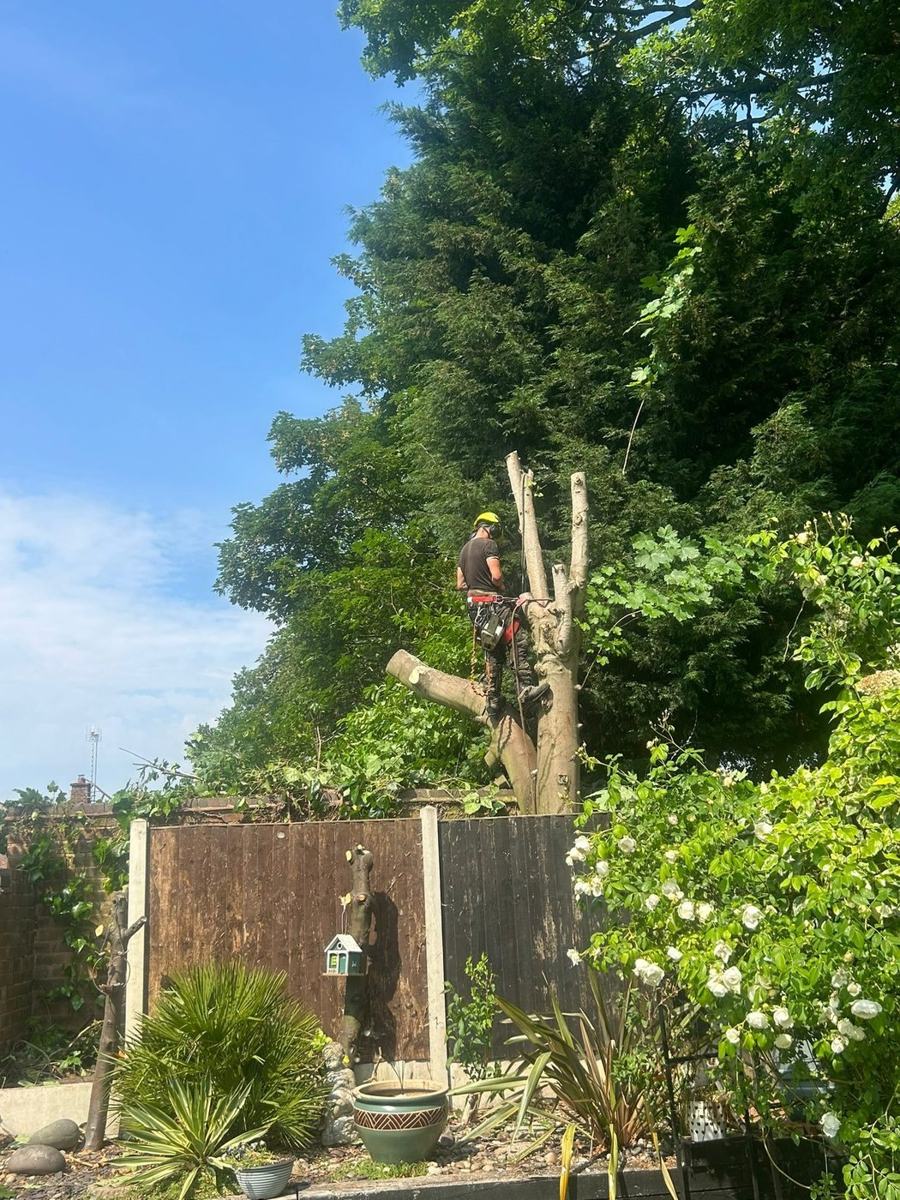
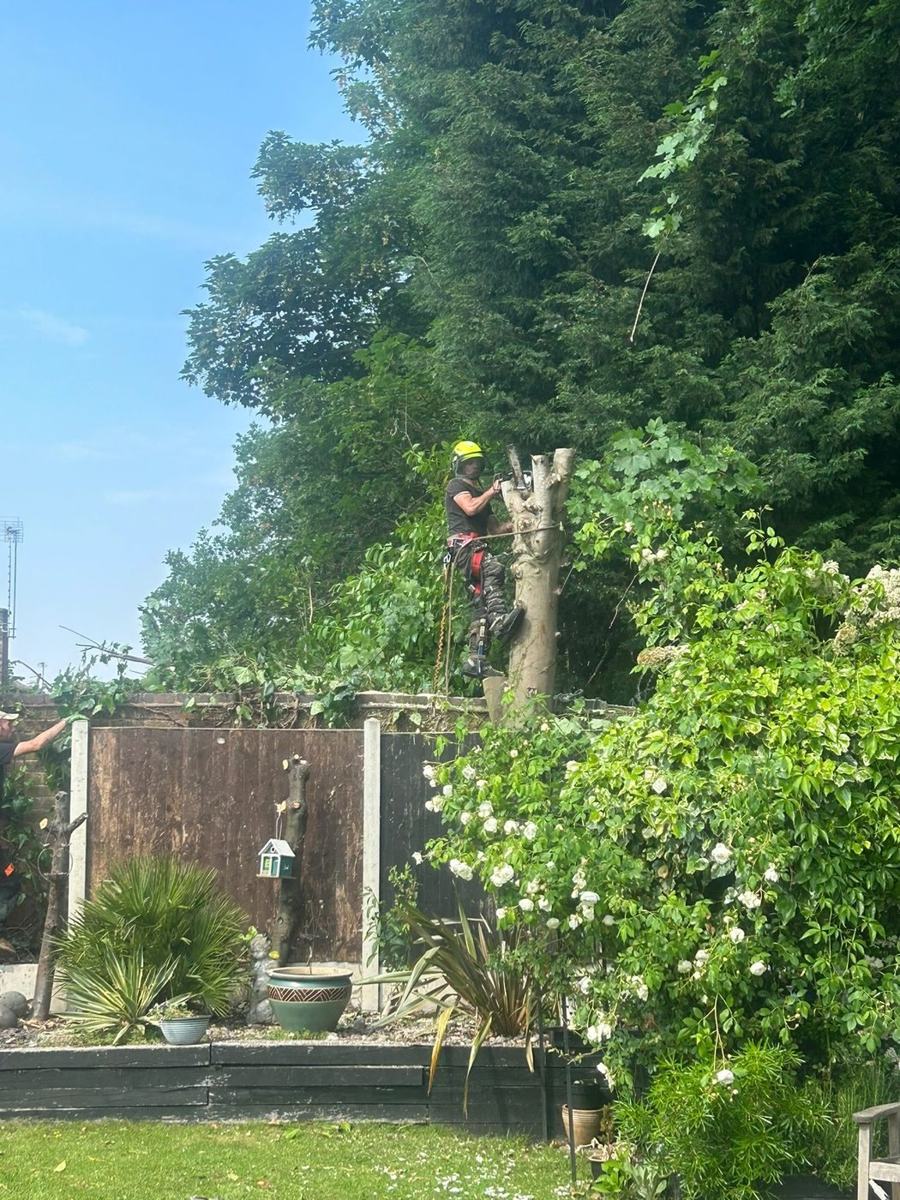
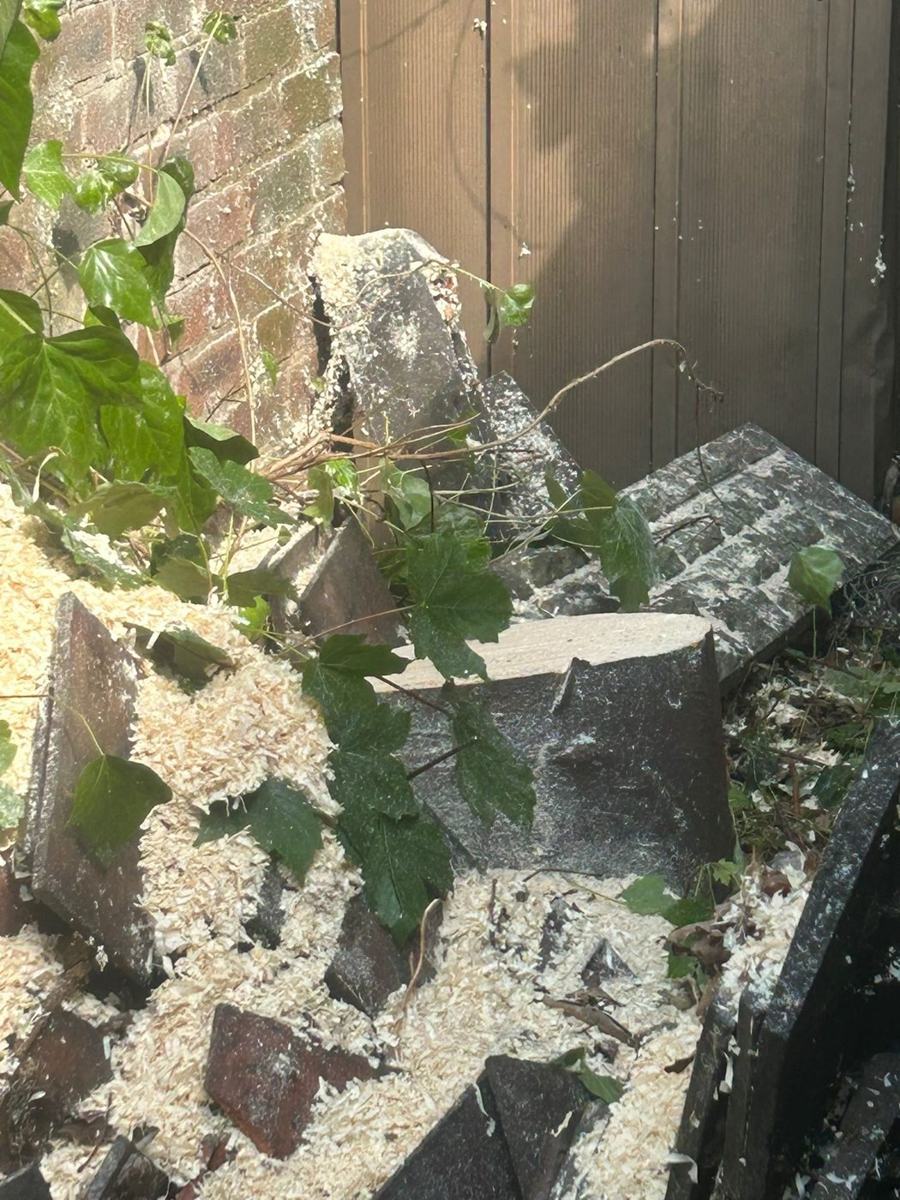
This project in Shirley started with a tall, leafy tree growing right at the back of a garden, against a fence and a brick wall. With the tree so close to the boundary, we took it down from the top in stages rather than dropping it in one go. The photos follow the work as it progressed, from the kit laid out on the lawn to the sawdust at the base.
Why it came down in pieces
When a tree stands this close to a fence, a wall and a neighbouring garden, it cannot simply be pushed over. The climber goes up with a rope and a saw, removes the upper limbs, then cuts the trunk down in lengths, each one controlled on its way to the ground. It is slower than a straight felling, but it keeps fences, planting and the neighbours' side of the boundary safe.
Before any cutting starts, it is worth asking the council whether the tree is covered by a protection order or stands in a conservation area. Nesting birds are another thing to check for in spring and summer, because active nests need to be left alone until the young have gone.
What you can see in the photos
The first photo shows the full-sized tree with ladders, chainsaws, ropes and a harness laid out on the lawn. The next two show the climber on the trunk at different heights, with the top already removed. The last photo shows the foot of the work: sawdust and cut sections piled against an ivy-covered brick wall. Clearing all of that is part of finishing the job properly.