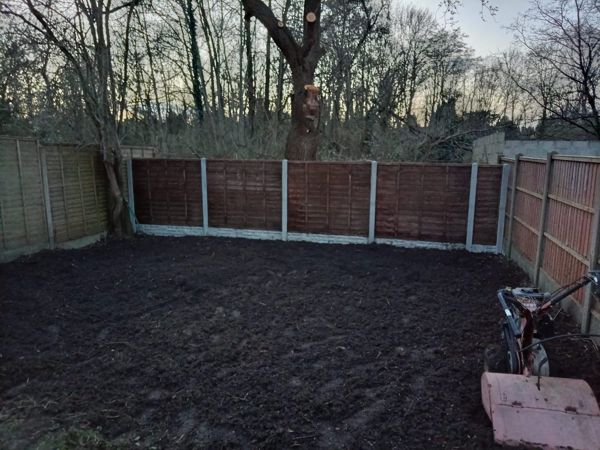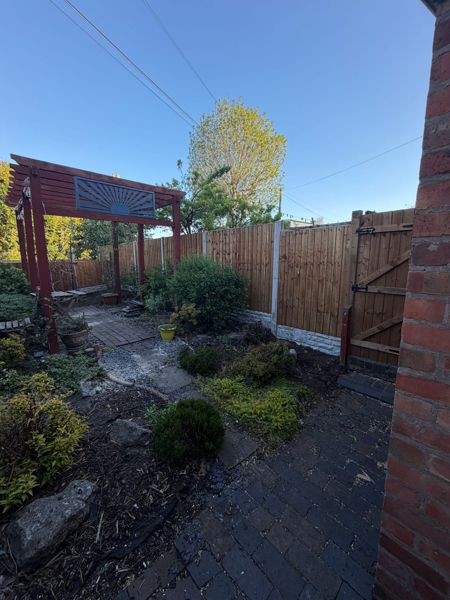
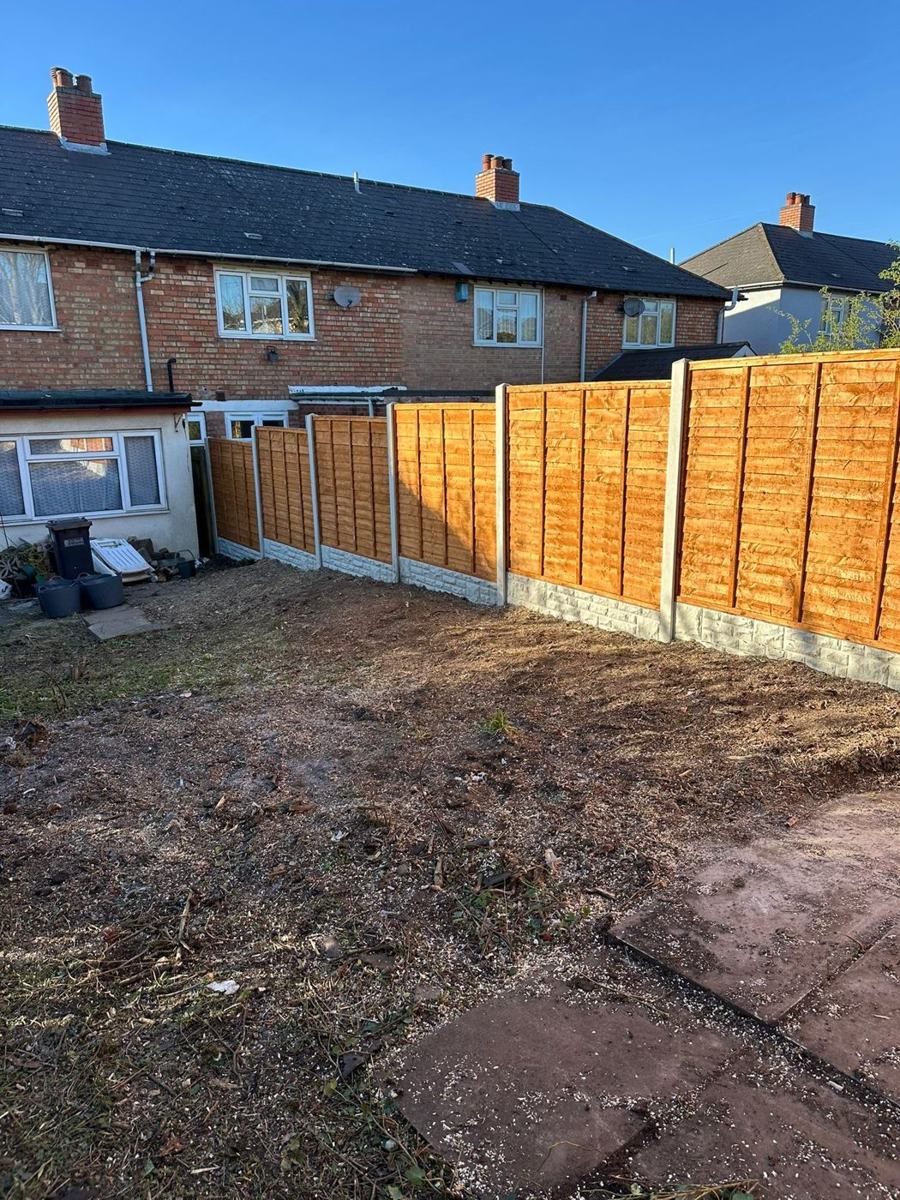
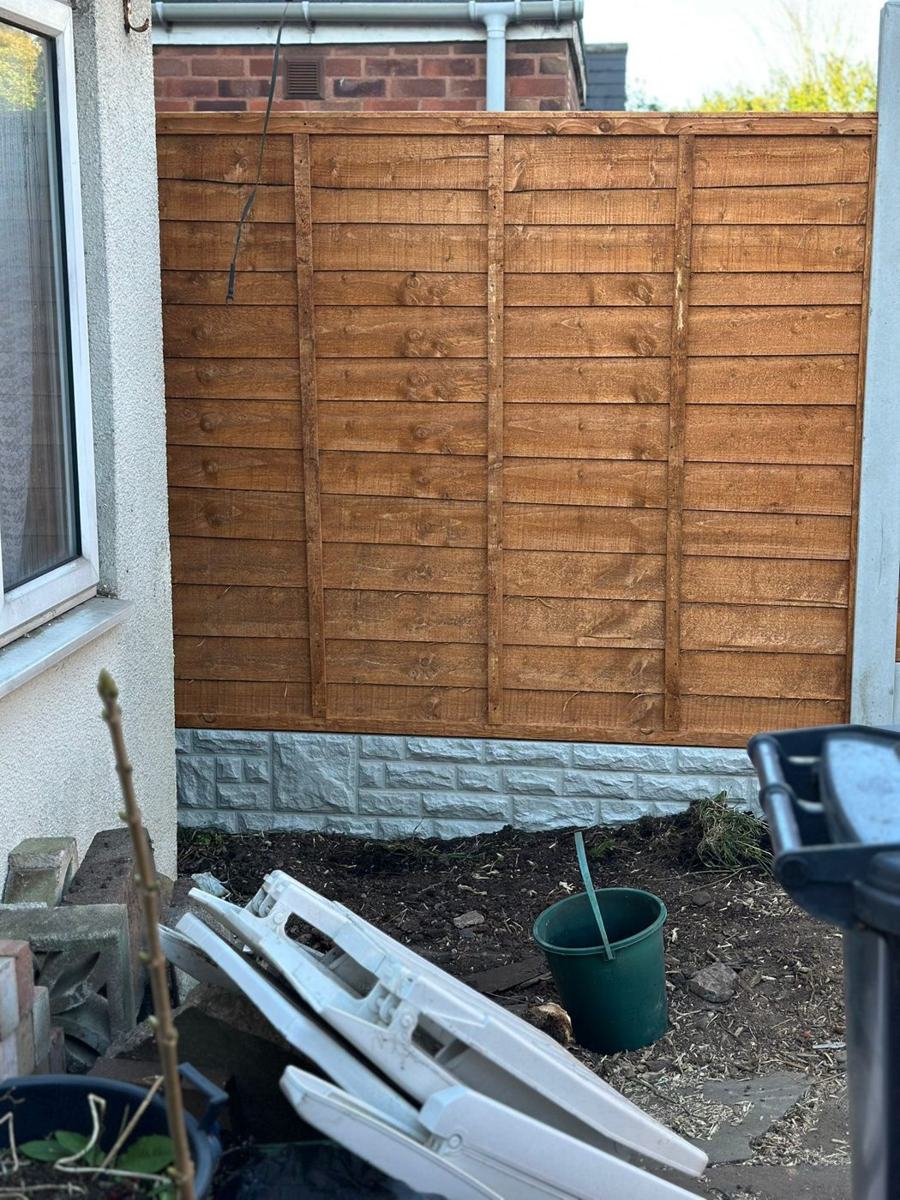
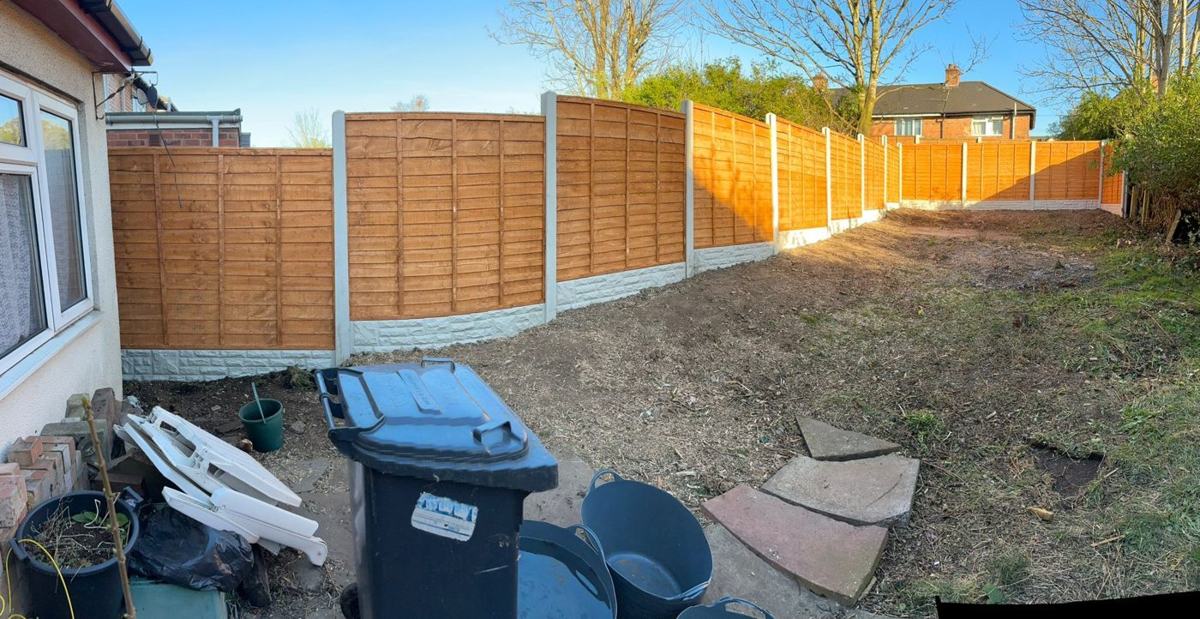
Here we replaced the boundary of a back garden belonging to a brick terrace in Birmingham. The photos show a fresh run of lapped timber panels set between concrete posts, with concrete gravel boards underneath. The garden had been cleared of overgrowth around the fence line, leaving bare soil and a few old paving slabs, so the new boundary stands out clearly.
What the fencing involved
A run like this starts with clearing the line, so the posts can be set properly in the ground. The panels are then fixed between the posts, with a gravel board along the bottom so the timber stays off the damp soil. Concrete posts and boards are a common choice because they do not rot in the way that wooden ones can. The photos show the panels running along the back and one side of the plot, including a shorter section tucked beside the house wall, where the fence meets the building.
The garden around it
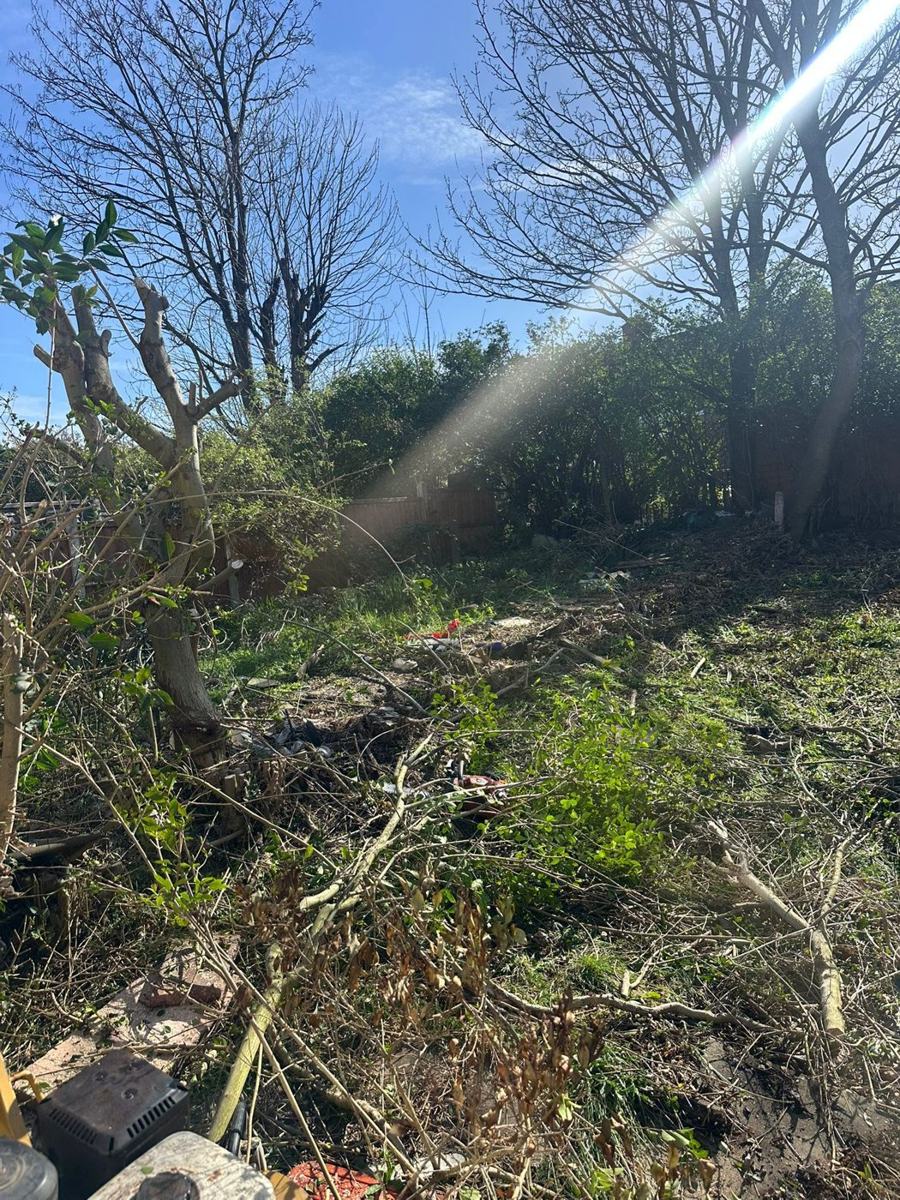
Before the fence went up, the ground beside it had been cut back hard. One photo shows a tangle of cut growth and tree stems in the sunshine, while the others show mostly bare earth, a few stepping slabs and some building rubble by the house. If you are replacing a fence, agree the boundary line with your neighbours first and check any height limits with the council. It also helps to clear stored items from the fence line so the work can go ahead without delay.