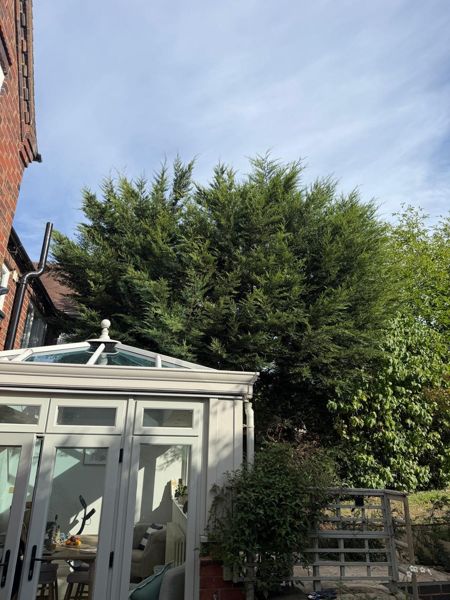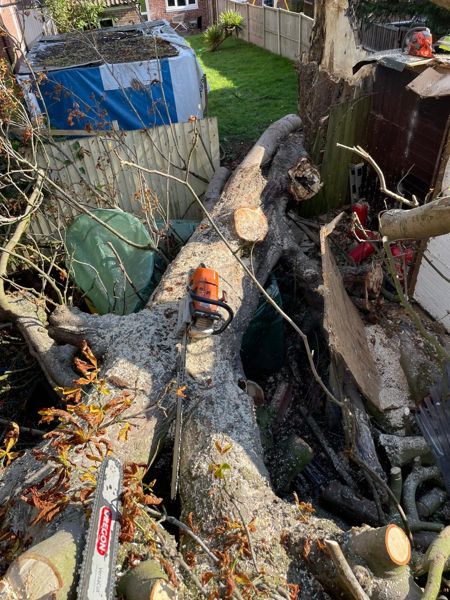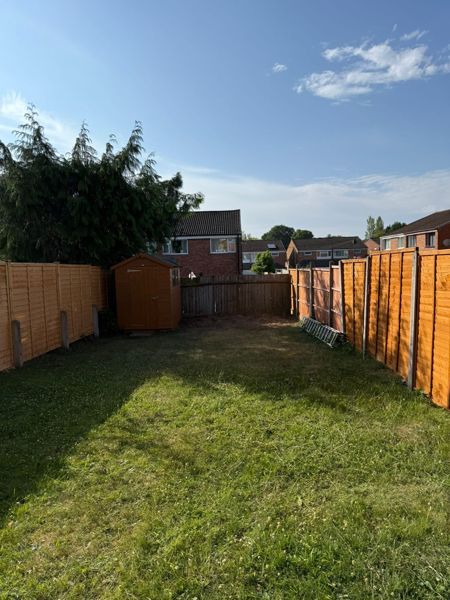
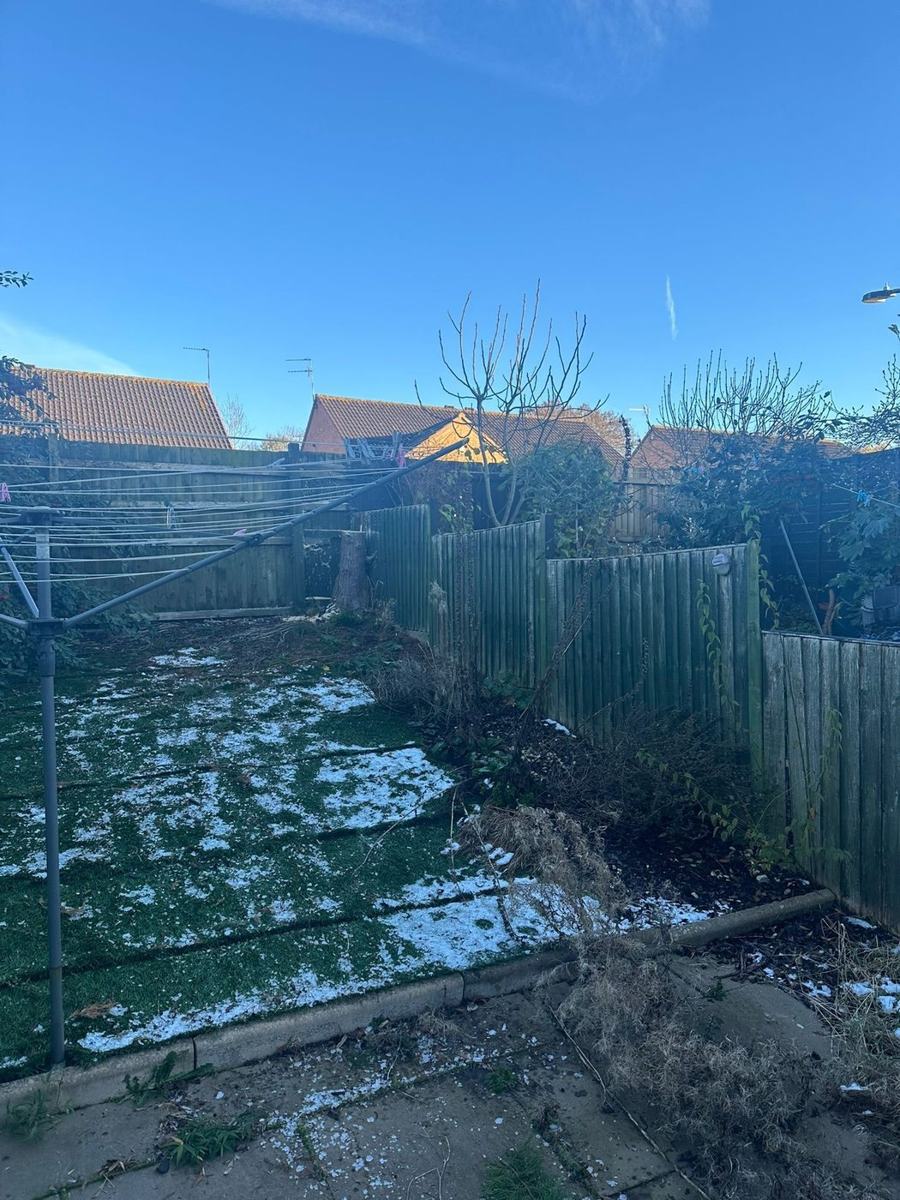
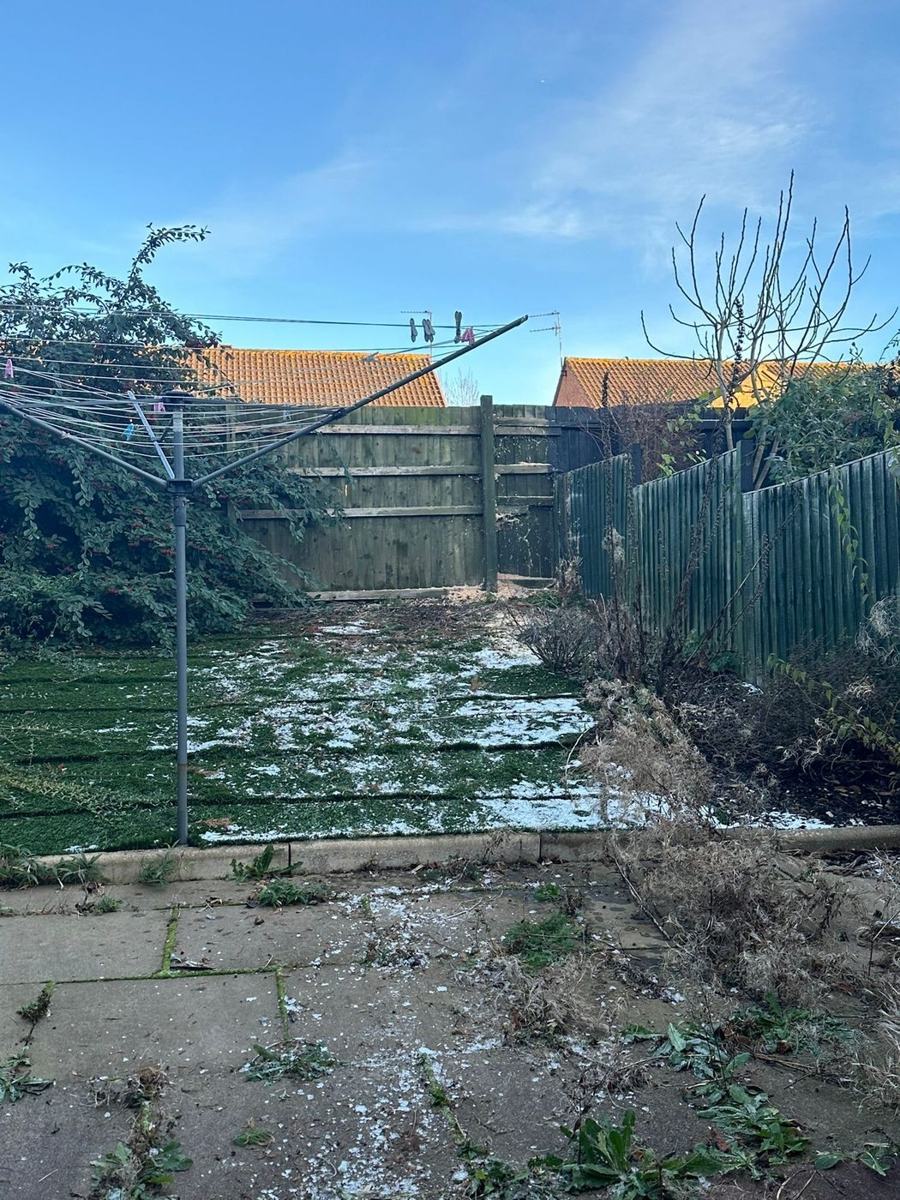
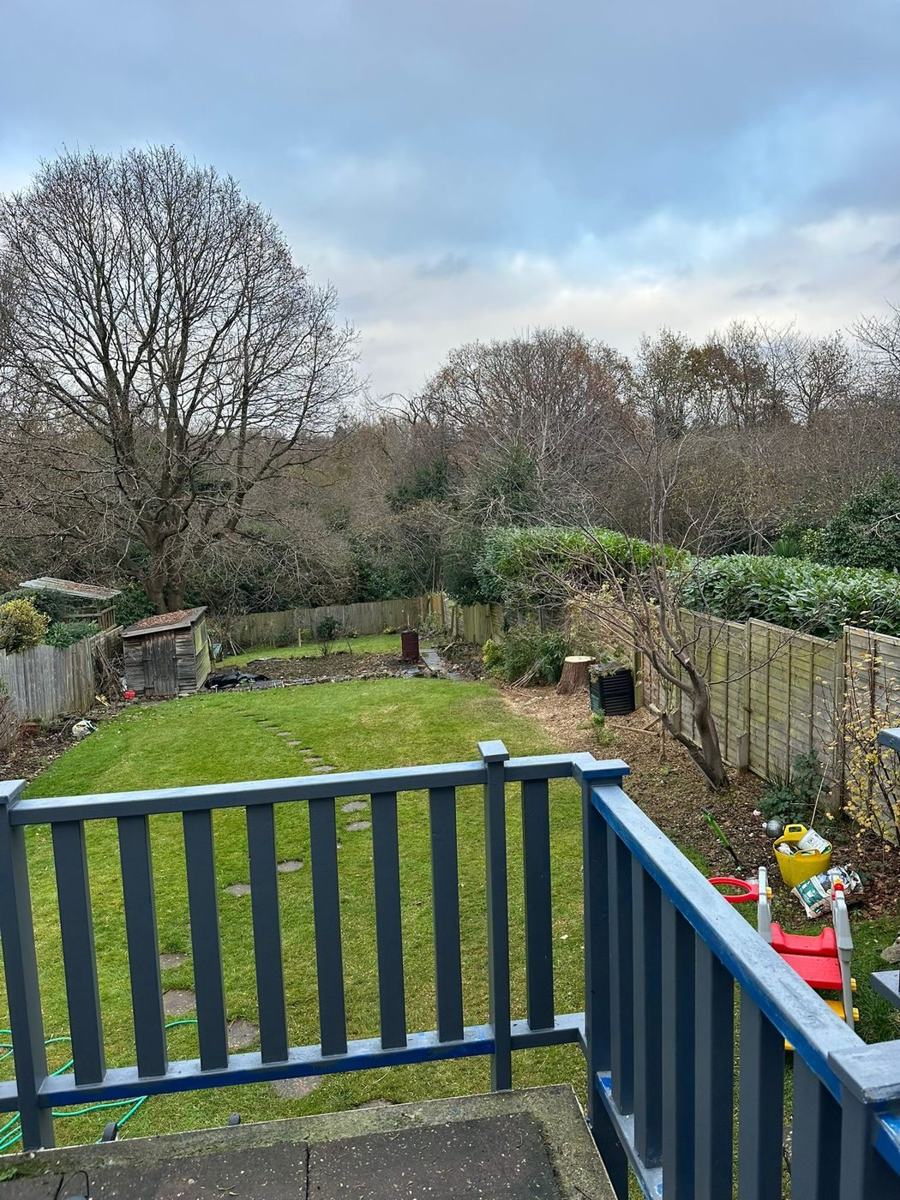
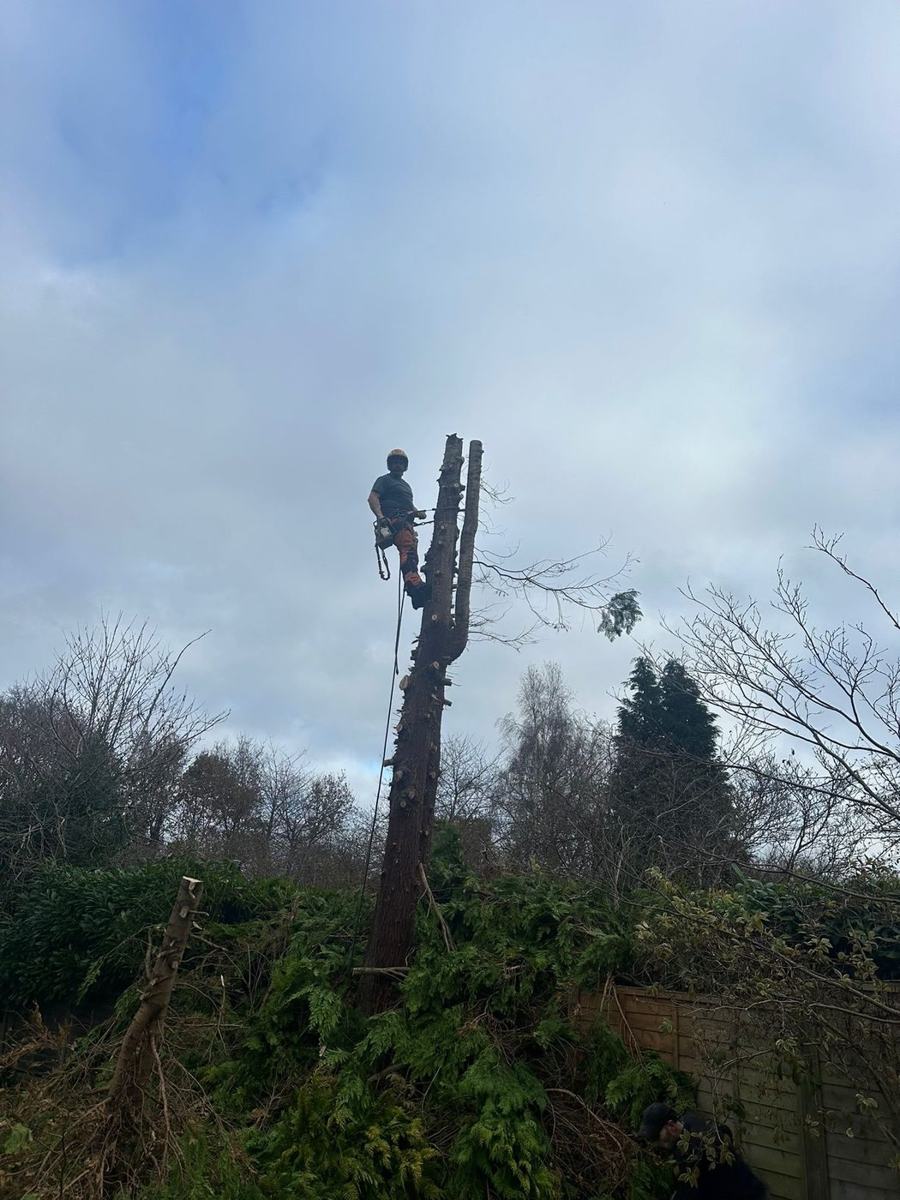
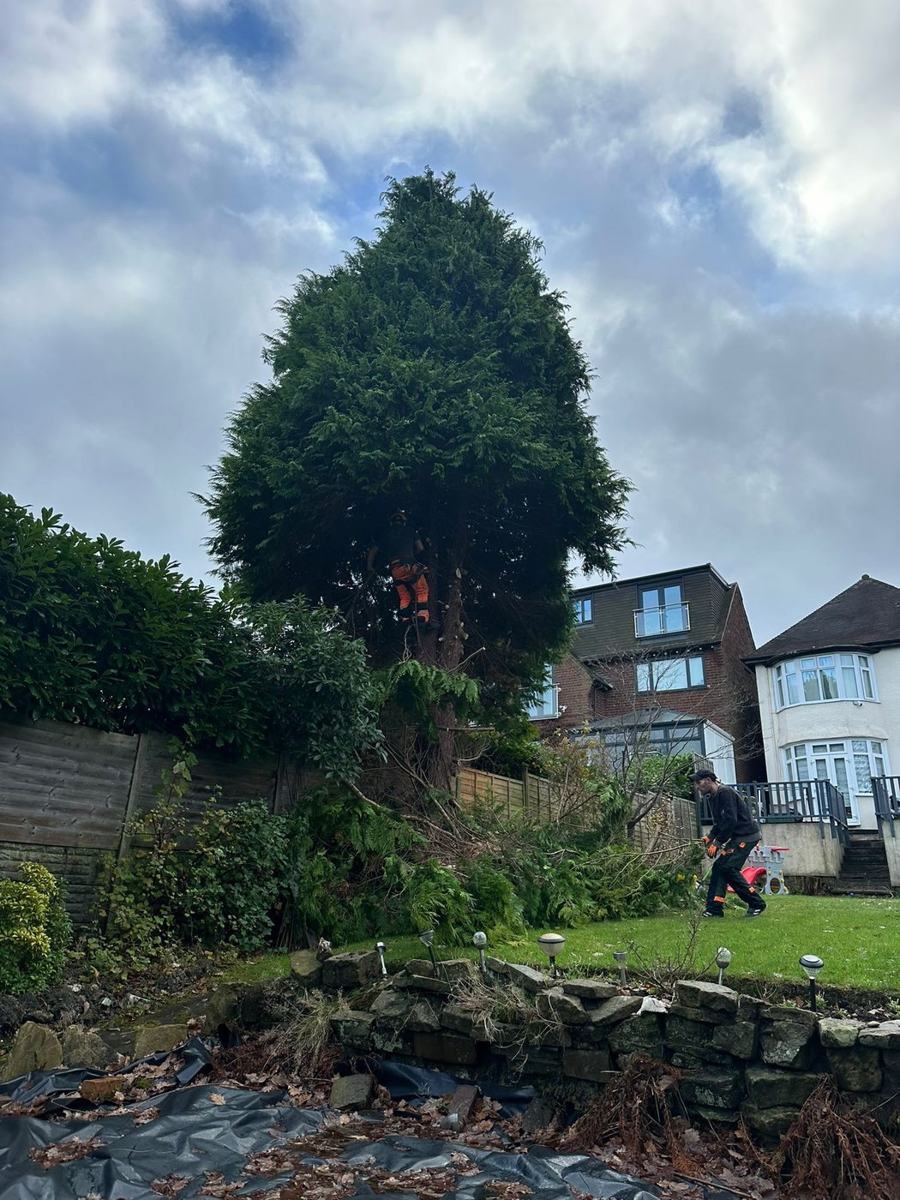
This project page brings together photos from fir tree felling work in Birmingham. The main job was a tall conifer in a back garden, taken down by a climber working up the trunk with ropes. The pictures also show a wintry garden where growth had been cleared, so treat this as a selection of jobs rather than one visit.
How a tall fir comes down
A fir this size cannot simply be pushed over in a built-up garden, so it is taken down in sections. The climber works upwards, removes the branches, then cuts the trunk from the top in manageable lengths and lowers them on a rope. The photos show exactly that stage, with the upper branches gone and a bare, narrowing trunk still standing above the hedges and fences below.
Conifers are quick to cut but bulky, and the branches pile up fast, so clearing as the work goes on keeps the garden safe to move around. Once the tree is down, the timber is logged and the green waste is taken away, and the ground is left tidy. Nothing is left behind.
What to plan for before felling
Before any tree is felled, it is worth checking with the local council whether it is protected by a Tree Preservation Order or sits in a conservation area, and Birmingham has plenty of both. It also helps to tell neighbours when work is planned, and to look for nesting birds in spring and summer.
The garden shots show why access and landing space matter. Houses, sheds and fences sit close to the trees, so the route for the cut sections is decided before the first cut. The lawn and borders are protected as far as possible, and nothing heavy is dropped near the boundaries.