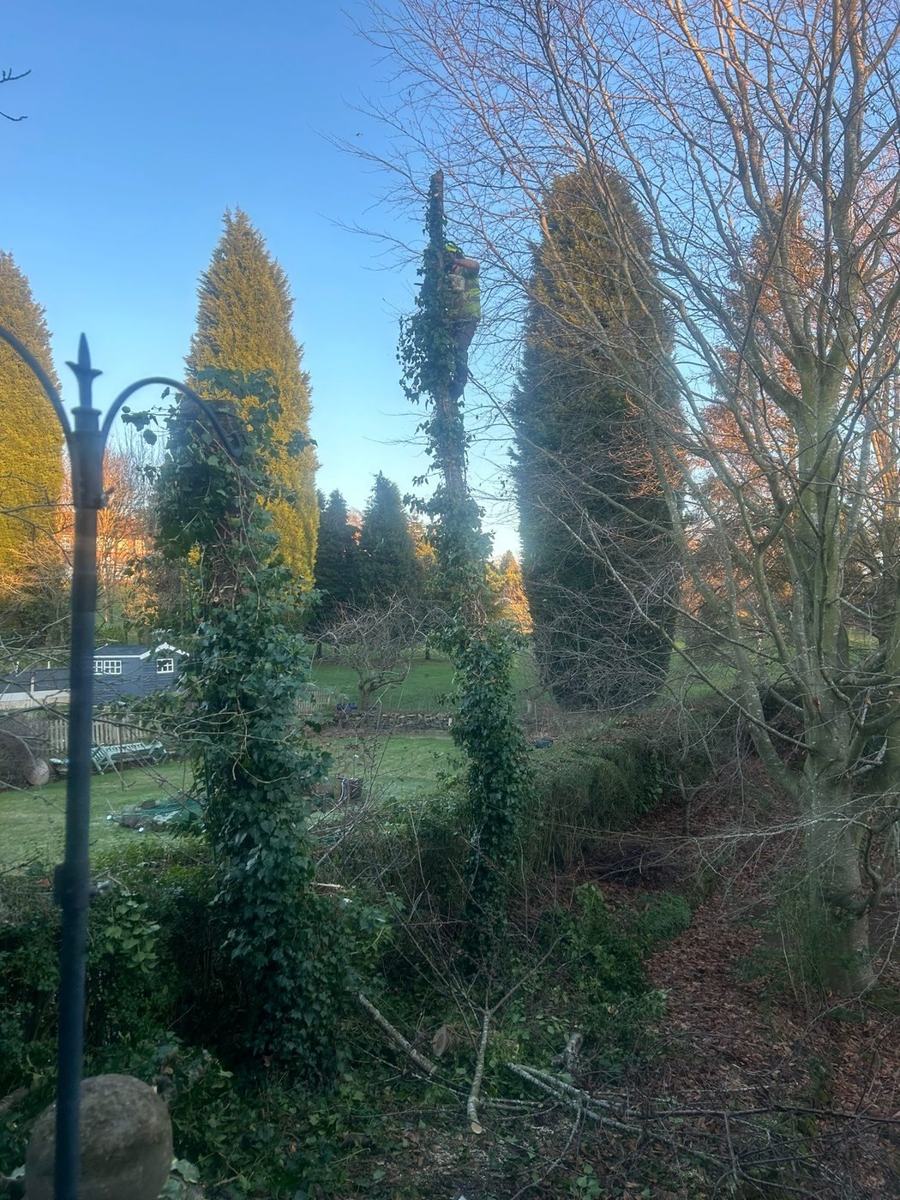
This Hall Green photo shows a tree wrapped in thick ivy from the ground to well above head height, with a climber working near the top of the stem. The garden is generous, with lawns, a summerhouse and tall conifers in the distance. Cut branches lie on the ground below, so we caught the job while it was in progress.
Climbing a tree covered in ivy
Ivy is not harmful to a healthy tree in itself, but a heavy covering hides the trunk, adds weight to the branches and makes it hard to judge the tree's condition. Climbing a clad stem is slower, because the climber must find sound footing and clear a way up. Dense ivy can also hold nesting birds in spring, so timing matters.
What to expect from a job like this
In a garden this size there is room to work, but the cut branches still have to be gathered, chipped or carted away, and the lawn and borders protected as that happens. Larger ivy-covered trees are often worth a proper look from the ground first, so any weak or dead growth is spotted before anyone climbs.
If you are unsure whether a tree is protected, the council can tell you before any cutting starts. It is also worth agreeing in advance what happens to the ivy and the cut timber, since a large amount of green waste can build up quickly. Leaving the garden tidy afterwards is part of the job, not an extra.