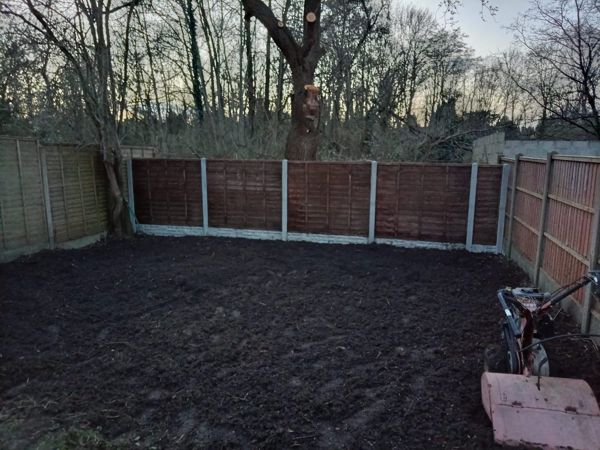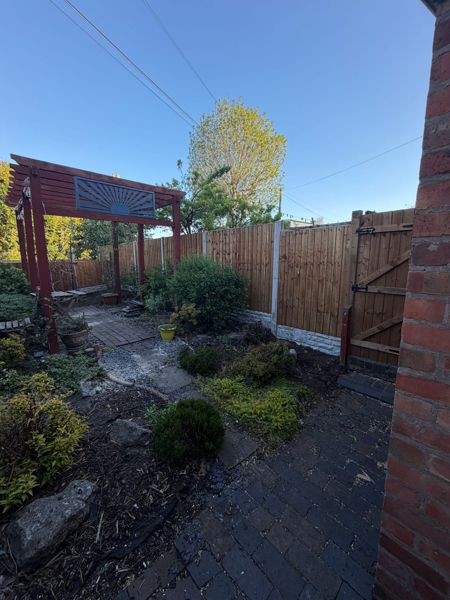
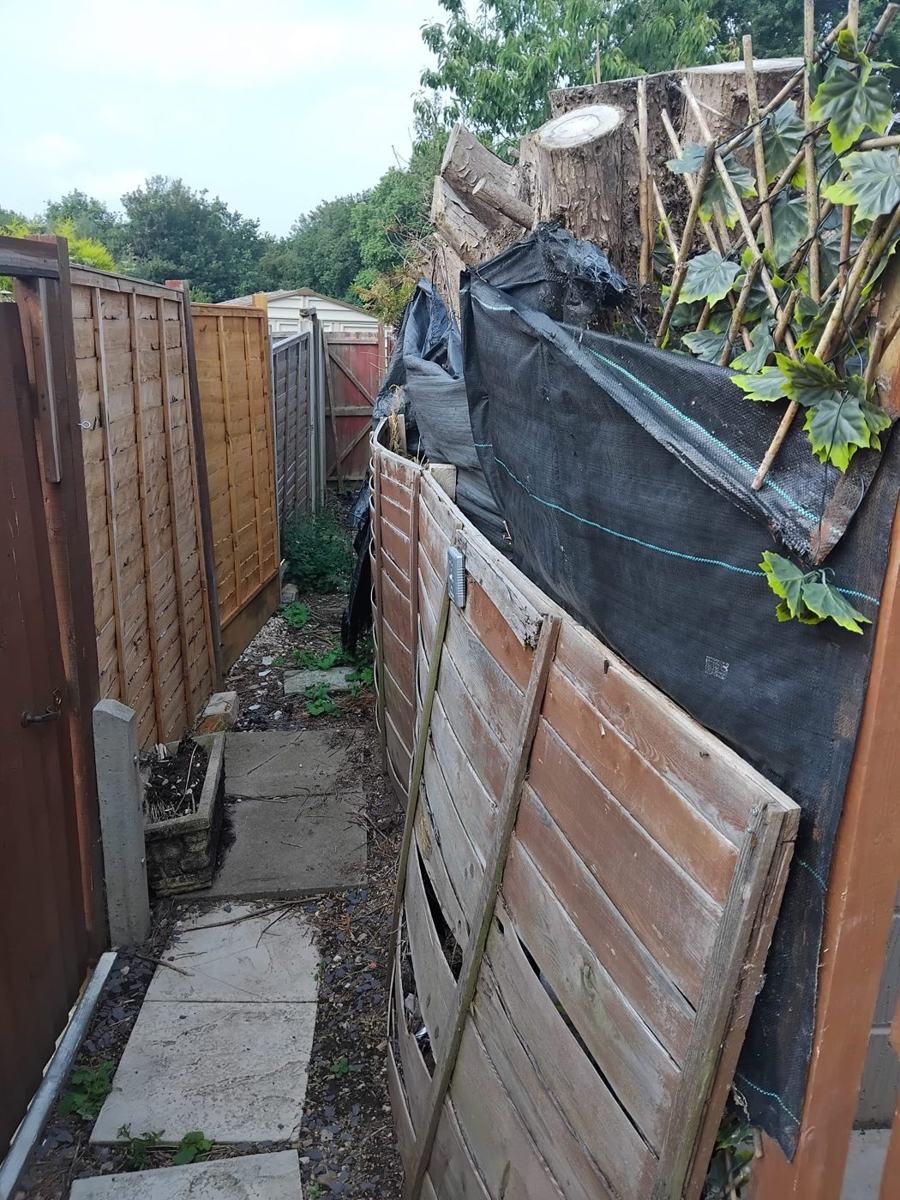
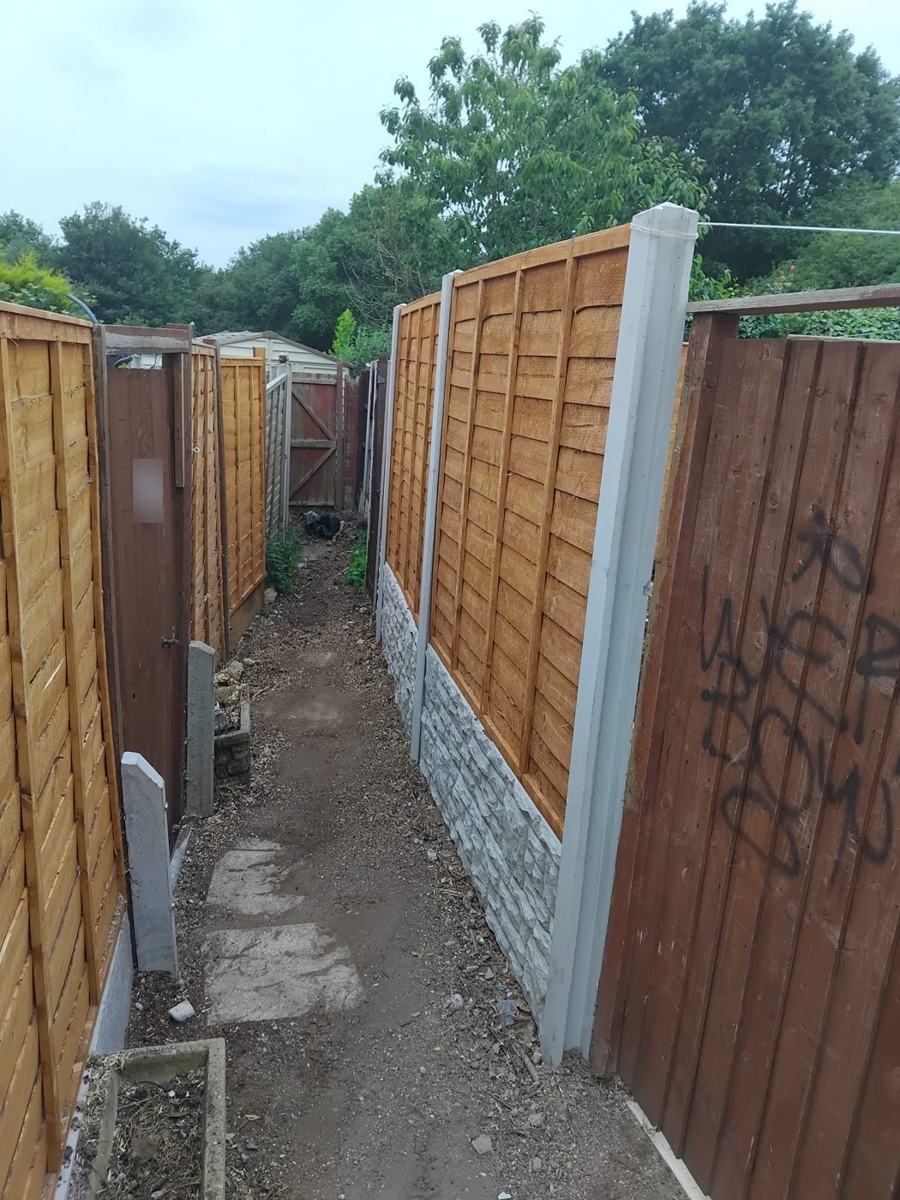
This Solihull fencing job took place in a tight side passage between gardens. The first photo shows old, bowed panels propped against a pile of cut timber, and the second shows a straight run of new fencing on concrete posts, with the passage cleared behind it.
Replacing a fence in a tight space
A narrow passage makes fencing awkward because everything has to be carried through by hand and there is little room to lay panels out. The old panels come out first, the posts are reset or replaced, and the new panels are fitted between them. The photos show that sequence, from the tired fence to the finished one. Working along a boundary this close to the neighbouring fences means each panel has to be measured and fitted with care.
The new run uses concrete posts, with stone-effect gravel boards at the base so the timber panels stay clear of the damp ground. That detail is what stops the bottom of a fence rotting early. Where the passage is damp or the ground is uneven, that small raised base makes a real difference to how the fence ages.
Before you replace a boundary
In the first photo the old fence is leaning outwards, with a stump, logs and black netting stacked against it. It is a good reminder that a fence is often tied up with other jobs, such as tree or hedge removal beside the boundary, and that clearing first makes the fencing straightforward.
It is also worth agreeing the line of the boundary with your neighbour before work starts, and checking height limits with the council if you plan to go taller than a standard fence. The second photo shows how a straight, clean run changes a cramped passage. Posts are set firmly so panels stay upright.